Iran has threatened to cut off the Strait of Hormuz – through which 1/3 of the global sea trade in oil travels – if the US enacts new sanctions on the regime. Dan Murphy scoffs:
During the so-called Tanker War between the Iranians and Iraqis during the 1980s, shipping in the Strait was severely threatened by both sides. Both countries sought to deprive the other of oil revenue, and attacked the boats of neutral parties as well as their direct enemies. All of that drove up the price of oil and shipping insurance, but didn't ever close the Strait of Hormuz. Eventually, the US Navy began escorting ships through the Strait, concerned about the global price of oil.
None of this is to say that all the war talk on both sides isn't frightening, or a reason for concern. And it's not to say that Iran couldn't do substantial damage to tanker traffic through the Strait if it comes to war. But the Islamic Republic simply does not have its hands on the spigot for 40 percent of the world's tanker oil, no matter how much it wishes that it did.
Tim Lister is not as dismissive:
Any attempt to interfere with shipping would be a double-edged sword for Tehran. Iran also relies on the Strait to export its crude and other products, and has to import most of its refined gasoline for lack of refining capacity. The U.S. State Department says there is "an element of bluster" in the Iranian threats.
Even so, analysts worry that the deterioration in U.S.-Iranian relations could magnify the consequences of a collision or provocation in the Gulf. Shortly before retiring as Chairman of the U.S. Joint Chiefs of Staff, Admiral Mike Mullen said: "If something happens, it's virtually assured that we won't get it right, that there will be miscalculations which would be extremely dangerous in that part of the world."
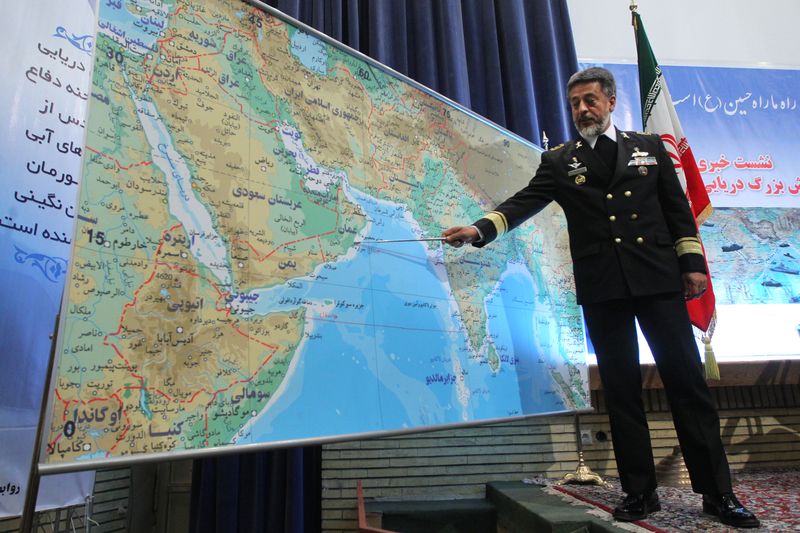
(Photo: Iran's Navy Commander Admiral Habibollah Sayari points at a map during a press conference in Tehran on December 22, 2011, saying that Iran will launch 10 days of naval drills from December 24, covering east of Strait of Hormuz and the Gulf of Oman to the Gulf of Aden. By Hamed Jafarnejad/AFP/Getty Images.)
 The Dish