Why Pay For Channels You Don’t Watch? Ctd

A reader writes:

When Alyssa Rosenberg claims that the motion is toward paying for specific items, she seems years out of date. The visible motion is in the other direction. People are stopping buying individual recordings and are instead using services like Spotify, where they are paying for access to a large library of music at a fixed price. They can listen to Muppets today and Ben Folds tomorrow, and if they never want to hear George Clinton, they don't have to, but he's still available as part of the deal. In movies, people are buying far fewer individual recorded films, but (except for sizable blips caused by sudden pricing changes) they have been swarming to services like Netflix, which offer them one-price access to huge libraries.

As for it always have been the case for books, a large portion of the money spent on books is by people supporting their libraries, where they (through tax dollars) pay to have access to a large number of books, even though reading even 1 percent of a well-stocked library would be am achievement. It's a convenience not only in avoiding much of the cost of toll-keeping on each of these individual items, but because it avoids the barriers to experimenting. If I'm already paying for Netflix, I don't have to think twice about trying out some BBC sitcom or offbeat film, because it's there at no marginal cost to me.

Another writes:

That question is just soooo 1990s. Think outside of the cable industry box. People don't watch channels, they watch programs. Why should people pay for 24/7 crappy movies and other programs on HBO when all they want to watch is one hour a week of "Boardwalk Empire". Why should they pay for everything on AMC when all they watch is "Mad Men". The personal entertainment delivery system is going to shift to fee-per-program before you can say 2020. Think iTunes and what it did to the music industry. Why do you think the cable industry is lobbying to change the pricing structure on home internet connections? Facebook and Twitter may become the new program guides.

Where Will European Democracy Land?

GT_SARKOZY_111201

Heather Horn reads the European debate over the currency crisis and sees evidence that it's actually pushing the continent toward political union:

Is supranationalism the solution to the problem of markets dominating politics, dominating society? That, then, is the broader, and potentially much more interesting, question coming out of this European debate. Social theorists, of course, have been wrangling with the fundamental problem for over a century now: what do you do when the market becomes more powerful than the society and political system (think property rights and so forth) from which it springs? The idea seems only to be half-formed at present, but the notion of supranational solidarity as a possible way out is one that should intrigue Europeans and non-Europeans, academics and laymen, alike.

Simon Nixon thinks France has the power, and possibly the will, to make this "half-formed vision" a political reality.

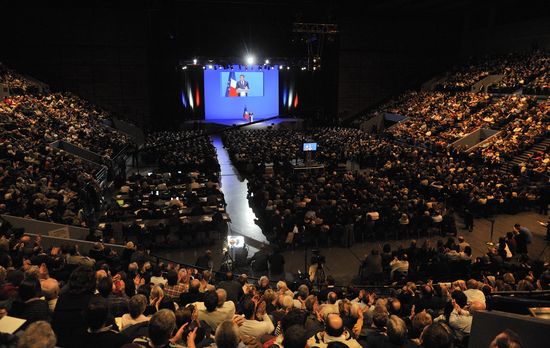
(Photo: General view of the audience as French President Nicolas Sarkozy delivers a speech on the European debt crisis on December 01, 2011 in Toulon, southeastern France. Sarkozy said he was convinced that the European Central Bank, which 'is and will remain independent', will act to counter the threat of the eurozone crisis. By Eric Feferberg/AFP/Getty Images.)

“This Is Your Cockpit Speaking …”

Philip Ross discusses the future of autonomous air travel: 

One factor that's often cited for keeping a pilot in charge is what's known as "shared fate." That's the reassurance passengers get from knowing that the human in the cockpit wants to live just as much as they do. But shared fate is not the only way, or even the normal way, to ensure safe service. After all, restaurants don't employ food tasters to reassure diners, nor do losing defense lawyers join their clients in jail. It's usually enough for a professional to demonstrate sheer competence—the "right stuff" of aviator lore. And it's clear that automatic pilots—like those that land F-18s—now have a goodly amount of it.

Is Romney A Foreign Policy Idiot? Ctd

Ackerman argued that Mitt's positions are all for show. Larison counters:

It would be encouraging if Ackerman were right, but it doesn’t follow that someone has a good grasp of international affairs and foreign policy because he has a sharp, inquisitive mind. We would like that to be true, but it isn’t. Romney may be well-educated and intelligent, but it doesn’t mean that his judgment on foreign policy is any good. A candidate can be smart and ignorant, and he can let ideology fill in a lot of the gaps in what he doesn’t know.

Who Will Win The FNC Primary?

Dylan Byers wonders if Fox News will back Gingrich and "help level an otherwise uneven playing field":

While Romney has sought to position himself for a general election, Gingrich is a Fox dream candidate: He loves to rake the coals of the fires the network has helped to feed, and to swim in the deep waters that, based on interviews with Ailes, seem to appeal to the chairman's worldview. It's Gingrich who has speculated on Obama's "Kenyan, anti colonial" intellectual roots, suggested that Barney Frank and Chris Dodd should be put in jail, and told Occupy protestors to "get a job, right after you take a bath."

Josh Marshall has the same thought.

Did Saleh Trick The World?

GT_YEMEN_111201

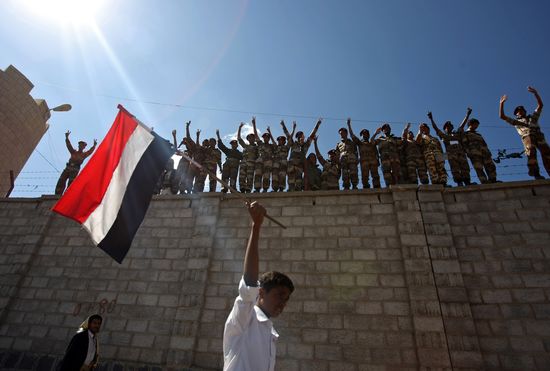
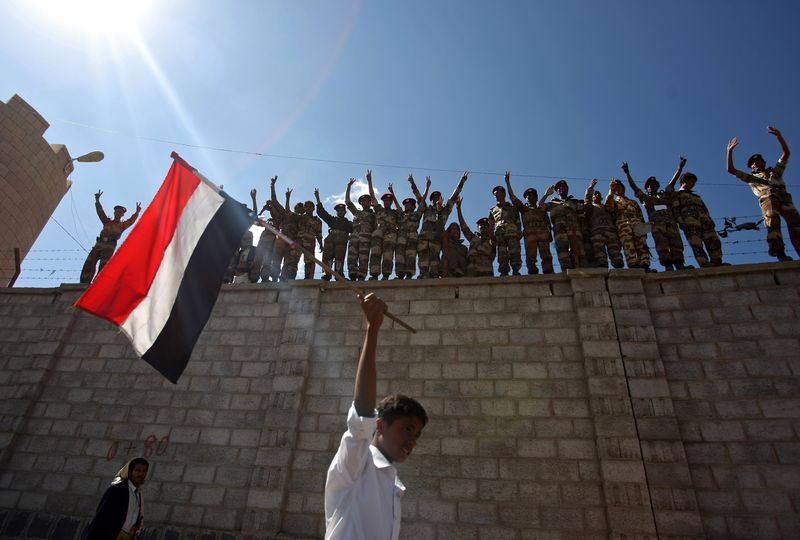
Jeb Boone, noting that the crackdown on Yemeni protestors continues despite "President" Saleh's formal resignation, thinks the strongman is still in charge:

As plans for an election are being laid, Saleh himself granted an ambiguous general amnesty to those who committed “follies” during the 10-month long political stalemate. With the ink still wet on the GCC initiative, Saleh is continuing to act as president. He isn’t just clinging to power, it would seem that Saleh is staying in power.

Muftah's editors agree:

In a country where promises have been broken again and again by the usual suspects, resting the fate of the country on the political will of the elite to give up their power is preposterous. Beyond promises, the reality is that Saleh remains president and continues to make decisions. His close family members continue to control key aspects of the military and security forces; a small minority of families continue to control the economy; and the country continues to witness ongoing conflict.

Juan Cole and Muhammed Humaid are more optimistic.

(Photo: Dissident Yemeni soldiers shout slogans as an anti-government protester waves his national flag during a demonstration demanding the trial of Yemeni President Ali Abdullah Saleh in Sanaa on November 26, 2011. By Mohammed Huwais/AFP/Getty Images.)

Why Google Plus Failed

Joshua Gans has a theory:

The network effects by which users value a particular network increase based on the amount of sharing going on. One telephone is useless. But with many millions and a phone book, you're getting somewhere. Facebook's defaults nudge people towards sharing while Google's do not. Indeed, Google's entire attraction is its sales pitch, "Suppose you don't want to share something with all your friends, we make that easy." So it attracts users more inclined to limit sharing. Here's the business implication: in the end, sharing is how social networks will make money and Facebook has positioned itself to maximize both.

Previous Dish autopsy on the social network here.

The Daily Wrap

Today on the Dish, the US Senate prepared to gut due process (related Yglesias award nominee here), Andrew issued a final response to Ta-Nehisi on IQ and race, and TNC responded here. Ron Paul took aim at Gingrich, the GOP grappled with their new front-runner's many betrayals, and we wondered if social conservatives would get onboard. Romney underperformed the generic candidate Bob Forehead by 12 points, Gingrich surged to the largest national lead held by any candidate so far, and Romney's buttoned-up candidacy showed signs of fracture. We mapped Herman Cain's knowledge of the world, Ackerman assumed that Mitt is pretending to be stupid on foreign policy, and Perry may have a medical reason for his humiliating collapse. The GOP began to coalesce around Obama's commission on fiscal reform, antagonism toward Obamacare is frequently misplaced, and in our AAA video, Andrew discussed the JFK presidency.

The Islamist wave grew stronger in Egypt, sanctions and YouTube spurred on the Syrian opposition, and on top of everything else, Europe faced a jobs crisis. Goolsbee anticipated the disintegration of the euro zone, civilian casualties of war were discounted, and we debated Chinese containment policy. 

Don Taylor calculated the cost of end-of-life care, readers weighed in on locker room nudity, and a layperson toyed with Adderall-dealing. The crackdown on medical marijuana escalated in California, American Airlines reorganized, and Alyssa reimagined cable television. Researchers at Dartmouth developed a Photoshop-revealing tool, we revisited early marijuana laws, and caught up on canine PTSD. In home news, the Dish is now running ads.

Cain's "great new ad" here, meme of the day here, Hewitt award nominee here, tweet of the day here (follow-up here), VFYW here, FOTD here, MHB here, and the saddest book ever written here

M.A.