The View From Your Window Contest

Vfyw_12-17

You have until noon on Tuesday to guess it. City and/or state first, then country. Please put the location in the subject heading, along with any description within the email. If no one guesses the exact location, proximity counts.  Be sure to email entries to VFYWcontest@gmail.com. Winner gets a free The View From Your Window book. Have at it.

Why Ignorant Voters Matter

Insight is being gleaned from a mathematical model for fish:

In experiments where a minority of fish was trained to swim toward a yellow target, and a majority toward a blue target, the minority swayed the whole group more than 80 percent of the time. Then the researchers added "uninformed" fish to the mix, and a curious thing happened.  "Adding those individuals dramatically changes the outcome of group decision-making," [study author Iain Couzin] said. "They inhibit the minority and support the majority view, and this allows the majority to be heard and that view to dominate." … "We thought, ‘Wow, that’s kind of interesting,'" Couzin said, "because you don’t normally think that adding uninformed individuals to decision-making processes would have that sort of democratizing effect."

The Stoicism Of George Kennan

Jacob Heilbrunn reviews John Lewis Gaddis's new biography: 

Kennan was perhaps the most brilliant intellectual of the past century. He was certainly the most tortured. For all the reams of books and essays written about George F. Kennan during his lifetime, it was a neighbor of his, one J. Richards Dilworth, who divined his true character: "George is ultra-conservative. He’s almost a monarchist." Yes, the man who invented the doctrine of containment that saved the West from Stalinism in the late 1940s and prepared the road for victory in 1989 when the Soviet empire came crashing down was himself less than a democrat. He was as old school as it gets. He pined for an older, pristine America, one that wasn’t enraptured by automobiles, suburbs, commercialism, and choked by pollution and greed. He opposed American recognition of Israel and didn’t feel it was America’s duty to interfere abroad to spread democracy.

Larison has more on Kennan's particular understanding of containment doctrine. In a review of Ned O'Gorman's Spirits of the Cold War, Barry Gewen also returns to Kennan: 

[T]hroughout his life Kennan was sour, morose, and pessimistic. "Life can never be other than tragic," he said, and that outlook, or "worldview," dictated a policy of caution, moderation, and quiet if unflagging strength. Moralism, with its absolutist strictures, was a dangerous and hopeless pursuit, its implicit utopianism "almost criminally unforgivable." The world was never going to be brought together in universal brotherhood, and it would be reckless for the United States to build its foreign policy on a program of intervening to eradicate what it viewed as evil. It was better advised to understand its genuine interests and to safeguard them. Therefore, the Soviet Union had to be contained, not converted. … Containment was a school for stoicism.

Worry About Egypt’s Brothers

GT_BROTHERHOOD)111215

Eric Trager gets scared after interviewing a number of Muslim Brotherhood parliamentarians:

[P]erhaps the most telling indicator of the Brotherhood’s theocratic outlook were the future parliamentarians’ comments on whether they would permit those who do not believe in the sharia to criticize or challenge it.  The answer was, without exception, no.  “It’s not allowed for Christians to come and say that the sharia is wrong,” said Abouel Fotouh.  “They are not specialists.”  Mukhtar agreed.  “There is no ultimate freedom, because your freedom ends at the freedom of other people,” he told me.  “And if I humiliate things that you respect, I violate your freedom.”  When I told Mukhtar about a video that a friend had sent me depicting Salafists calling for holy war against the Jews, he laughed and suddenly transformed into a civil libertarian.  “People are free to say what they want,” he said.  He proceeded to rant against Israel.

Mara Revkin explains the electoral success of the even more extreme Salafis.

(Photo: A Egyptian man throws back a teargas canister fired by policement as hundreds of Coptic Christians marching in Cairo on November 17, 2011 came under attack by assailants throwing stones and bottles at them. Security officials said 25 people were lightly injured in subsequent clashes that took place when Coptic protesters were marching to demand justice for the Christian victims of a clash with soldiers in October that left at least 25 people dead, most of them Christian Copts. By STR/AFP/Getty Images.)

Lessons From The Depression

Joseph E. Stiglitz describes how the Depression, spurred by war spending, delineated a move from an agricultural society to one dominated by manufacturing:

Today we are moving from manufacturing to a service economy. The decline in manufacturing jobs has been dramatic—from about a third of the workforce 60 years ago to less than a tenth of it today. The pace has quickened markedly during the past decade. … As in 1937, deficit hawks today call for balanced budgets and more and more cutbacks. Instead of pushing forward a structural transition that is inevitable—instead of investing in the right kinds of human capital, technology, and infrastructure, which will eventually pull us where we need to be—the government is holding back. Current strategies can have only one outcome: they will ensure that the Long Slump will be longer and deeper than it ever needed to be.

Jim Manzi complicates the point:

The proportion of Americans working on farms has been in continuous decline since at least 1800, when about three-quarters of the labor force was in agriculture. The decade with the biggest reduction in this proportion appears to have been the 1840s, when the percentage of the workforce in farming went from 67.2% to 59.7% (a reduction of 7.5 points). … The Great Depression occurred around the middle of a century-long, steady decline in the percentage of the labor force on farms. How could this decline have been the special cause of a spectacular economic collapse that occurred in one of these ten decades, but in none of those before or after?

Arnold Kling also questions Stiglitz's numbers and his conclusion:

In the long run, new patterns of specialization and trade have to be established. But we do not know what those will be. Government does not know, either, so its fiscal policy is a very clumsy instrument.

Nick Rowe and Ryan Avent pile on.

The Weekly Wrap

Hitch
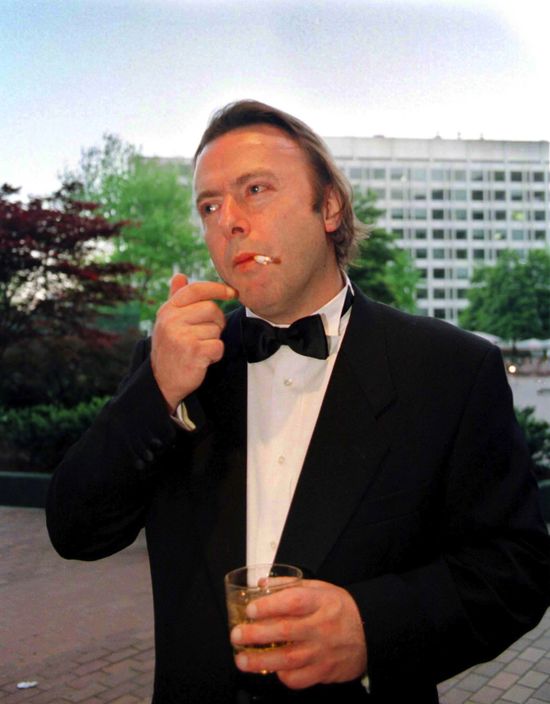
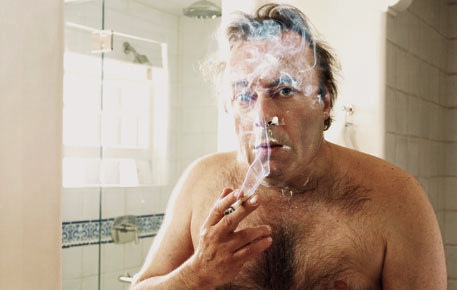
Today on the Dish, Andrew eulogized his friend Hitch, and we assembled remembrances here, here, and here. Peter Hitchens remembered his brother's courage, we revisited his final interview, and in our AAA video, Andrew recounted a night with Hitch. Hitchens ranted against Mother Teresa and Princess Diana, he flourished in the aftermath of Jerry Falwell's death, and Sullivan wouldn't give tongue. In a friend one should have one's best enemy, Sully and Hitch were as one for America, and Hitch knew this poem by heart. 

We revisited Ron Paul's racist newsletters, the GOP field is wildly out of touch on Iraq and Iran, and the candidates (with the exception of Paul) have "pandered to fear and much worse " on gay rights. A reader made the electability argument for Ron Paul, E.D. Kain came out for the anti-war candidate, and we lingered on the outsized brains of London cabbies. We may have missed our chance on climate change, Obama is the "worst socialist ever," and the Louis CK model is not necessarily scalable. TNC detailed the life of "a poor black kid," violence returned to Cairo, and autopsies are indispensable.

Malkin award nominee here, Christmas hathos alert here, poems for the day here and here, VFYW here, MHB here, FOTD here, and the insanity of the drug war here

Leaving iraq
By Joe Raedle/Getty Images

Thursday on the Dish, Andrew live-blogged the last debate before the Iowa caucuses, and we collected reax here. Gingrich lost altitude in the polls, Romney saw a lift in Iowa, and Fox News rejected the democratic process (more disdain here, and a reader's thoughts here). Gingrich has done everything for himself, and he may not even want to be president. In our AAA video, Andrew thought through a Ron Paul presidency, he elaborated on his endorsement in a response to Frum, and Brian Doherty reflected on Paul as a normal political choice. Paul did in fact disown Reagan, Romney has a private equity problem, and his life as a poor missionary in Paris came under dispute. We previewed a crucial moment of Gingrich's candidacy, assembled reax to the Ryan-Wyden plan to reform Medicare, and Obama capitulated on indefinite detention. We assessed Ron Paul's chances, the congressman refused the marriage pledge (take a look at the comments at NRO here),National Review put out an entire magazine to "anti-endorse" Gingrich, and the Weekly Standard held out.

The war in Iraq came to a formal end, John McCain doubled down on US imperialism, and Greenwald provided an update on the Josh Block smears. We imagined a post-Assad Syria, Huntsman is unreasonable on Iran, and every people is "an invented people."

We debated the best ways to discourage and prevent date rape, the field of neuroeconomics emerged, and the typical law professor knows nothing about being a lawyer. A reader warned against playing with gender stereotypes, Hitch has not found God and is not finding God (related dissent of the day here), and infertile women do not lack families. 

Chart of the day here, FOTD here, MHB here, VFYW here, and shit gay guys say here

Ron paul
By Tom Williams/Roll Call

Wednesday on the Dish, Andrew endorsed Ron Paul for the GOP nomination, Christine O'Donnell championed Romney, and Nate Silver ran the latest numbers in Iowa. Mitt has an evangelical problem, his brand of capitalism is inadequate, though his tax plan is relatively moderate. The former governor borrowed the KKK's slogan, he went after Gingrich's money, and may run (back) to the center. The GOP may be willing to lose in 2012, but electability can be persuasive, and the president can't let the chairman of the Fed go. The Freddie Mac bailout was even worse than 144 Solyndras, and Gingrich represents a liberal's idea of a Tea Partier

We reimagined the US-Saudi relationship, checked in on Afghanistan, and celebrated British "obstructionism." The Muslim Brotherhood clamped down in Egypt, Google documented post-tsunami Japan, and Russia is beside the point. China may be more Westphalian than the West, the two likeliest Republican nominees are far more supportive of Netanyahu than their own president, and in 1982 Reagan urged a settlement freeze. 

In our AAA video, Andrew explained his distaste for the HRC, Louis CK won the Internet, and readers sounded off on date rape and personal responsibility. We explored the psychology of murder, reexamined the conservatism of Russell Kirk, and delved into the criminalization of HIV. A la carte pricing would force active viewers to pay more for cable, Facebook is making us jealous and sad, brain structure is not fixed, and the face of Muslim America is banal.

Quote for the day here, today in Syria here, Malkin award nominee here, VFYW here, FOTD here, MHB here, and Andrew on Hitch here

Tuesday on the Dish, Andrew discussed meditation, he considered the many ways to God, and "that thing out there" is conscious. Conservatives went berserk over the Gingrich surge (more unconcealed panic here), and the former speaker proposed an average tax cut of $1.9 million for everyone in the top 0.1 percent. Romney defined his views as "progressive" in 2002, he had a hard time connecting with a gay vet, and his lead in New Hampshire may not be forever. The "less weird" candidate will win, Newt mastered the counter-punch, and he waged a lonely campaign. We collected reax to the Gingrich-Huntsman "debate," a conservative Christian brought Perry back to earth, and Ron Paul could "change the math" in Iowa (more on Paul as protest vote here). 

The foreign minister of Israel defended Putin's corruption, Assad has murdered more than 5,000 Syrians, and drones hovered in the US. We explored Palestinian identity, and the EU faces a problem of scale. 

We debated the merits of political fact-checking, met YouTube's oppo researcher, and covered the controversy surrounding Lowe's and All-American Muslim (Jonah Goldberg's thoughts here). DOMA complicates the tax code, cable bundling enables Fox News, and the blogosphere's most talented political reporter ditched blogging. We have a primordial need to hoard food, sugar makes us tired and sad, and e-cigs are an effective replacementfor cigs. City rankings are useless, and the pit bull is the American muscle dog.

Poseur alert here, FOTD here, MHB here, VFYW here, VFYW contest winner #80 here, the 2011 economy in 10 graphs here, and the Christmas gift idea for the man who has everything here

Wasilla
Wasilla, Alaska, 11.26 am

Monday on the Dish, Newt opened up a bigger lead in the early states, he took up the fundamentalist's war against secularism, and he acted "exactly like one of those obnoxious elitist intellectual know-it-alls that the right-wing no-nothings think is the hallmark of an intellectual" (more on Newt's appeal here). Andrew embraced Gingrich's proposal for a series of Lincoln-Douglas debates, we placed the former speaker in the recent history of improbable candidates, and the GOP field erupted into negative attacks. Greater Israel is at the core of the GOP base, Santorum once gave an award to Jerry Sandusky, and Romney self-consciously ducked class warfare. The debates have been a disaster for the GOP (further reax to the $10,000-bet debate here), the headline unemployment rate could actually rise next year, and a 15-year-old boy spent his entire adolescence imprisoned at Guantanamo Bay. 

We tracked developments in Syria, Stephen Walt warned against covert war in Iran, and Marty Peretz stood up to right-wing Israelis. A former AIPAC spokesman introduced a campaign to target several critics of Netanyahu as anti-Semites over a list-serv, Middle Eastern Jews and Palestinians are genetically almost identical, Britain resisted European integration, and the British coalition showed worrying signs of fracture. 

In our AAA video, Andrew discussed his opposition to infant circumcision, Xeni Jardin Instagrammed her mammogram, and Roland Fryer measured school culture. Molten lava isnothing like water, fungi grow toward their food, and Facebook is keeping tabs. We continued the debate over emergency contraception for teens, addressed the first rule of blogging, and the Army invented a sandwich that stays fresh for two years. We shouldn't require "sparks" on the first date, cremation powered electricity in England, birds see things humans cannot, and there's a theory that only someone who has had a twin in utero can be "truly left-handed." 

Quote for the day here, hathos alert here, chart of the day here, VFYW here, MHB here, and FOTD here

M.A. 

Malkin Award Nominee

"The thing about both the Soviet Union and Adolf Hitler's Germany was that the enemy was plain in view. We knew these guys were bad, they had black uniforms, they had swastikas, they had tanks – they were obviously the bad guys, they wanted to destroy us. What makes the modern environmental movement so dangerous is that it masks its intentions behind this cloak of cuddly, touchy feely, polar bear, Nobel Prize-winning, righteousness," – James Delingpole, talking to NRO about "why he believes Climategate is the greatest threat to modern civilization."

The Anti-War Candidate

E.D. Kain will be voting for Ron Paul:

I want a candidate who will honestly and frankly assess the abuses of liberty here at home, because without our basic rights intact, how can we trust anything our government does? For me it is hardly about left vs. right anymore or the various second-tier policy differences Democrats and Republicans may have. Yes, I care about jobs, about taxes, about healthcare and public education. Yes, on many of these issues I’m far to the left of Ron Paul. But I care more about peace.

A reader sends the above video from the previous presidential cycle and writes:

Back in 2007, I was in college and a very conflicted Republican. I disagreed vehemently with my party on the war in Iraq and the Patriot Act, and I had a whole collection of candidates that I disagreed with. Then a video of some old congressman debating with Rudy Giuliani on the topic of blowback went viral, and two thoughts came to mind: a) here's a guy who gets it, and b) why is the audience rewarding Giuliani's obvious ignorance by clapping? After that, I became a Ron Paul supporter.

I thought he was a little too zany on domestic issues, but at the same time, the mere presence of Ron Paul in the GOP made me feel better about my party. I took part in the money bombs. I tried to convince friends, family and complete strangers to listen to Ron Paul, believing that if people would just pay attention that he would rise in the polls and shake things up.

But nobody paid attention. In fact, he was treated like a buffoon, and as the campaign wore on, I made a promise to myself that if the GOP doesn't start taking Ron Paul's ideas more seriously that I would leave the party. And that's what I did. What's more, the GOP has so devolved since then that I'm embarrassed to have ever called myself a Republican.

These days, I'm a pretty staunch Obama supporter. I don't agree with him on a lot of stuff, but most of the time it seems like he's the only adult in Washington. Still, sometimes I hear Ron Paul in a debate or read a piece like your endorsement, and I honestly wonder how I would vote if he somehow, magically managed to win the nomination.