The GOP Is Stuck In The Past

David Remnick considers the Republican presidential candidates' views on gay equality:

In terms of civil rights, in terms of the progress of human decency, one of the clearest political victories of 2011—a long and cruelly delayed victory—is the triumph, last June, of marriage equality in the State of New York. This is a victory that will, if we are lucky, spread to many more states and has already enriched the lives of countless gay and lesbian couples. That the remaining Republican candidates (except, notably, Ron Paul) have found so many ways to deride this right, so long in coming, is appalling. History should not forget that at this late date Mitt Romney, Rick Perry, Rick Santorum, Michele Bachmann, and, most recently, Newt Gingrich—politicians who propose to inspire and lead—have pandered to fear and much worse by pledging their support for a Constitutional amendment banning same-sex marriage.

Is It Too Late For The Climate?

James Garvey wonders if we've missed our chance to stop global warming:

There is now at least the possibility that it is now too late to do the right thing — it might already be too late for the LCDs and small island states, who are calling for an immediate deal and even tougher targets. As the space on the graph between us and 2030 compresses, and the lines we have to contemplate riding out become steeper and steeper and therefore further and further from the realm of the physically possible, the possibility that it’s too late is genuinely before us. Facts here intrude on morality, and sometimes the possibility of doing the right or just or equitable thing can slip beyond our grasp if we let it.

Which Obama and the Democrats did.

Ron Paul’s Newsletters

Ron_Paul_Newsletter

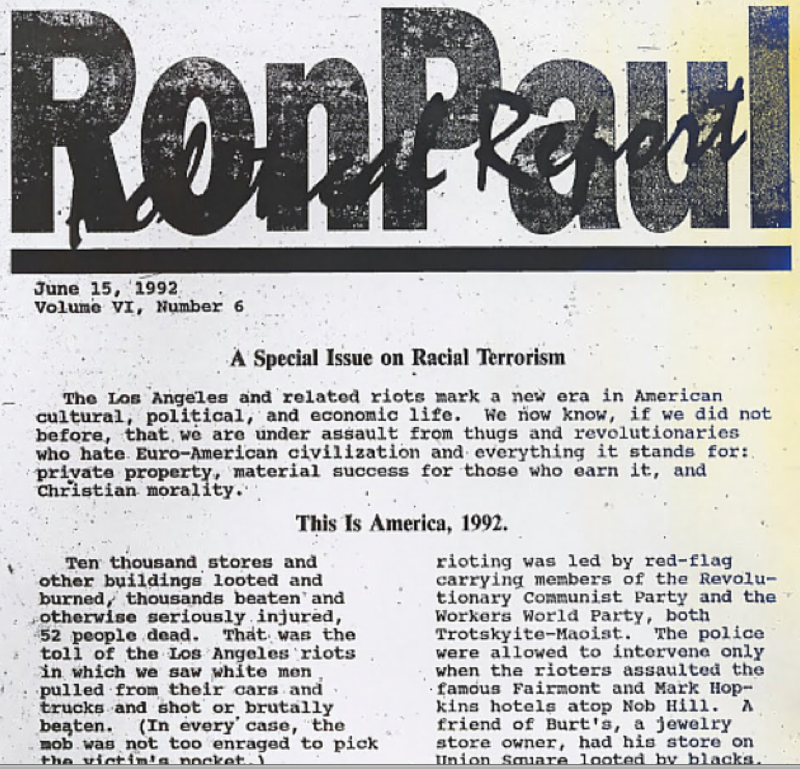
Ed Morrissey fears that Paul would be a disaster in the general election and mostly focuses on Paul's racist newletters in order to make his case:

What do Republicans who are considering Paul as the nominee think will happen if he wins a spot on the Republican ticket?  The Obama campaign will have a field day running these [newsletters] in advertisements and painting their opposition as entirely consisting of old racists, even if Paul starts issuing vague regrets for his newsletters and instructs people to read them in full context. The last two weeks have seen Republicans debate what Mitt Romney was thinking when he said he had “progressive views” in 2002 or when Gingrich was lauding FDR as one of the greatest presidents of all time even longer ago than that.  Aren’t these statements a few orders of magnitude more disturbing?

Jeffrey Lord piles on. Chait calls Paul a "huge racist":

The slight complicating factor is that Paul’s newsletter was unsigned, so even though it purported to express his views, he can plausibly deny having authored any single passage personally. But the general themes of white racial paranoia are so completely pervasive that the notion that they don’t represent Paul’s own thinking is completely implausible. It is possible that another contributor could have snuck in a line here or there that did not reflect Paul’s thinking, but they couldn’t have set the consistent ideological line for his newsletter. Paul may be a dissident from the main thrust of Republican policy-making but this is not because he’s more tolerant or more sensible than the leaders of the GOP. It’s because he’s crazier.

Dave Weigel points to his old reporting on the subject. In short: "Paul said he had no idea who wrote the letters, which wasn't very credible, but my sense was that he really didn't harbor the sorts of thoughts that appeared in the letter." Why Paul hasn't been attacked over his newsletters this campaign:

Paul's very strong in Iowa and strong in New Hampshire. But after those states vote, the race moves to South Carolina and Florida. The first state has always been one of Paul's weakest. The second state is simply too large for Paul's fans to overwhelm the vote like they can in Iowa caucuses or in the relatively small New Hampshire primary. They're mostly closed primaries, with no ways for liberal anti-war Democrats to boost Paul. So Republicans don't think Paul will grow beyond his new, fairly large subsection of the GOP. Paul only becomes a problem to them if the race continues to the caucus states that he performed very well in last time, where he's had extra time and money to organize.

Image of a Ron Paul newsletter from here. Jamie Kirchick exposed such material in the last presidential cycle. My response at the time here.

“Cairo Once Again Looks Like Bahrain”

Marc Lynch reacts to the violence in Egypt:

Today's sudden deterioration and brutal violence shows clearly that Egypt will remain unstable as long as the Egyptian military leadership fails to address core political grievances or impose any meaningful accountability for violence by its security forces.  What the SCAF has thus far done is clearly not enough. Egypt can't wait for the SCAF to transfer real power to an effective civilian government, end its abusive security tactics, and hold those responsible for the violence accountable.

Is Paul’s Position On Iran Popular?

Larison believes so:

The conventional wisdom is that Paul hurt himself politically by resisting the clamor for war against Iran, but I’m not so sure. Alone among the candidates on stage last night, Paul made the case for restraint and deterrence, and there is a much larger constituency for this inside the GOP than there once was. Huntsman might have benefited himself by presenting a more qualified position akin to the one Haass outlines in his essay on “Restoration Doctrine,” but he threw away any chance he had to sound reasonable on Iran long ago. That leaves Paul as the only one talking sense on avoiding another unnecessary war. Besides, his position on Iran isn’t as unpopular among Republicans as hawkish pundits would have you believe.

Last month, Rasmussen asked if the U.S. should take military action to prevent Iran from developing nuclear weapons “if diplomatic efforts failed,” and just 51% of Republicans said yes. 22% said no, and 27% were unsure. Paul has a chance to reach at least part of that 27%, and it is far from obvious that Paul alienated them last night.

Hitch Tributes: Remembrances From Readers

The outpouring of sentiment from the in-tray has been immense and ongoing, so it's only fitting that we give readers the final say for today. Hitch would love that. One writes:

I don't cry. Without fail I sleep interrupted, but for some reason tonight I awoke and got online for a bit after a drink of water. I read the very sad news and immediately went the Dish. Thank you for sharing what you wrote. I've been sitting here in the dark softly weeping.

Another writes:

Sorry if this topic is too personal, Andrew. I do not want to be intrusive. I have lost friends and cannot quite put in words or even hold consistent thoughts about it. I just wanted to send you a huge teary hug. I started to read Arguably yesterday. I had already read many of the essays there, but I had to keep reading him. Today I woke up to this news, went directly to the Dish to read it only in your words, and cried for the best bastard damn writer who made me nod in agreement as much as shake my head in exasperation. This one goes to him, to you, to your friendship, and to all the writings, passions, ideals, debates, disagreements, infuriating facts, pet peeves, anger, love, wonder and humanity that each of you shared with all of us.

Another:

I am truly sorry for the loss of your friend. I came to know about him through you and how deeply you cared for each other. I can only hope that his passing was peaceful and that he had his own version of "Oh, wow! …"

Another:

The concept of death bothers me most when we lose people of Hitchens' intellect. In him we had a mind of such depth and vibrance and complexity, and now he is – as a friend of mine put it upon the death of his father – "nowhere to be found". What writings and broadcasts he contributed are still there, sure. But the wellspring of knowledge that he was constantly refreshing has ceased to exist. I know this is an obvious statement, but that just doesn't seem fair – to build all that up, only to have it extinguished. Fuck death.

Another:

To use Kurt Vonnegut Jr.’s phrase, "And so it goes".  Lives were enriched, the good fight was fought, and if there IS an anthropocentric Heaven, you know he is there, kicking up dust and arguing with God.

Another:

I emailed yesterday about your recent thread on Hitchens, I hope it did not come off as rude. It is difficult to always remember that public figures are friends and colleagues firstly, and public symbols only after that.

Upon hearing the news I thought of something Vonnegut reported having said before a humanist organization when Asimov died: "Isaac is in heaven now," by way of honoring him through dark humor (both, of course, did not believe in an afterlife). While I, too, have no faith in an afterlife, I can imagine the spirit of Christopher Hitchens saying, "Rumors of my deathbed conversion have been greatly exaggerated."

Another:

I've spent the couples hours crying over a man I never met and only knew through his writings. This probably says something about my propensity towards sentimentality, but I would like to think that it says more about Hitch's prose. I came to find Hitch while looking for religious debates online and was so captivated by his charisma and eloquence that I made it a point to read as much of his work as possible. One could say that I came for the atheism, but stayed for the whole package. His weekly Slate column was a ritual, which was often the best part of my otherwise mundane Mondays. It is truly a marvel how the written word – when used masterfully – can make a stranger appear like an old acquaintance. I will truly miss him. If there is to be a public memorial, please keep us updated.

Another:

As a straight man, I'm not going to pretend to know what it's like to be gay, and to have to deal with all the difficulties arising from a society that still can't fully tolerate homosexuals in its midst.  That being said, I am part of a small, distrusted minority myself, being an atheist.  Consistent polling shows atheists are even less trusted than Muslims in this country, and while no one will ever try to pass a Constitutional amendment banning me from marrying the person I love, I learned to keep my thoughts on God under wraps with the women I've dated until we were well enough into our relationships.

Hitchens' greatest effect on me was to get me to be more proud of myself as an atheist, and come out of that "closet".  He made me realize that those of us who subscribe to no religious beliefs (some 16% of the US population) need to be out there and vocal about it in a time when one major political party in this country has been overtaken by a deranged religious fundamentalism.  We atheists can no longer hide from view in a time when an alliance of end-times Christian fanatics in Washington and messianic Jews in the West Bank and Jerusalem seem bent on bringing holy war to the all-too willing apocalyptic mullahs in Tehran.

Another:

Although I only once got to shake his hand (while nervously, star-struck babbling and knocking over his thankfully-empty water bottle), I can say with certainty that, in my 32 years on this dustball, no professor, friend or mentor was more important in my proper instruction on how to think (as opposed to what to think) than the writings of Christopher Hitchens. The shear force of his living, breathing example of unwavering committment to intellectual honesty has only just begun to resonate through our pinprick corner of the cosmos …

Another:

I remember being a sophomore in High School, a little black kid on the south side of Chicago, and being reduced to tears while trying to fend off verbal attacks from my best friends, and it all stemmed from my telling them that I did not believe in god. I remember desperately thinking, "I'm not fighting well enough. I'm alone on this and I can't defend myself!" and the tears were borne out of a frustration that if I were only somehow better, then I could at least make my friends respect my point of view, if not see what I saw.

It wasn't until I went to college that I found Mr. Hitchen's work, and where I initially went to school his words were rather fortifying. He was flawed, and I don't know what argument you could make that he was the best of men, but he was the kind of fighter that I wanted, and still want, to be. He was a man so comfortable and assured in what he knew that you could tell that he didn't just want to just challenge the thought or the line of the moment, but more to dominate the entire basis of an idea that it left his opposition questioning the foundations of their own argument. I know that at least for me, and a few others I know, there was some mean-spirited satisfaction in having the tables turned, but over and above that was the elation in finally having not only a voice, but one that can and would be heard.

Another:

My all time Hitch favorite was a discussion about the existence of God with Jon Meacham. It was a joy to behold no matter how you felt about the issue – Hitch, always bunched over, defending the soft underbelly of his never seen vulnerability. (And yet he always looked so vulnerable. How did he manage that?)

Another:

I've been reading and enjoying your work for years, but I've never felt compelled to write until now.  I know you'll get a million of these, but here's my Hitch story:

I once went to hear Hitchens speak in San Francisco. Afterward, he was signing books. I was broke and didn't have enough money for a book, but I got in line just to thank him for his articles denouncing Kissinger, which meant a lot to me and my parents, who were both deeply affected by the Vietnam War. I told him all this. He listened – he seemed as good at listening as speaking – and he asked me all kinds of questions. We talked for a bit, and finally he asked if he could sign something. I told him I didn't have enough money for a book. Without hesitating, he pulled one off the pile, asked for my parents' names, and inscribed the book to them. One of the best moments of my life. I loved the man. He's left the world to a bunch of fucking lightweights, but we have to try our best.

Another:

I know you'll get a lot of mail on this today, and there will be a lot of talk about Hitchens legacy for the obvious things; his atheism, his distrust of naive liberal equivocation re: Iraq and Islamic fundamentalism. But I think more needs to be said of his prose, particularly in his shorter reviews. When I was in my early twenties I first discovered Hitchens in the back of The Atlantic alongside Ben Schwartz and Sandra Tsing Loh. More so than any other writer I can think of, save perhaps Martin Amis (with whom of course he was good friends), Hitchens' work whether I agreed with it or not (his book reviews were marvelous) inspired me to want to write each and every time I read it.

It was so free of the nervous, sterile magazine writing that is too often the standard in the print publishing world. Hitch, whether from a boozy after glow or whatever, said fuck you to all that, avoided easy references or throw away cliches. The vast, joyous creativity behind it spoke to something in my head and encouraged me to forge on whenever the editor in my brain (or sometimes in real life) told me to pick up sticks and try something else. Today I work at a media company as a sports writer among other more gifted people, and I'm amazed how at all levels of the professional writing world how we can all cite various Hitchens pieces we've read, whether in Slate, The Nation, or The Atlantic. It's too often said but in Hitchens' case it applied: he was a writers' writer.

One more:

If you get hold of his new e-mail, please tell him that one fan just smoked a delicious cigarette, five years after quitting, in his honor.

The Last Word

From his last interview, with Richard Dawkins. And yes, it sums up all he stood for and believed in:

RD I've always been very suspicious of the left-right dimension in politics.

CH Yes; it's broken down with me.

RD It's astonishing how much traction the left-right continuum [has] . . . If you know what someone thinks about the death penalty or abortion, then you generally know what they think about everything else. But you clearly break that rule.

CH I have one consistency, which is [being] against the totalitarian – on the left and on the right. The totalitarian, to me, is the enemy – the one that's absolute, the one that wants control over the inside of your head, not just your actions and your taxes. And the origins of that are theocratic, obviously. The beginning of that is the idea that there is a supreme leader, or infallible pope, or a chief rabbi, or whatever, who can ventriloquise the divine and tell us what to do.

He was Orwell's heir in this. And we have lost a comrade in the struggle ahead.

I have to stop now. I need to sleep. I managed only a few hours last night. Normal service – provided by the Dish team – will resume shortly.

Hitch Tributes: Keeping The Aspidistra Flying II

Hitch_Moore

Scott Eric Kaufman:

I know I’ll take flack for this, but honestly, the reason the left reviled Hitchens as strongly as it did was because it realized that it had a formidable opponent. For the most part, the left argues with the likes of Grover Norquist, whose influence is undeniable but whose skills are very much comparable.

PM Carpenter:

Hitchens' proper and, I might add, honorable legacy will be his detestation of conformity of thought, an unintellectual malady nearly as pandemic throughout the progressive community as it is on the right. 

Timothy Noah:

As a writer, he made intuitive leaps that occasionally got him into serious trouble. In Hitchens's evidentiary arithmetic, 2 + 2 might equal 4 or it might equal 573. But he was never dull, and he never failed to teach you something you didn't know, even on topics you thought you knew fairly well. He was astonishingly well-read, so much so that when I heard him confide, in the early 1990s, that he had never read any novels by the Nobel prizewinner Toni Morrison (she was sitting in his living room at the time; somebody famous was always sitting in his living room) I had difficulty absorbing the news that there was anything Christopher hadn't read. 

Mark Gordon:

Obviously, I didn’t agree with Hitchens on much, especially his atheism and his perplexing defense of the war in Iraq. But in a country where the public discourse grows more stupid by the day – where stupidity is even counted as a qualification for high office in some quarters - Hitchens was a reminder that there is great value in intelligence, clear articulation and the honest search for truth. Hitchens found the claims of the Christian faith wanting, even perverse. But he took them seriously, in a way even many Christians do not. He challenged Christians to defend the often contradictory practice of our faith, and to reconcile the seeming absurdity of its assumptions with the hard truths of the world around us. I never viewed Hitchens as an enemy of Christianity, but he was one of its most severe critics. And thank God for that. The honest critic is always a friend of those who seek the truth.

Jane Mayer:

Hitch lived so large, and so beyond the rules, that his mortality seems especially hard to accept. I remember the day some eighteen months ago when he told me that he was mortally ill. He had missed a few stops on his book tour, which wasn’t like him, so I called to see if he was all right. “No,” he said frankly. “I’m not. I have cancer.” I was so stricken for the next few days that I couldn’t get much work done. Then I noticed that during the time that I was using his illness as an excuse to procrastinate, he had himself authored a handful of brilliant pieces. I couldn’t work, but he couldn’t stop working. He was a born writer, whose irrepressible talent and verve put most of the rest of us journeymen to shame.

Radley Balko:

I’ve also long admired Hitchens’ willingness to trample on the tradition of venerating the recently dead. Some people don’t deserve veneration. (Though I didn’t always agree with his assessments.) I imagine we’ll see some of Hitchens’ detractors attempt to out-Hitchens him on that front in the coming days. And I imagine he’d have appreciated a well-executed corpse-prodding as much as the glowing tributes.

Charles Glass:

Christopher never resisted attacking his chosen enemies, but he would assail friends as well. As Christopher Buckley recalls on the New Yorker website, in a touching reminiscence of their friendship, he unleashed several thousand words in the Atlantic against his closest friend, Martin Amis, on the subject of Stalin. He also criticised another friend Edward Said, who was himself dying of leukaemia at the time, in the same magazine. It was the only time Christopher and I had a falling out. I thought it was bad form, but he reminded me that Edward was too honest a man to expect a free ride because he was ill. (I see that Edward's daughter, the actress Najla Said, forgave Christopher and now laments his passing.) Yet most of Christopher's friendships survived, including the one with me. It did not matter that he hated my Catholicism and I was indifferent to his atheism. Each of us believed the other was wrong about the American invasion of Iraq and said so. Life would be duller than it is if friends agreed on everything.

Fred Kaplan:

He shouldn’t be sentimentalized. Hitch could be a real shit if you fell on the wrong side of his favor. Among our mutual friends, he had fallings-out, in some cases multiple ones, with almost every one of them. And yet, at some point, they always fell back in. He was too irresistible and, in a pinch, too good a friend.

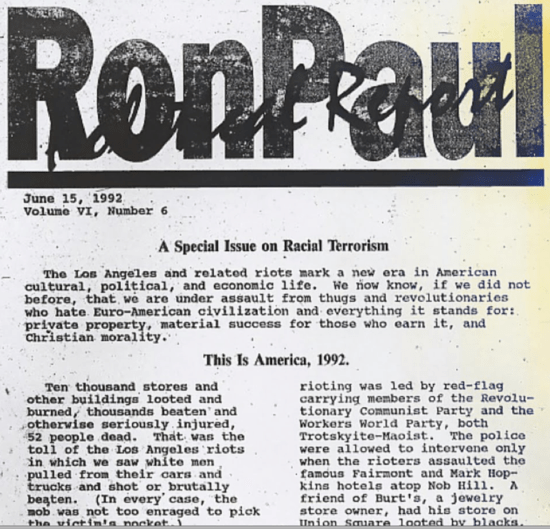
The image above comes from Buzzfeed's round up of Hitch quotes.

“Love, Hitch”

It was how he ended every email. Love. English, yes. But also such a deep generosity of heart and compassion and gentleness, disguised by his public bravado. A reader reminded me of this moment at a party at his house. A glimpse of remembered friendship through my now suddenly unstoppable tears:

Inside, Hitchens opined on whether the Obama administration should answers calls from the left to prosecute Bush administration officials for illegal interrogation of prisoners: “As long as it's agreed that these steps were taken in response to public demand,” he began, only to be interrupted by Andrew Sullivan, who greeted him with a hug and a kiss. “I want tongue. Give me tongue,” Hitchens implored, to no avail. “No, I'm not giving you tongue,” Sullivan replied, feigning astonishment. “Let the record show: Sullivan wouldn't give tongue,” Hitchens replied. (“He's gayer than I am!” Sullivan later told us.)

Another clip from the Russert-me-Hitch interview after the jump. We discuss the role of religion in one of our rare public discussions on this subject: