Iowa Tea Leaves

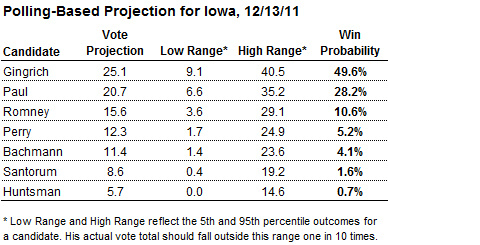
Iowa_Projection

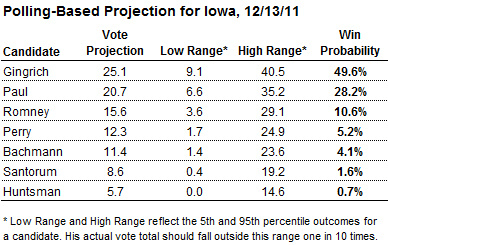
Nate Silver's initial reading of them:

The most important ground rule is that the forecasts are based on one type of information and one type of information only: state-by-state polls. You are absolutely welcome to consider other objective and subjective factors in addition to the state polls. We will continue to discuss those factors on this blog. We think these forecasts provide a valuable perspective but that doesn’t mean that you should ignore everything else. However, building a well-calibrated forecast from the polls is challenging enough given the uncertainties inherent in primary polling, and so that’s what we’ve decided to focus on rather than anything fancier.

Quote For The Day

“I’m just going by my gut. I shook the guy’s hand, looked him in the eye and he has no soul. I don’t see a conviction. I don’t see a leader. I feel like I’m talking to a robot. I’ve talked to all the other candidates and none of them gave me the vibe that Gingrich did. He is not a guy you want to go have a beer with,” – Judd Saul, a Tea Party member and GOP activist from Black Hawk County.

Can The President Fire The Fed Chairman?

Forced to explain that "traditionally, Fed chairs and presidents act in concert and without partisanship," Joseph Lawler examines whether a President Gingrich would have the power to let the Bush appointee go as promised:

If Gingrich were elected president, he would find getting rid of Bernanke to be a difficult task. The Fed is structured to remove the influence of politics from monetary policy. Accordingly, the president nominates candidates for the Board of Governors, but, once approved by the Senate, the governors are granted 14-year terms that can't be cut short by the executive branch. The chairman of the Board of Governors, also nominated by the president, is limited to four-year terms, but after he's confirmed the president has no authority to remove him unilaterally. Furthermore, the chairman is also a member of the Board of Governors, so even if President Gingrich were to replace Bernanke when Bernanke's term expires in 2014, Bernanke could choose to fill out the remainder of his 14-year term as a governor.

An Iowa Gaffe

In the Kinsley sense. Here's what Gingrich's Iowa political director, Craig Berman, said in a focus group that oddly included the names of various players:

“There is a national pastor who is very much on the anti-Mitt Romney bandwagon,” Craig Bergman said. “A lot of the evangelicals believe God would give us four more years of Obama just for the opportunity to expose the cult of Mormon…There’s a thousand pastors ready to do that.”

He's now fired. But this was a broad consensus among the participants:

Judd Saul agrees that Mitt Romney faces problems with evangelicals. “They won’t vote for a Mormon,” he said.

Polk County GOP Co-Chair Dave Funk believes Romney can defeat Barack Obama in the general election, but the Republican Party as a whole would be better off with another candidate. “The thing with Romney is, we don’t get coattails,” Funk said. “We don’t get the Senate with Romney at the top of the ticket.  He’s able to grab enough independents and Democrat to beat Obama. However, we don’t turn out three million evangelicals to vote in every school board and local election.”

Digitally Touring Post-Tsunami Japan

View Larger Map

Google unveils a new project:

Back in July, we announced our initiative to digitally archive the areas of Northeastern Japan affected by the March 11 earthquake and tsunami. Today, we’re making good on that promise—after driving more than 44,000 kilometers through the affected regions, 360-degree panoramic imagery of those areas is now available through the Street View feature in Google Maps. The images can also be viewed via a special website called “Build the Memory,” where you can easily compare before and after shots of the towns changed by these events.

The Brains Of London Cabbies

In order to drive a taxi in London, applicants have to undergo an intense test of London's 25,000 roads and 2,000 landmarks. For the last 11 years, Eleanor Maguire has studied the brains of those who pass. Ed Yong recaps:

An enlarged hippocampus is a rare feature. You don’t see it in doctors who gain vast amounts of knowledge over many years. You don’t see it in memory champions who have trained themselves to remember seemingly impossible lists. You don’t see it in London’s bus drivers who have similar driving skills but work along fixed routes. Among all of these groups, only the London cabbies, with their superb spatial memories, have swollen hippocampi.These studies strongly suggested that their intensive training was the reason for the changes in the taxi drivers’ brains.

Maguire's takeaway:

We’re in a situation where people are living longer and often have to retrain or re-educate themselves at various phases in their lives. It’s important for people to know that their brains can support that. It’s not the case that your brain structure is fixed.

Is The GOP Base Prepared To Re-Elect Obama?

GT_GOLDWATER_111213

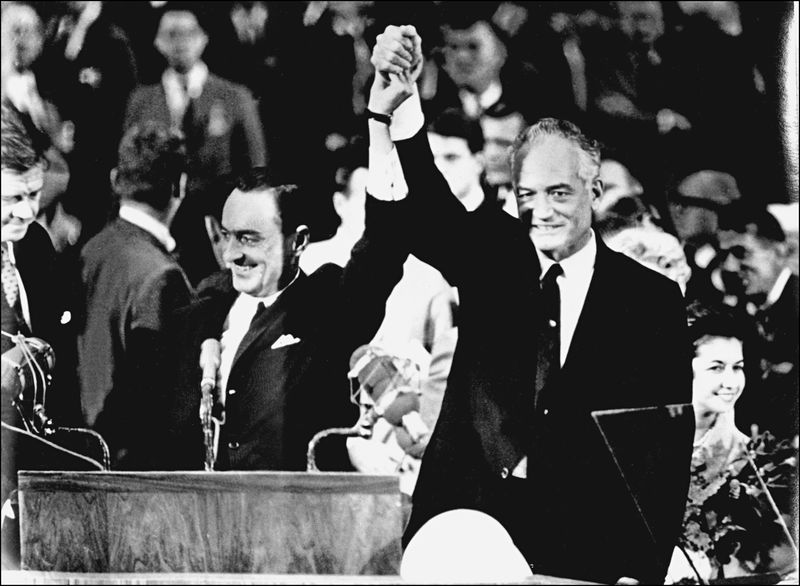
Noting that the current Republican Party platform consists of positions that "range from unpopular to very, very unpopular with the public as a whole," Jeffrey Toobin draws an analogy between 2012 and 1964: 

In 1964, Republican insurgents seized control of the party. They recognized that their views were not held by a majority of Americans—at least not yet. As Rick Perlstein wrote in “Before the Storm,” his fascinating history of the Barry Goldwater campaign, the Republican Party was taken over by “a little circle of political diehards whose every move was out of step with the times”—which did not bother them much at all. For their moment, they were political missionaries who came to introduce a nation raised on the New Deal to an alternative approach to governing. Goldwater embraced “extremism” in the fond hope that its time, if not his time, would come. Goldwater and his aides didn’t spend a lot of time worrying about “electability.” They didn’t expect to win, and, emphatically, they did not. Lyndon B. Johnson won sixty-one per cent of the popular vote, and carried forty-four states. 

Paul Waldman adds

[F]or the base of the party, beating Obama may be a secondary goal, and this is where the 1964 comparison makes the most sense. As Ed Kilgore explains, "the conservative activists who dominate the Republican presidential nominating contest are split between those who simply don’t believe adverse polls about Gingrich, and those who would rather control the GOP than the White House, if forced to choose." If this is a conflict between the establishment, which would rather nominate Romney, and the base, which would rather (at this point anyway) nominate Gingrich, then right now the establishment is losing, and they don't have too many ways of stopping Gingrich if he were to win the early contests.

(Photo dated 17 July 1964 shows then presidential hopeful Barry Goldwater (R) and his running mate William Miller accepting the Republican Party nomination in San Francisco. AFP/AFP/Getty Images.)
What Makes A Murderer?

Ari Kohen explains how the psychology of murderers supports research suggesting there is no deterrent effect:

The inmates on death rows across the country are a fairly uniform bunch. They are poor, they are male, and roughly half of them reside in only four states, California, Florida, Texas, and Pennsylvania.[2] They are often addicted to drugs or alcohol; they are the losers in our society, on the bottom rung of the ladder. Many of them –- and, indeed, convicted felons in general -– view the world and their place in it quite differently from the way those who hold to the idea of deterrence would expect. As Howard Zehr (54) argues, “If success comes, it is associated more with luck than hard work. If they are arrested for an offense, it has more to do with luck than something they did. Whether or not they do have the power to make real choices, many do not believe that they do.”

The implications of this sort of thinking are serious, for deterrence necessitates a belief that we choose what we will do in any given situation.

Earlier post by Kohen here. Dish mini-thread on whether the death penalty has a practical purpose here and here.

Democracy In A Religious Egypt

GT_EGYPTISLAM_111213

Michael Totten gets worried about proposed restrictions on the freedoms to drink alcohol and wear bikinis:

We’ve heard a lot of talk recently about how the Muslim Brotherhood will supposedly follow the Turkish model of moderate Islamism if it comes to power, but I wouldn’t count on it. Egypt’s Islamists aren’t even in power yet and some of them are already talking about the imposition of theocratic rules on people who are neither Egyptian nor Muslim. Erdogan, by contrast, has been Turkey’s prime minister for almost nine years, and he hasn’t yet done this.

Issandr El Amrani is also peeved. Juan Cole and Martin Kramer spar over whether the Muslim Brotherhood has taken the even more worrying step of praying for the murder of "all the Jews." Lauren E. Bohn zooms in on the struggle for democracy in the more rural Upper Egypt region.

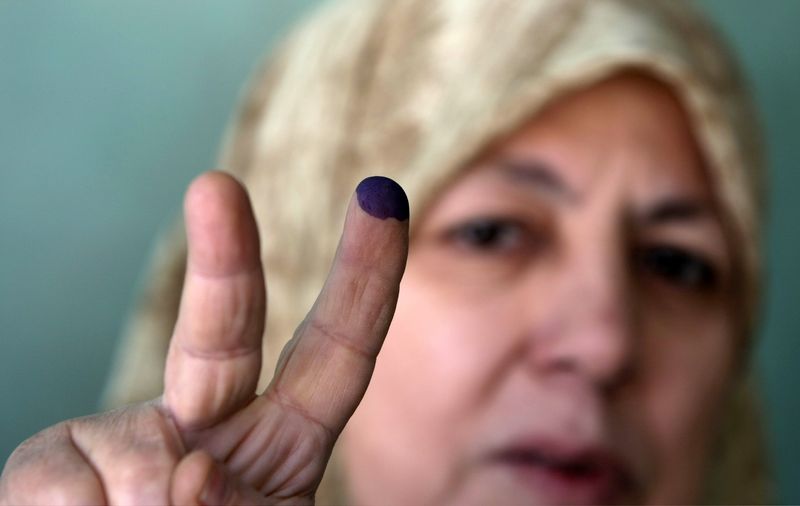
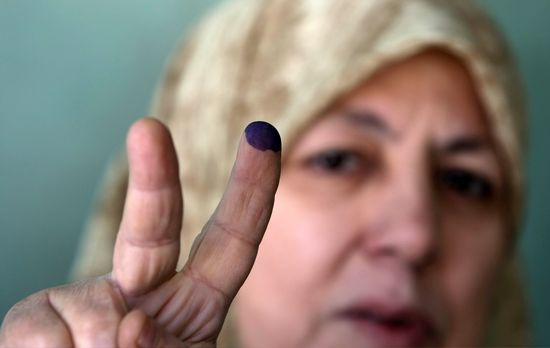
(Photo: An Egyptian woman shows her ink-stained finger during the run-off of the first round of parliamentary voting in the Cairo neighbourhood of al-Manial on December 5, 2011. Islamist candidates in Egypt looked to extend their crushing victory in the country's first parliamentary elections since the toppling of Hosni Mubarak as voters turn out for run-off polls. By Mahmud Hams/AFP/Getty Images.)

Is Facebook Making Us Unhappy?

Daniel Gulati worries

I monitored and observed how Facebook was impacting the lives of hundreds of young businesspeople. As I went about my research, it became clear that behind all the liking, commenting, sharing, and posting, there were strong hints of jealousy, anxiety, and, in one case, depression. … Since our Facebook profiles are self-curated, users have a strong bias toward sharing positive milestones and avoid mentioning the more humdrum, negative parts of their lives. Accomplishments like, "Hey, I just got promoted!" or "Take a look at my new sports car," trump sharing the intricacies of our daily commute or a life-shattering divorce. This creates an online culture of competition and comparison.