What Defines Acting?

Andy Serkis, the actor behind Gollum and a star of the new Tintin movie, rubbishes the distinction between motion-capture performances and "real" acting:

[T]he acting part of the process is entirely the same. I've been bombarded by hate mail from animators saying, "How dare you talk about 'your' character when all these people work on it after the fact? We're actors as well." They are actors in the sense that they create key frames and the computer will join up the dots, carefully choreograph a moment or an expression and accent it with an emotion. But that's not what an actor does. An actor finds things in the moment with a director and other actors that you don't have time to hand-draw or animate with a computer.

Alyssa Rosenberg complicates the claim:

[T]here’s a difference between technological alteration without which a performance could not exist, and post-production work that tweaks or modifies a performance or a set but that does not constitute the core of the work. Our current awards categories don’t provide appropriate recognition to the first category of technological and post-production work. I want Serkis to get piles of statues. I just think we have to find a way to acknowledge the interactive nature of the work. 
Abuse Is Like War

For the brain:

[A recent study] compared fMRIs from abused children to those of 23 non-abused but demographically similar children from a control group. In the abused children, angry faces provoked distinct activation patterns in their anterior insula and right amygdala, parts of the brain involved in processing threat and pain. Similar patterns have been measured in soldiers who’ve seen combat.

Worrying About An Arab Winter

GT_ARABSPRING_111205

Daniel Byman starts to:

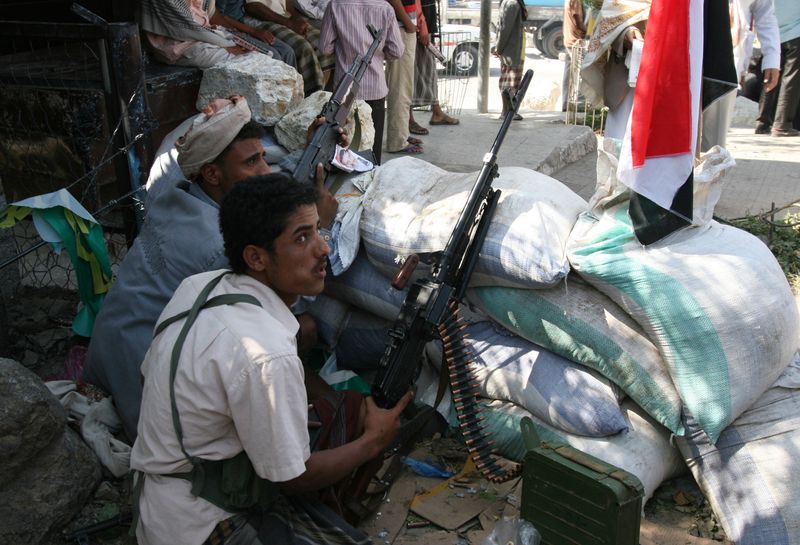
The most dangerous outcome of the Arab Winter … is the spread of chaos and violence. In Syria, where thousands have already died, the body count may grow exponentially as sectarian killings spread and peaceful protesters take up arms. In Yemen, the resignation of Ali Abdullah Saleh has not ended the turmoil throughout the country. And Libya, lacking strong institutions and divided by tribal and political factions, may never get its new government off the ground.

Bernard Finel thinks Byman's conclusion – that the US should help shepherd emergent democracies – is misguided:

I think the worst of both worlds would involve the United States ineffectively intervening in regional affairs in order to promote stability, but in the end getting both costly instability and the blame for having failed to prevent it. Our orientation ought to be one of mitigation by distancing ourselves as best we can from problematic developments, and working to find other ways to pursue economic (i.e. energy) and security (i.e. counter-terrorism) goals. 

Paul Pillar cautions against overreacting to Islamist election victory. Jack Goldstone is relatively hopeful about prospects for Egyptian democratic stability. Salman Masalha puts the recent uprisings in the broader historical context of failed Arab nationalism.

(Photo: Yemeni men guard a position in Taiz, south of the capital Sanaa on Derember 5, 2011, after forces loyal to Yemeni President Ali Abdullah Saleh shot dead a woman and wounded six other people when they opened fire on a crowd of protesters. By STR/AFP/Getty Images.)

Be Grateful You Were Born When You Were

Cheeseburgers weren't possible before the 20th century:

Tomatoes are in season in the late summer. Lettuce is in season in in the fall. Mammals are slaughtered in early winter. The process of making such a burger would take nearly a year, and would inherently involve omitting some core cheeseburger ingredients. It would be wildly expensive-requiring a trio of cows-and demand many acres of land. There's just no sense in it.

A cheeseburger cannot exist outside of a highly developed, post-agrarian society.

Meanwhile, The Planet Groans

David Roberts draws an unpleasant conclusion from a new paper [pdf] on climate change:

If there is to be any hope of avoiding civilization-threatening climate disruption, the U.S. and other nations must act immediately and aggressively on an unprecedented scale. That means moving to emergency footing. War footing. "Hitler is on the march and our survival is at stake" footing. That simply won't be possible unless a critical mass of people are on board. It's not the kind of thing you can sneak in incrementally.

And it isn't happening. Indeed, one major political party denies climate change at all, and wants to double down on carbon. The gains made under Obama – largely through the stimulus and through the new gas mileage moves – are not enough. Which is why one thinks of geo-engineering as a last resort. I still hope that technology will eventually save the planet from too drastic a change (like the experiments in genetically saving the Great Barrier Reef). I just don't know whether it will happen in time to save entire ecosystems.

Can Plants Think?

2662362308_9010e47d07_b

Alva Noë wonders:

Plants reshape themselves — extending, growing, opening, closing, altering leaf size, etc — in direct response to what they need, what they have good reason to shun and to a broad range of local conditions. In developing underground networks of roots, they show sensitivity to obstacles in the ground, and there is evidence that they differentiate their response to the roots of other plants from their response to their own roots.

Granted, by human and animal measures, plants are very slow. But surely it is prejudice to think that only movements and responsiveness that occurs on time scales that seem natural to us count as legitimately expressive of intelligence and mind.

(Photo via Flickr user Ebonezer)

Is Having Children A Right?

Jean Kazez defends the idea:

At a genetic level, and on a psychological level, having a child has much in common with self-preservation, even if it's not identical to self-preservation.  Yesterday I heard a Libyan woman interviewed on the radio. Her husband was Libyan broadcaster Mohammed Nabous, who who was killed by a sniper while speaking to his wife on a cell phone last spring — she was 7 months pregnant at the time.  She had wanted to be out there reporting with him, she tells the interviewer, but knowing their child was on the way made him able to face death.  He wanted her to stay safe.  On some level, having a child is surviving–at least that's how many people feel, and on a genetic level, there's a least a kernel of truth to their feeling… If reproduction is erstatz survival, the right to self-preservation applies (more or less) to reproductive decisions as well.

Why Have The Arab Monarchs Survived?

Shadi Hamid theorizes:

Kings … manage to still be autocrats but in a less overt way, which is in part what makes their reign more acceptable to their people. Where Egypt, Tunisia, and Libya resorted to flagrantly rigged elections, monarchs in Jordan, Morocco, Bahrain, and Kuwait hold reasonably free polls and permit legal opposition. It just so happens that these elections determine relatively little of real importance. Decision-making authority remains with the king and the cabinets that he appoints. These regimes have been able to create the illusion of reform even as they strengthened their grip on power. Jordan went from having, in 1992, the best ever Freedom House scores for an Arab country to full-blown authoritarianism fifteen years later. 

David Schenker analyzes the monarchies' moves against Assad as an international version of this strategy.