Quote For The Day II

"One of these days we’ll have a conversation about Newt Gingrich … I know a lot about him. I served on the investigative committee that investigated him, four of us locked in a room in an undisclosed location for a year. A thousand pages of his stuff," – Nancy Pelosi

Brian Beutler translates: "if Gingrich somehow clinches the nomination, there’s one hell of an oppo dump coming."

Thank Newt For Your Online Porn

He stood up to Senator Jim Exon's amendment to the 1996 Communications Decency Act. The amendment would have criminalized the transmission of "indecent" materials over the Internet:

[T]he law could even have criminalized the online distribution of Gingrich's first novel, 1945, in which a "pouting sex kitten"—who is also a Nazi—seduces a White House aide in order to extract classified information. It would also have prohibited most non-Will Smith forms of hip-hop. "[The amendment] is clearly a violation of free speech and it's a violation of the right of adults to communicate with each other," Gingrich said at the time. "I don't agree with it…"

Peace Process Death Watch

134852981

Marc Tracy notes the latest impasse:

In compliance with the Quartet’s timeline, the Palestinian Authority actually submitted a peace proposal. As far as opening positions go, it sounds not bad: borders based on the Green Line but with two percent of the West Bank land swapped; a largely demilitarized West Bank; and permission for Israel to maintain a force along the Jordan River. It is Prime Minister Netanyahu’s turn to respond—and he hasn’t and says he won’t, not unless he gets direct negotiations, which he knows can’t be effective without unity, and which he knows that, with unity, would mean negotiating with Hamas, which he knows most of the world would see as a reasonable deal-breaker.

So, dead as a doornail. Merry Christmas.

Which is, of course, great news for AIPAC. The Atlantic recently released a multi-media report on whether there are any terms both sides will accept, focusing on four areas: borders, security, refugees, and Jerusalem. An overview of the project here. Updates here. A rare American protest against growing fundamentalist pressure on women's freedoms in Israel here.

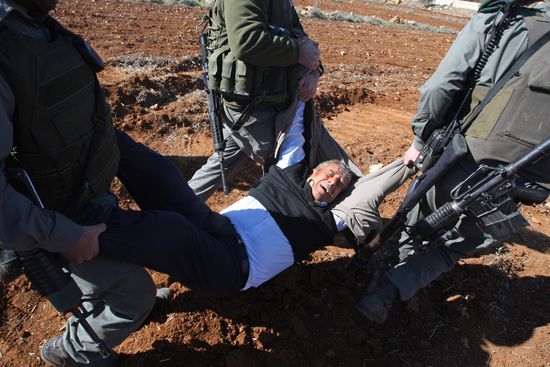
(Photo: Israeli soldiers drag away a Palestinian man as people gather to prevent bulldozers from reaching their farming lands which are due to be levelled in order to build a section of the controversial Israeli separation barrier and expand the nearby Jewish settlement of Atarot on December 4, 2011. Photo by Abbas Momani/AFP/Getty Images)

Newt and Mitt: Reverse Hockey Sticks

Romney_Gingrich_Early_States

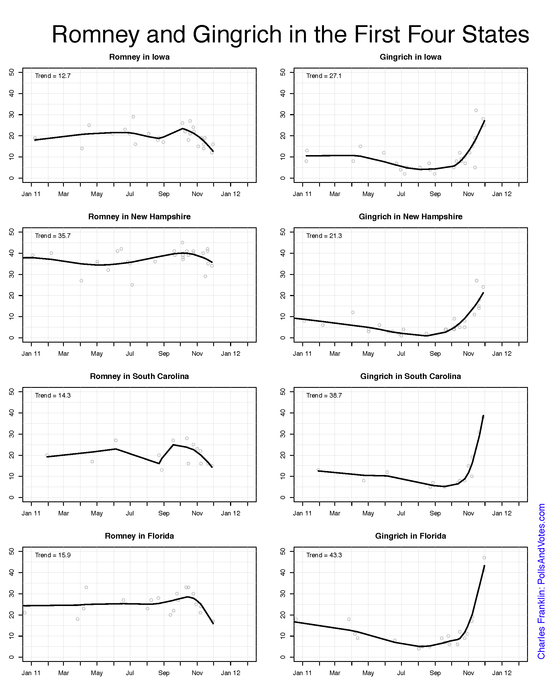
Charles Franklin studies Romney's decline:

With a lot of attention focused on the collapse of the Herman Cain campaign and the sudden rise of Newt Gingrich I think we’ve missed an important downturn in Mitt Romney’s standing in the first four states. Since mid-September he has experienced significant downturns in all four states that will vote in January. Romney is down about 10 in Iowa, 5 in New Hampshire, 10 in South Carolina and 14 in Florida. His recent increase in effort in Iowa may have less to do with trying to win than with attempting to shore up weakening support there.

Has The Iran War Already Begun?

GT_BASIJ_111201

Goldblog, reacting to several mysterious explosions at Iranian nuclear sites, puts his thinking cap on:

I'm not entirely convinced, but it's not unreasonable to group these recent explosions with the Stuxnet virus of last summer that haywired an uranium enrichment facility in Natanz; last October's explosion at a Shahab missile factory; the killing of three Iranian nuclear scientists in the past two years, last November's attempted assassination of Fereydoun Abbasi-Davan–a senior official in the nuclear program — and rumblings of a second supervirus deployed this month as proof that the West's war on Iran's nuclear program is getting less covert by the minute.

Michael Totten feels somewhat similarly. There are also signs that the electronic war against the nuke program has been more successful than we previously believed. But nobody told Max Boot:

Western policymakers have implicitly made the same assumption today that their predecessors made in the 1930s, 1940s and 1990s: that an immediate war, even one fought on favorable terms, is to be feared more than a looming cataclysm that is likely to occur at some indefinite point in the not-too-distant future. That was the right decision to make with Stalin's Russia; it was tragically wrongheaded with Hitler's Germany and the Taliban/Al Qaeda.

Matt Fay and Michael Cohen are decidedly unimpressed with Boot's argument. I'd simply point out something that seems beyond most commentators. The US was rightly outraged by Iran's plot to kill the Saudi ambassador in Washington; but what about the targeted assassinations of Iranian nuclear scientists? If Iran started assassinating American scientists, would we not make a stink? Don't get me wrong: sabotage of Iran's nuclear program is easily the best way forward, along with sanctions. But killing individuals seems to me an over-reach we could come to regret.

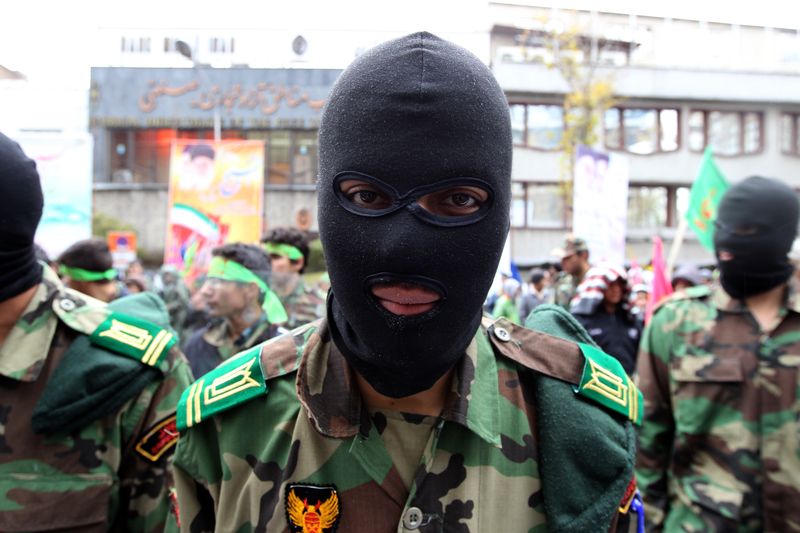
(Photo: Members of Iran's paramilitary Basij militia parade in front of the former US embassy in Tehran on November 25, 2011 to mark the national Basij week. Iran has dismissed a US news report implicating it in a chemical weapons cache uncovered in Libya, saying it was a champion in fighting to eradicate such arms. By Atta Kenare/AFP/Getty Images.)

Could Teen Promiscuity Lower STDs?

Marina Adshade considers a controversial fix to the high rate of sexually transmitted diseases among teenagers:

If in a sex scene (like a high school), there is only one girl who is willing to have sex for every 10 boys who are willing to have sex, then if one person in that scene contracts an STI, everyone else will become infected as well. This is because all the boys are having sex with the same few girls who are willing to be promiscuous. Increase the number of girls willing to having sex, however, and according to the theory the risk of contracting an STI decreases. This is because now each girl is now having sex with fewer men.

Merkozy’s Deal

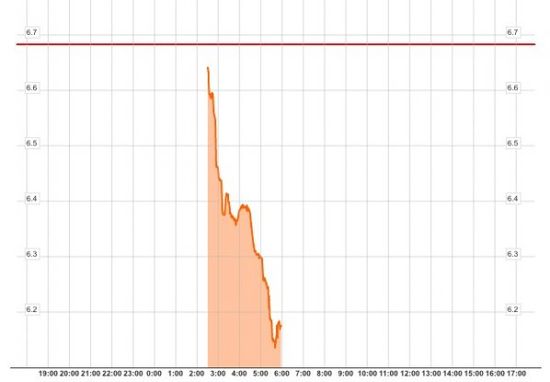
Chart The chart above is of Italian bond yields, which have fallen sharply after appointed prime minister Mario Monti unveiled $30 billion of spending cuts. Meanwhile, Merkozy has called for a new EU Treaty, which, so far, seems all German discipline and no real leap to fiscal union:

• Automatic sanctions for breaching deficit ceilings of 3pc of GDP. • Introduction of qualified majority – 85pc – for reforms. • Monthly meeting of eurozone leaders until crisis ends. Focus to be on growth in Europe. • Eurozone governments must work towards balanced budgets. • Speed up implementation of European Stability Mechanism to 2012. • ECB’s role to remain unchanged – will not be lender of last resort. • No eurobonds.

It doesn’t sound radical enough so far as I can see. Why? Because the root cause is the imbalance between North and South, and merely disciplining the South doesn’t help that. If anything, it perpetuates it:

Historians can only smile, or weep. Germany is unwittingly doing to Spain exactly what America did to Weimar Germany after flooding the country with cheap capital in the late 1920s. When Wall Street cut off funds and ended the credit boom, Germany collapsed. There was a chorus of self-righteous pedants in Hooverite America who turned this into a question of cultural ethics, reproaching the Germans for lack of discipline and failing to work hard enough. Sound familiar?

And where’s the backstop without eurobonds or the ECB? Evans Pritchard again:

No doubt there will be a “bazooka” of sorts, a mish-mash of big talk on the EFSF bail-out fund, with IMF flanking operations, and accompanying ECB action to keep banks afloat for longer, all cloaked in a fiscal union that isn’t what it seems.

Mandarins will slip the figure €1 trillion somewhere into the communiqué to nourish a hungry media. In other words, we may just have to hunker down yet again and wait for Germany to blink at last, or detonate the fuse.

Michael White in the Guardian:

The issues to be resolved between here and Friday are highly technical and it is clear that the heavyweight policymakers and analysts do not agree on what should best be done. A big enough bailout to get Europe moving again is full of risk – not least that indisciplined countries will become indisciplined again – but the austerity model is beyond risk: it is certain to impoverish most of us, though not the central bankers.