What Putin Was Reduced To

Two cheers for moderate democracy! Putin decided it was unwise to stuff the parliamentary ballots so crudely that he might capsize his own presidential "election" next Russia – but still United Russia saw its vote collapse. The rigging was still there, of course, it's just that the loss was so big it couldn't be thoroughly disguised:

Petros Efthymiou, who led the short-term O.S.C.E. observer mission, said the elections “proved that the Russian people can form the future of this country by expressing their will despite many obstacles.” “However, changes are needed for the will of the people to be respected,” Mr. Efthymiou said. “I particularly noticed the interference of the state in all levels of political life, the lack of necessary conditions for fair competition and no independence of the media.”

Ambassador Heidi Tagliavini, who headed the mission of the O.S.C.E.’s Office for Democratic Institutions and Human Rights, compared the elections to “a game in which only some players are allowed on the pitch, and then the field is tilted in favor of one of the players.”
Where Do Dogs Come From?

East Asia, apparently. Dave Schuler elaborates on the study's findings:

If you go back a thousand years or so ago, before world commerce exploded, there was more morphological diversity in dogs in East Asia than anywhere else. Whereas in the west there were a relatively small number of types and characteristics, e.g. mastiffs, coursing dogs, etc., in Asia there were all of those characteristics and more, some of which have barely filtered to the rest of the world even today. … Wherever there’s the most genetic diversity is a pretty good place to look for the place of origin.

The Post-Industrial Dilemma

Kay S. Hymowitz captures it through an essay on the revival of Brooklyn:

[T]he borough is a microcosm of the nation’s "hourglass economy." At the top, the college-educated are doing interesting, motivating work during the day and bicycling home to enjoy gourmet beer and grass-fed beef after hours. At the bottom, matters are very different. Almost a quarter of Brooklyn’s 2.5 million residents live below the poverty line—in the housing projects of East New York, in the tenements of Brownsville, or in "transitional" parts of Bushwick and Bed-Stuy, all places where single-mother poverty has become an intergenerational way of life. Between 2000 and 2010, the percentage of the area’s population on welfare did decline markedly, but the number of Medicaid recipients almost tripled, to nearly 750,000. About 40 percent of Brooklyn’s total population receives some kind of public assistance today, up from 23 percent a decade ago. 

The Life Cycle Of A Banana

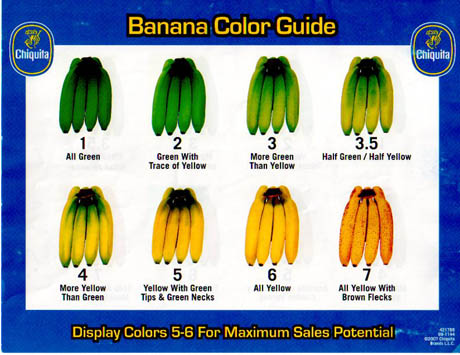
Banana-Colours001

Nicola Twilley follows the fruit's journey to the US:

Bananas are cut while green, hard, and immature, washed in cool water (both to begin removing field heat and to stop them from leaking their natural latex), and then held at 56 degrees — originally in a refrigerated steamship; today, in a refrigerated container — until they reach their country of consumption weeks later. What this means is that ripening must then be artificially induced, in a specialized architecture of pressurized, temperature- and atmosphere-controlled rooms that fool the banana into thinking it is still back on the plant in tropical Ecuador. 

Is The Laff Box Earning Its Keep?

Josef Adalian investigates whether a laugh track, still used in sitcoms today, makes audiences think jokes are funnier:

A 1974 study published in The Journal of Personality and Social Psychology suggested that laugh tracks did prompt some laughter at unfunny jokes. More recently, however, Dartmouth professor Bill Kelley studied brain scans of folks watching samples of both Seinfeld (laugh-tracked) and The Simpsons (non-laugh-tracked), and discovered that the laugh regions of their brains lit up equally, whether cued or not. Put those two pieces of research together, and you may have your answer: If the show’s funny, a laugh track doesn’t make any difference. If it’s not, the laff box may help. 

Why Do Pit Bulls Get A Bad Rap?

Pitbull

Bronwen Dickey pursues the answer:

Chain up any kind of dog, subject it to the jeers and taunts of passing strangers, and deny it food, shelter, and meaningful human company, and you may very well end up with a dangerous, unstable animal. With pit bulls, the media-stoked firestorm about their "viciousness" has created a tragic feedback loop: They have a terrible reputation, so the animal abusers are even more drawn to them.

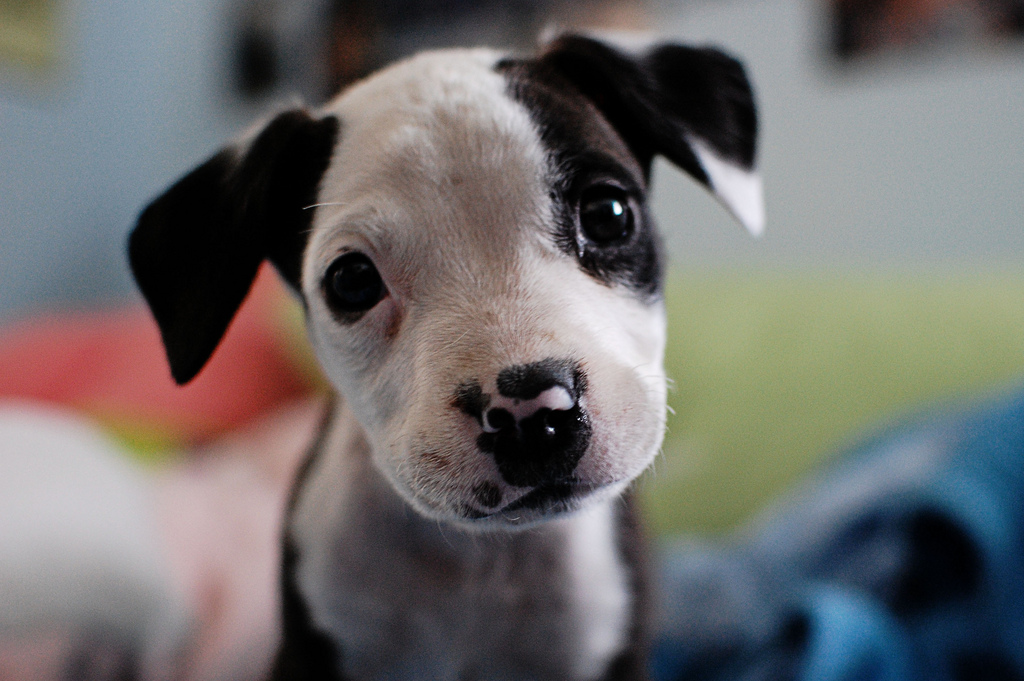
(Photo of Petey, a purebred pit bull, by Flickr user MickiTakesPictures)

Did We Ever Really Integrate?

Among blacks and whites, not really. But if you look at Latinos, yes:

The presence of Latinos in black neighborhoods has doubled since 1980, from 8.2 to 16.4 percent. Similarly, the declining homogeneity of white neighborhoods does not reflect the long-sought residential integration of whites and blacks, but instead the influx of Latinos into white neighborhoods. In 1980 Latinos were 5.5 percent of residents in majority-white neighborhoods. Today they are 11.2 percent.

Faces Of The Day

Screen shot 2011-11-30 at 10.16.45 AM

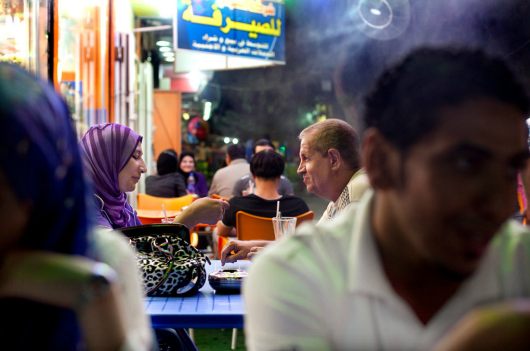
Photographer Marieke van der Velden captured the above shot, titled "Love," for her project on everyday life in Iraq, “Baghdad Today." Michael Kamber reflects on her work:

The Iraqis seem ordinary in many respects, strikingly so. Yet a sense of off-screen danger permeates the photos. One young man sits smiling on bed, one of his hands missing. In a revealing diptych, several children peer out from an open doorway. The second photo — with the door closed — reveals an AK-47 propped against the wall. Yet it is the photos from Baghdad’s sidewalks, amusement parks and ceremonies that are most revealing.  The Iraqis hold one another, laugh, photograph their children and look lovingly into one another’s eyes. The sense of danger is largely supplanted by joy.