David Dobbs quotes from Thomas Seeley’s Honeybee Democracy:
We will see that the 1.5 kilograms (3 pounds) of bees in a honeybee swarm, just like the 1.5 kilograms (3 pounds) of neurons in a human brain, achieve their collective wisdom by organizing themselves in such a way that even though each individual has limited information and limited intelligence, the group as a whole makes first-rate collective.
His assessment of Seeley's lessons for group decision-making:
- Create groups with mutual respect and shared interest
- Minimize the leader’s influence on the group thinking
- Seek diverse solutions
- Aggregate the group’s knowledge through debate
- Use quorum responses for speed, cohesion, and accuracy
These work fairly well in small-town meetings, not so well at larger democratic scales, as we’ll see vividly demonstrated over the next year or so — at the larger scale, we can’t get past step 1, and disrespect for the other party seems increasingly a fundamental requirement for candidacy, at least among the GOP. … Honeybee Democracy provides not just a look at a particularly rich life of inquiry but some nice, unforced parallels between the workings of honeybee colonies, small human societies, and our great big human brains: Certain group dynamics, it seems, are scalable and fractal.
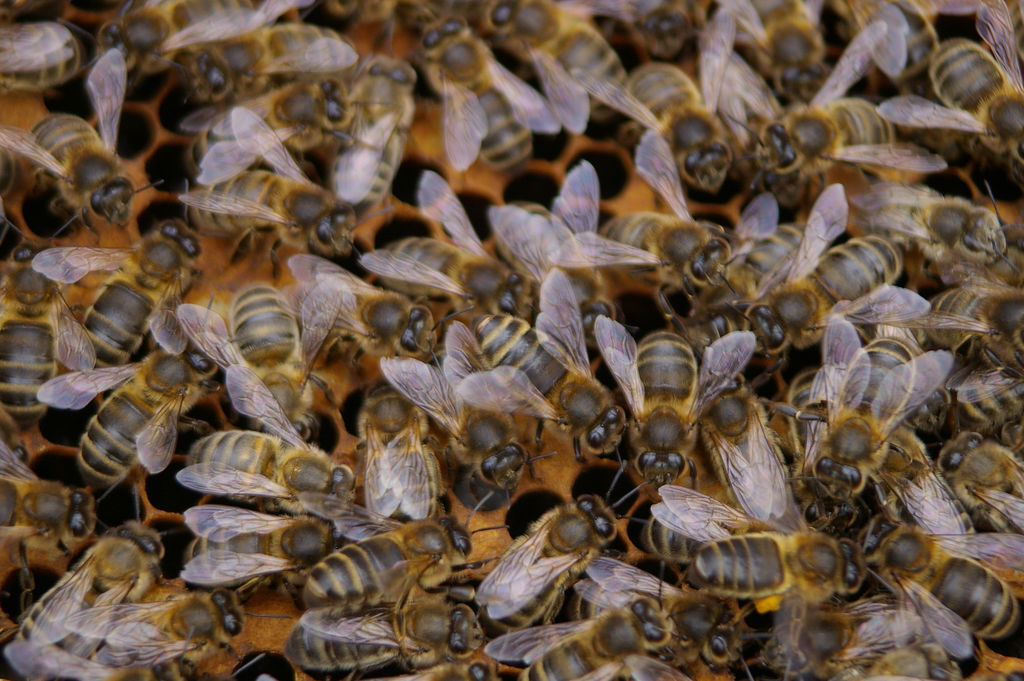
(Photo by Max Westby)
 The Dish