Matt Stroud weighs the merits of "wet shelters" such as Seattle's 1811 Eastlake, where drinking isn't prohibited:
On the street, [1811 Eastlake administrator Bill Hobson] says, "these people have a 5 percent chance of survival." And furthermore, he says, when they’re out on the street, these folks end up in the emergency room, get picked up by police and often end up in jail, costing taxpayers money. He points to an April 2009 study in the Journal of the American Medical Association that says the chronically alcoholic homeless people cost the city of Seattle two-thirds less housed in Eastlake than they do out on the street.
Maia Szalavitz underscores the benefits of wet shelters:
The homeless residents in the study cut the number of drinks they consumed daily by 40% over the course of two years in a home that did not require abstinence. Moreover, for every three months of their stay, participants consumed eight fewer drinks on average on their heaviest drinking days. The occurrence of delirium tremens, or DTs — potentially life-threatening withdrawal symptoms — also declined by more than half, with 65% of residents reporting suffering DTs in the month before being housed, compared with just 23% in the month afterward.
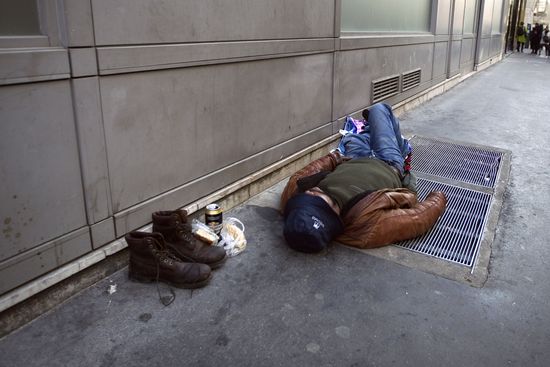
(Photo: A homeless man lies on his back a grille in a Paris street on January 13, 2012. By JOEL SAGET/AFP/Getty Images)
 The Dish