British blogger Richard Adams reads up on Saul Alinsky:
[He] was what passes for a left-wing radical in American politics, agitating for better living conditions for the poor in the slums of Chicago and New York – that has been filtered through the likes of right-wing talkshow hosts such as Glenn Beck and Mark Levin. … Rather than the far-left figure that Gingrich and others would paint him, Alinsky appears in his writings – including Rules for Radicals, published in 1971 – to be more concerned with the nuts and bolts of grassroots organisation in effecting change. "Dogma is the enemy of human freedom," Alinsky once observed, and said he never considered joining the Communist party.
Dan Savage draws a parallel:
Alinsky's advice to young radicals—"go home, organize, build power [and] you be the delegates"—is the strategy adopted by American religious right and social conservatives in the 1980s.
They're organized, they're the delegates, they pack the school boards, they pack the city councils and state legislatures. The right's adoption of Alinsky's strategy was a success for the right and a disaster for the country. But you gotta give 'em credit: the right got out there and they organized and they built power. And how did they do that? Well, they did it with… wait for it… community organizers!
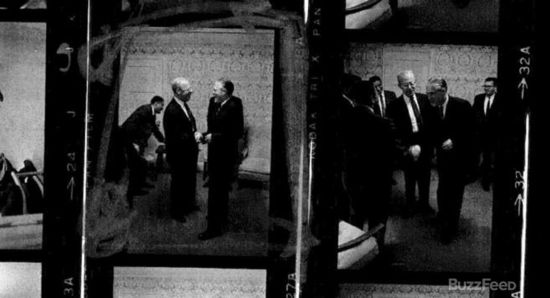
Andrew Kaczynski dug up the above image:
In the wake of the devastating Detroit riots of the summer of 1967, Michigan Gov. George Romney — a liberal Republican — met the radical organizer Saul Alinsky to discuss the grievances of the urban black poor. … "I think you ought to listen to Alinsky," Romney told his white allies, according to T. George Harris's 1968 book, "Romney's Way."
 The Dish