Sparking The Moral Imagination

Bob Wright praises Paul's foreign policy worldview:

I've long thought that the biggest single problem in the world is the failure of "moral imagination"–the inability or unwillingness of people to see things from the perspective of people in circumstances different from their own. Especially incendiary is the failure to extend moral imagination across national, religious, or ethnic borders.

If a lack of moral imagination is indeed the core problem with America's foreign policy, and Ron Paul is unique among presidential candidates in trying to fight it, I think you have to say he's doing something great, notwithstanding the many non-great and opposite-of-great things about him (and notwithstanding the fact that he has in the past failed to extend moral imagination across all possible borders).

I'd make a further point: understanding your enemy from the inside out is vital if you are to foil him. When your foreign policy is based entirely on abstract arguments about America and ideology, and not also on figuring out how your foe might act rationally (and the Iranian regime has acted quite rationally in its own self-interest since it began), can lead to fatal error. Moral imagination, in other words, is the twin sister of self-interested strategy.

Why Paul Will Not Go Away

Jennifer Rubin claims Santorum "put Ron Paul in his place." Matt Welch counters:

Ron Paul, and more importantly his ideas, are in it for the long haul. Other candidates will run out of money; Ron Paul won't. Most politicians see their business in primarily transactional terms of winning, losing, and influencing legislation; Paul sees his as proselytizing for freedom. "Where we are very successful," he said his speech last night, "is re-introducing some ideas the Republicans needed for a long time, and that is the conviction that freedom is popular."

Presidential campaigns, for all their soul-killing dreariness, are opportunities to debate political philosophy and policy with a motivated audience. The Paul campaign, simply by virtue of surviving the fates suffered by Herman Cain, Tim Pawlenty, and a dozen other pretenders to the throne, has occasioned all sorts of fascinating (and oftentimes brutal) discussion about, against, and within libertarianism. 

Who Are Those “Gay Friends”?

Elise Foley reported that Rick Santorum's daughter, Elizabeth, said she "has gay friends who support her father's candidacy based on his economic and family platforms." Dan Savage presses reporters to fact check:

Reassure Elizabeth you'll quote her friends anonymously to protect them from potty-mouthed gay bloggers, they can talk to you on background or whatever, but tell her that you're going to need to verify the existence of these gay friends. Because you're a journalist, not a stenographer. You'll either catch Elizabeth Santorum in a revealing lie—what does it tell us about this moment in the struggle for LGBT equality that even homophobes like Elizabeth and her dad perceive a political risk in being perceived as homophobic?—or you'll land a fascinating interview.

Dan reiterates his request with a South Park reference.

Obama’s Iran Strategy: Working Out?

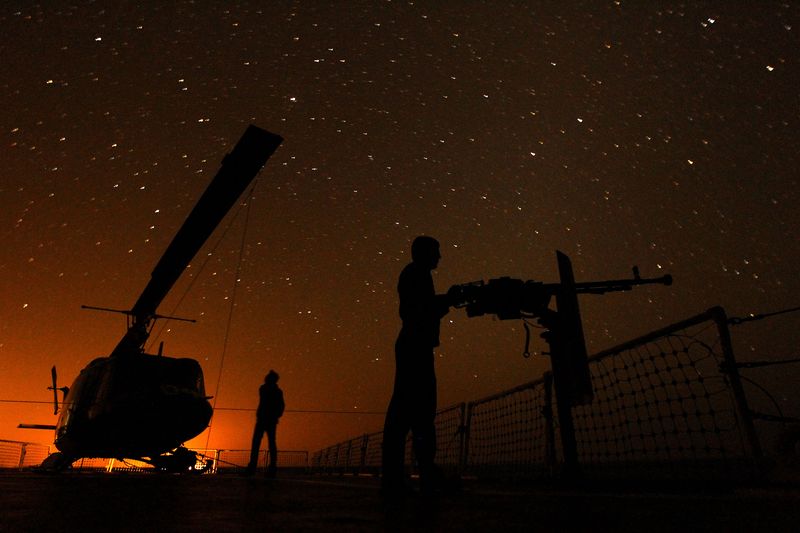
GT_IRANNAVY_120103

Walter Russell Mead answers in the affirmative:

[Iran's behavior] looks like the defiance of a cornered animal rather than the insolence of a rising power.  Iran’s chief regional ally, Syria, continues to disintegrate. Hamas, the radical Palestinian group whose previous links with Iran gave the unpopular Shiite Persians greater standing in the mostly Sunni Arab world, is shifting from a Syria-Iran alliance toward one with Turkey and possibly Egypt.  The rial continues to fall as sanctions hit the weak economy.  The recent decision to stop fuel subsidies will make the government less popular at a time of great stress. As protests sweep Russia, Putin seems to be shifting toward a more cautious foreign policy, one that offers little comfort to Iran. China, too, is unlikely to offer anything more than a bit of political cover at the UN.

Even uberneocon Max Boot doesn't see any Iranian military threat to the Strait of Hormuz:

The Iranians must realize that the balance of forces does not lie in their favor. By initiating hostilities they risk American retaliation against their most prized assets—their covert nuclear-weapons program. The odds are good, then, that the Iranians will not follow through on their saber-rattling threats. But this heated rhetoric does suggest how worried the Iranians are about the potential impact of fresh sanctions on their oil industry. All the more reason for the Europeans to proceed with those sanctions.

Juan Cole couldn't disagree more:

[E]ven Congress’s more severe sanctions and targeting of Iran’s Central Bank are likely to be ultimately ineffective in changing Iranian policy or undermining the regime. The international community will find work-arounds and close US allies like South Korea, facing major economic consequences, will lobby hard for exemptions. Obama, who was forced into this law and had opposed it, has every reason to grant the exemptions. In other instances, the NDAA will cause American will to be tested. It will take a lot of impudence to attempt to impose sanctions on Chinese banks for dealing with Iran, when Chinese finance is so important to propping up the US economy.

Daniel Serwer has mixed feelings.

(Photo: Iranian navy conducts the 'Velayat-90' naval wargames in the Strait of Hormuz in southern Iran on January 1, 2012. Iran defiantly announced that it had tested a new missile and made an advance in its nuclear programme after the United States unleashed extra sanctions that sent its currency to a record low. By Ebrahim Noroozi/AFP/Getty Images.)

The Iowa Spectacle

Jay Rosen blasts the MSM coverage of last night's caucus:

My suggestion is that it would be more profitable to treat the Iowa Caucuses as a "ritual," rather than an informational or news event. There may be a modicum of information emerging from the caucuses themselves; they may tell us something–a little bit–about the relative standing of Mitt Romney, Rick Santorum, Ron Paul, Newt Gingrich, Rick Perry, and Michelle Bachmann. But caucus coverage is more profitably viewed as a campaign ritual, in which the tribe of political reporters (like Chuck Todd or Mark Halperin) and pundits (like E.J. Dionne or David Brooks) and pollsters (like, say, Frank Luntz) and operatives (or former operatives like James Carville or Donna Brazille) claim interpretive rights over the election of 2012.

Will Paul Win The Most Iowa Delegates?

Seth Masket thinks it's a possibility but that it won't matter much:

I want to address this article about Ron Paul's post-caucus strategy. The gist is that the Paul people are very organized and made sure that their supporters stuck around after the initial counts to run for delegates to the county conventions. This is how you ultimately end up with a greater share of national convention delegates than your caucus-night showing would predict. The naive campaign treats a caucus like a primary and leaves as soon as the voting is done. The smart campaign realizes that the caucus is just the first step in the selection of delegates and sticks around to try to control the post-caucus selections. (I wrote about this with regards to Obama and Clinton back in 2008). Anyway, I think Josh Putnam is right that Paul could end up with significantly more delegates than expected thanks to this level of organization, although I agree with Jon Bernstein that this won't make a difference for the nomination.