Newt Wanted To Legalize Medical Marijuana

In 1982, before he wanted to execute pot importers, Congressman Gingrich wrote a letter to the Journal of the American Medical Association:

We believe licensed physicians are competent to employ marijuana, and patients have a right to obtain marijuana legally, under medical supervision, from a regulated source. The medical prohibition does not prevent seriously ill patients from employing marijuana; it simply deprives them of medical supervision and access to a regulated medical substance. Physicians are often forced to choose between their ethical responsibilities to the patient and their legal liabilities to federal bureaucrats.

Richard Metzger digs up more highlights from Newt's past. What he once told the Wall Street Journal:

[Toking] was a sign we were alive and in graduate school in that era. See, when I smoked pot it was illegal, but not immoral. Now, it is illegal AND immoral. The law didn’t change, only the morality… That’s why you get to go to jail and I don’t.
When A Man Loves A Lesbian, Ctd

A reader writes:

"Pink Triangle" is a great ode to unrequited love because it so wryly captures the absurdity and pain of loving someone who will never – or in the case of Pink Triangle Girl, can never – love you back. So I was amused to learn in this 2009 Fresh Air interview with Rivers Cuomo that the woman who inspired the song was actually straight, and that the pink triangle was a show of support for gay rights. Rivers missed the boat!

Defending Defense Cuts

Andrew Exum encourages defense wonks to speak up:

I think we in the defense analysis community have to do a better job explaining some things to the public, such as why, in the event of a major war, you can recruit and train new infantry battalions quicker than you can design and build ships, and also how much of the budget is eaten up by personnel costs. If you are a member of the Congress, meanwhile, I think you will find that you have more support to cut the defense budget than you might have previously thought. It will be up to you, though, to explain to your constituents why some cuts are smarter than others and why some "obvious" cuts are not as smart on second glance as they are at first.

Newt’s Boogeyman, Ctd

A reader adds to the Alinsky thread:

His main contribution, at least in the terms Gingrich and the right talk about, is that he was all about destroying his "enemies". Alinsky used the word "enemy" to describe almost everyone who wasn't a lefty.  He also in practice believed that since conservative, business, and the right were his enemies, the ends justified the means.  From his book:

The eleventh rule is: If you push a negative hard and deep enough it will break through into its counterside. … The thirteenth rule: Pick the target, freeze it, personalize it, and polarize it.  (P.126 -129B)

Another asks:

Didn’t Hillary Clinton write her college thesis on Alinsky?

Yes.

How Can We Fix The Housing Market?

Tyler Cowen argues that we can't:

It’s an unpopular answer, but the best thing for government to do right now, for the housing market, is not very much. Prices may have reached their bottom in any case. A better monetary policy still could improve the economy and wise investments in human capital will pave the way for longer-run growth and new household formation. There is a common attitude of "something must be done," but the U.S. public sector already has screwed up housing, and not every problem can be fixed by further government tinkering.

Who Are The Uninsured?

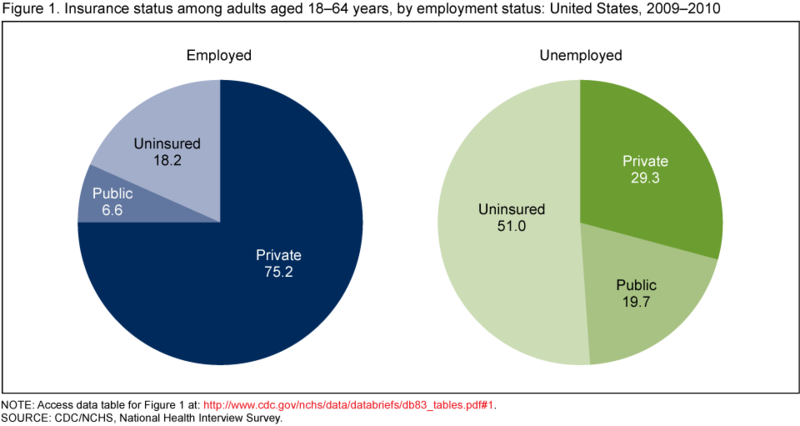
Unemployment_Healthcare

Aaron Carroll studies the connection between unemployment and lack of health insurance:

Many people like to think that being uninsured is a “choice”. And they’re correct, in the sense that you can “choose” not to buy insurance. I get that. But many people “choose” not to buy insurance for the sole reason that it’s crazy expensive. The average – not gold plated, but average – employer sponsored insurance plan for an individual plan in the United States last year was $5429. And that was just the premium. It didn’t include deductibles, co-pays, or co-insurance. The average family plan was $15,073. The median salary in the US, on the other hand, was less than $50,000 for households. For individuals, the median paycheck is $26,364. When you’re making that amount, and you lose your job, paying for that insurance plan is no longer possible.

Earlier this week, Gallup reported that the uninsured population continued to grow last year.

Paul Personally Approved His Newsletters, Ctd

Weigel's reaction to the scoop:

Paul's odd coalition of Old Right conservatives and young liberal college students hasn't been shaken at all by the newsletter story. In primary after primary, he outperforms with liberals. This convinces me that Paul's close third place result in Iowa was a godsend: It made sure that Newsletteraquiddick remained a boutique story, not an explosive new story about a frontrunner. And it suggests that Paul's voters are so dedicated to their protest votes that they're willing to overlook… well, everything that makes him look bad. Most of them know they're not picking a president. They're keeping an anti-drug war, anti-tax spokesman on the debate stage next to Mitt Romney.

Fancy Fast Food

Eleanor Beardsley savors the "MacDo" experience in France, where McDonald's operates 1,200 franchises: 

French McDonald's are spacious, tastefully decorated restaurants that encourage people to take their time while eating. … [They offer] all kinds of Frenchified dishes, from the Alpine burger with three different kinds of cheese to tasty little gallette des rois, or King's Cakes, popular after Christmas and sold by all the bakeries. Last year, it introduced the McBaguette. Another reason McDonald's works so well here is that the food is locally sourced and very high quality. As we all know, France is the land of haute cuisine. But it's also the land of good cuisine. The French appreciate quality in any category, even fast food. Restaurateurs in France know they'll go bust if they offer substandard products. 

Fortunately our McDonald's in the US remains unabashedly brutish.

The Psychology Of The Mandate

A new study found that how people to react to new laws depended on how inevitable or absolute the law appeared:

Across two studies, participants responded to absolute restrictions (i.e., restrictions that were sure to come into effect) with rationalization: They viewed the restrictions more favorably, and valued the restricted freedoms less, compared with control participants. Participants responded in the opposite way to identical restrictions that were described as nonabsolute (i.e., as having a small chance of not coming into effect).

Sarah Kliff looks ahead:

The Supreme Court won’t rule on the law’s constitutionality until this summer and, even after that, the law’s fate still hangs on the 2012 election. The uncertainty around the individual mandate’s fate may explain why its consistently the least popular part of the law, being met with resistance rather than rationalization.