The Wiki Blackout

Screen shot 2012-01-18 at 2.52.25 AM

What happened:

The Stop Online Piracy Act (SOPA) and Protect IP Act (PIPA) are landing in the U.S. Senate next week and a whirlpool of online protest has fired up again. The two bills intend to stop online piracy and protect copyright holders, however, critics claim they infringe upon creativity, Internet security and innovation by punishing websites that link to any copyright-infringing sites, even by accident. Wikipedia and a number of major sites including Reddit, Mozilla and TwitPic will go offline on Wednesday to protest. Wikipedia co-founder Jimmy Wales made the announcement on Twitter, joking that students should "do [their] homework early."

But there are plenty of ways to bypass the blackout:

[T]yping Wikipedia.org in a Web browser (or any of the site’s pages for that matter), and as the page loads, pressing the escape key, circumvents or stops the blackout placeholder page from appearing. Timing the maneuver exactly right, may take a few tries. The Wikipedia mobile app appears to be alive and working well too.

Madrigal has more:

Atlantic friend and contributor Philip Bump created a simple site — http://pbump.net/wiki/ — that lets you search Google's cache of Wikipedia to find recent copies of articles. Obviously, the cached versions of the millions of Wikipedia articles won't retain their full functionality, but as a temporary Wikipedia replacement, it's pretty slick.  The site [is] also a great reminder that the Internet is very good at defeating attempts to restrict information flow by anyone, even those people protesting to keep the flow unfettered.

(Above tweets via herpderpedia, which is chronicling the collective freakout. Hat tip: Ralph Bodenner)

How Weak Is Romney?

Very, according to Chait:

Romney has been positively associated with "electability" because he is more electable than most of his rivals. But he is the one-eyed man in the land of the politically blind. Romney, by normal standards, is a terrible candidate. He is nowhere near as formidable as John McCain was four years before. … He may win – he probably will win if the economy dips back into recession – but he is a weak candidate who in many ways embodies the public’s distrust of his party.

PPP's latest backs up Chait:

It's not as if Obama's suddenly become popular.  He remains under water with 47% of voters approving of him to 50% who disapprove. But Romney's even less popular, with only 35% rating him favorably while 53% have a negative opinion of him. Over the last month Romney's seen his negatives with independents rise from 46% to 54%, suggesting that the things he has to say and do to win the Republican nomination aren't necessarily helping him for the general. Obama's turned what was a 45-36 deficit with independents a month ago into a 51-41 advantage.

Ad War Update

The RNC launches Ottack2012.com ("his only hope is to go negative"): 

Here's the DNC's takeaway from Monday's debate:

Alexander Burns braces for a "long, predictable general election debate over which party’s nominee is more of a scheming, untrustworthy politician":

Dishonest and evasive versus desperate and negative. Welcome (probably) to the next nine months of our lives.

Here's Newt's "closing argument," which highlights his "food stamp president" bit from the South Carolina debate:

Mitt's latest defense of "free enterprise" co-opts Huckabee, who has yet to endorse a candidate:

Emily Shultheis has more

Huckabee has defended Romney since the barrage of Bain attacks started, and his former adviser Bob Wickers officially joined the Romney team last week. The former Arkansas governor hasn't officially backed anyone in the race and said this weekend that he was still undecided, but it's unlikely that Romney's campaign would have used the Huckabee footage without at least tacit approval from him — so even though it's not an endorsement, it certainly is an encouraging sign for Romney on that front.

The new Ron Paul spot below reflects Paul's "sorry I'm not sorry" approach to truthful attack ads: 

The Daily Wrap

871e11ca691502fc45ea936f54d6c0fb

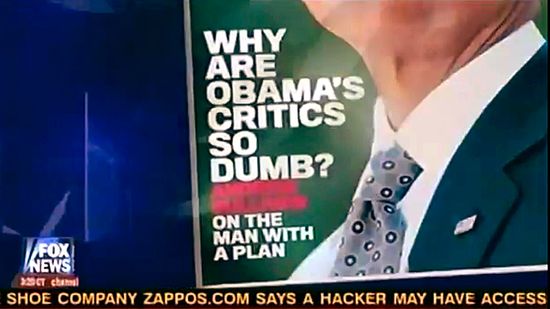
Today on the Dish, Andrew called out Fox News for making him persona non grata – which potentially produced an on-air debate over the blockbuster Newsweek piece with Megyn Kelly – and defended his Obama defense here, here, and here. He also live-chatted about the article with readers, found Palin's shrill denunciation of it telling, acknowledged that Europe might derail Obama's 2012 hopes, and noted some unsurprising vagueness from Mitt about budget cuts. On the campaign trail, the shrinking field bolstered Romney's already-dominant position, South Carolina inched his way, he might have broken far enough ahead to win every primary, and the base got (hypothetically) sold on Mormonism. Last night's debate had some fallout too – Gingrich got slammed for his horrific remarks on race and Perry got hammered for calling the leaders of a NATO ally "Islamic terrorists."

We envisioned a global democratic future, developed solutions to Egypt's specific trouble on that front, had hope for Iraq, worried about Iran's oil-powered clout, and charted the limits of European solidarity. The President wasn't a private equity CEO, The Dark Knight was a cautionary tale about violence and state power, and the universe was a mystery. A man opened up about being raped by a woman, facials in porn started as a semi-empowering safety measure, nicotine patches proved mostly unhelpful, your digital activity created history, "Lamb Chop" ventriloquist Shari Lewis went under the microscope, and readers kept going on fracking and conservatism.

Quote for the Day here, Hathos (Red) Alert here, VFYW here, VFYW contest winner here, Ad War update here, AAA here, Face of the Day here, and MHB here.

(Screengrab via John Cook)

What Do We Know Of The Universe?

Darkmatter

Carl Zimmer profiles astrophysicist Neil deGrasse Tyson. Here's Tyson explaining the problem of dark matter to a young boy: 

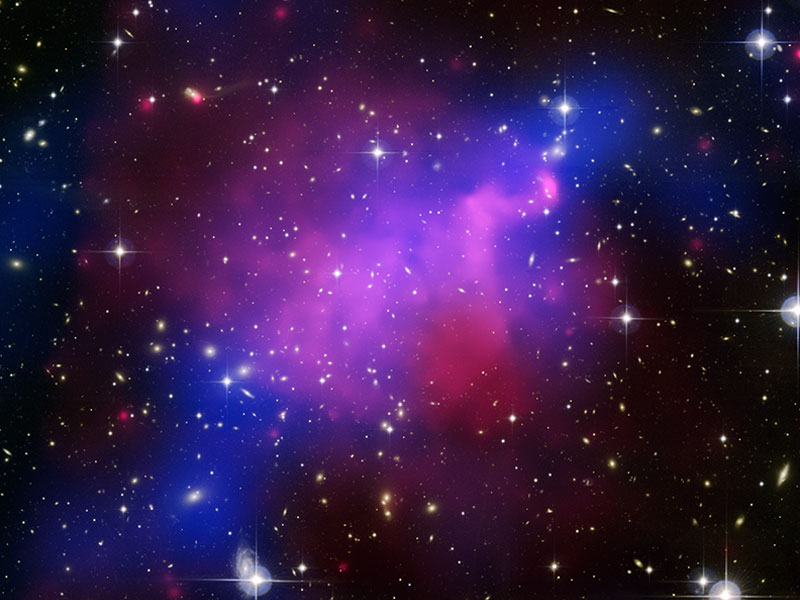
[E]verything we've ever seen in the universe has gravity–Earth, the moon. And you can tell how much gravity something has by how fast something moves around it. … Add it all up. We've done this. Add it all up and say that should give me this much gravity. But when you look at how fast things are moving, you get six times as much gravity as the stuff that we know about is generating. It was originally called the missing matter problem. Where is the matter that's making this gravity that we see? Because everything we do count up doesn't get us where we need. We now call this the dark matter problem. 

But really we have no idea what's causing it. We so don't know what's causing it that we shouldn't even call it dark matter because that implies we have some understanding that it's matter. We don't know what it is. I could call it Fred. Eighty five percent all the gravity in the universe comes from something about which we know nothing. …

[Add that to dark energy and] it is ninety six percent of the universe. Everything we know and love–electrons, protons, neutrons, light, black holes, planets, stars, everything we know and understand–occupies four percent of the universe. Dark matter and dark energy is everything else.

("Cluster Crash Illuminates Dark Matter Conundrum" from NASA)

The European Disunion

Francis Fukuyama takes aim at British multiculturalism. In a follow-up, he broadens the critique to the European project writ large:

There was never a successful attempt to create a European sense of identity and a European sense of citizenship that would define the obligations, responsibilities, duties and rights that Europeans have to one another beyond simply the wording of the different treaties that were signed. The EU in many respects was created as a technocratic exercise done for purposes of economic efficiency. What we can see now is that economic and post-national values are not enough to get people to buy into this community.  So wealthy Germans feel a sense of noblesse oblige towards poorer Germans; this social solidarity is the basis of the German welfare state. But they do not feel similar obligations towards the Greeks, whom they regard as being poor disciplined, very non-German in their general approach to fiscal matters.

Earlier thoughts along these lines here.

Conservatism Is Not Consumerism, Ctd

A few more readers keep the thread going:

I'm an environmental engineer with a specialty in water resources and I'm taking some issue with your petroleum engineer reader who wrote about fracking. The biggest issue is that natural gas fracking is essentially unregulated and they are injecting who knows what. That's a huge problem as it relates to groundwater. Methane and other chemicals are reaching groundwater in some areas where fracking is occurring, there is no denying this. Not sure about you, but I like my water to be free of harmful chemicals.

His main argument is that it creates jobs. Yeah, and so does sex trafficking and other activities that are harmful to people or the environment.

While a bit hyperbolic and slightly unfair this argument is, it boils down to a "just because we can doesn't mean we should" situation. Sure, we could exploit the natural gas reserves we have to keep prices artificially low now, but that just depletes our resources faster without regard to future generations. A better use of the money going to oil and gas companies would be for developing sustainable energy platforms and boosting efficiency of our existing infrastructure. We waste upwards of 60% of our energy in the US with about 90% of that loss coming from inefficiency in our electricity generation and transportation sectors. We have the capability to drastically improve efficiency right now, but money and regulations are not being promoted in the appropriate ways to achieve this. The recent dust-up over the incandescent light bulbs is a great example of how our politicians continue to screw the pooch on this and clearly don't understand energy.

I realize jobs are important, but the argument for exploiting natural resources to benefit us now and only now is a non-starter for me. I'm for developing sustainable solutions, and going whole hog into fracking is not a path to sustainability.

Another writes:

I have a lot to say in response to your reader who said we should not "exaggerate" the impacts of Marcellus shale.  First, let me say that I was born and spent 27 years of my life in the oil and gas fields of northwestern Pennsylvania.  This area was impacted by the oil and gas industry long before the onslaught of Marcellus shale.  The first successful oil well in the United States was drilled in 1859 about 40 minutes west of my childhood home in Titusville, PA.  The oil and gas barons (with the help of the timber barons) stripped northwestern Pennsylvania's forests of its trees in the late 1800s and early 1900s and replaced those forests with oil derricks.  (Note that this photo was taken near Tidioute, PA in 1871).  The Marcellus shale – and Utica shale, which the gas industry also plans to exploit – is just the latest "boom" that will, as it always does in the oil and gas industry, go "bust."

Second, I noticed that the reader never said whether he was actually from or working in Pennsylvania.  Rather, he said: "I work for an engineering company which provides services to gas companies working in the Marcellus shale in Pennsylvania." Many of the people working in the Marcellus shale are not from Pennsylvania.  The gas industry has imported many workers from out-of-state, where shale drilling has been going on for a while (such as the Barnett shale in Texas).  And while the influx of all these people obviously has a positive effect on local business (i.e., restaurants, hotels, etc.), you cannot ignore the dramatic and long-term impacts this industry is having on Pennsylvania. 

Which brings me to my third point. No one is exaggerating the impacts of Marcellus shale.  If anything, far too few are taking seriously enough the impacts, not just to water quality, but also water quantity, air quality, and wildlife habitat fragmentation.  Just recently, Youngstown, Ohio was hit with a magnitude 4.2 earthquake and the prime suspect is an injection well that is receiving wastewater from Marcellus shale drilling operations.  No one from the gas industry notified landowners that one of the consequences of disposing of millions upon millions of gallons of wastewater underground could be earthquakes. 

The only thing being exaggerated is the economic benefit that that will be visited upon you if you just sign on the dotted line (oh, and if you don't sign that lease, the gas industry will try getting the legislature to pass legislation forcing you to give up the gas beneath your land … and if you don't want a gas pipeline running across your property, the gas industry will try getting the Pennsylvania Public Utility Commission to give it eminent domain authority so it can condemn your land).  Can't you smell the small government conservatism!

Perhaps the most frustrating thing of all, however, is the complete lack of awareness of how the Marcellus shale gas boom is rapidly changing Pennsylvania's landscape.  Pennsylvania has an amazing state forest system, one of the largest in the country.  The area north of State College has at least five or six large state forests totaling over one million acres.  It is a breathtaking and under-appreciated part of the country for its outstanding opportunities for recreation and solitude – and it is being destroyed by the Marcellus shale gas drilling boom. 

The state Department of Conservation and Natural Resources (DCNR) has leased over 700,000 acres of state forests for oil and gas drilling (that includes both shallow wells and deep Marcellus wells).  This vast, remote part of Pennsylvania is being destroyed and nobody seems to notice or care.  All we hear are jobs, jobs, jobs.  Well, jobs are not everything.  And when the jobs being created come at the expense of something as beautiful as northern Pennsylvania's forested hills and valleys, we should think long and hard before plunging headfirst into the Marcellus "salvation." (Here's a local blog from someone experiencing the Marcellus gas boom in southwestern PA.)

I think too many conservatives and Republicans have lost connection to their conservation roots.  It was Teddy Roosevelt who established the National Wildlife Refuge System and established many Forest Reserves (which are our National Forests today).  Sure, Roosevelt did it partly because he loved shooting animals, but he also understood the value of having vast stretches of land where nature can exist without the heavy footprint of humans.  This notion is completely lost on Republicans and conservatives today.

And that whole "American energy" thing – don't buy that either, because the industry is planning to export that "homegrown" energy as soon as it gets a terminal constructed in Chesapeake Bay.  How about that?  Landowners in Pennsylvania getting their land condemned to build pipelines to send Marcellus (and Utica) shale gas to a terminal in Chesapeake Bay so it can be exported.

But don't get me started.

Iran’s Trump Card

Is, of course, its oil:

Iran's production capacity represents about 5% of the world total. Mr Hamilton notes that supply disruptions of that magnitude in the past were associated with oil price increases of between 25% and 70%—and with American recessions. … So one interesting thing to note is that Iran could potentially send America into recession all by itself, simply by halting its oil production for a few months. That wouldn't be good for the Iranian economy, of course, but perhaps that's a small price to pay for the smiting of one's enemies, and so forth. America couldn't easily respond with force as it would in response to, say, a nuclear attack. Closing the Strait of Hormuz would be a different geopolitical animal but would, if successful, bring the global economy to its knees.

Face Of The Day

137252353

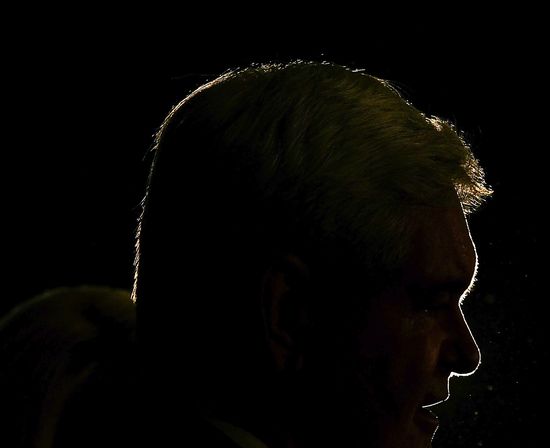
Former Speaker of the House Newt Gingrich speaks during a town hall meeting at the South Carolina Farmer's Market on January 17, 2012 in Columbia, South Carolina. Republican candidates for the U.S. presidency continue their campaigns in South Carolina as the citizens of the state vote in their primary January 21. By Win McNamee/Getty Images.