
You'd think they'd relent for the Sabbath?
You'd think they'd relent for the Sabbath?
A reader reminds me why I simply couldn't watch past a certain point, by quoting Albert Camus from 1937:
Every time I hear a political speech or I read those of our leaders, I am horrified at having, for years, heard nothing which sounded human. It is always the same words telling the same lies. And the fact that men accept this, that the people's anger has not destroyed these hollow clowns, strikes me as proof that men attribute no importance to the way they are governed; that they gamble–yes, gamble–with a whole part of their life and their so-called 'vital interests'.
Filmed in Malaysia, the narration is adapted from Heart of Darkness by Joseph Conrad:
We Were Wanderers On A Prehistoric Earth from James W Griffiths on Vimeo.
Douglas Noble thinks he's pinpointed a weakness in the case for assisted suicide:
In political terms [assisted suicide] is a dead duck – so why the continual fascination by a minority of vocal campaigners? The answers are complex. Perhaps, though, it is ultimately because of an inability to accept that suffering is an integral part of our world, common to all who share the human condition. Dealing a fatal injection and dressing it up as dignity is not a solution to suffering and pain. High quality palliative care is part of the answer, but so too is the effect of the affection, love, and commitment (sometimes over long periods of time) that we can show to one another when the worst hand is dealt.
Iain Brassington isn't buying it:
For one thing, I’m not suffering now, and if I never suffer at any point in the future, that’s just fine by me. This doesn’t mean that I’m missing out from some part of “the human condition” (whatever that might be), or that I wish to be less than human. Maybe he means the potential to suffer – but, again, there’s no obvious reason why this should strike anyone as a good thing. Besides: someone who wants their life to end because they’re suffering is someone who is plainly pretty much OK with the idea of opting out of the human condition wholesale.
Jon Grinspan commenorates Civil War humor:
This all may sound callous to modern sensibilities, but there is an impressive honesty to it: the comedy of the Civil War preferred to directly engage suffering rather than hide behind stern reverence. While humor could not stop the onslaught of grand and terrible events, at least it helped Americans talk about them.
Defying gravity with stop-motion:
Since we're looking for life on Mars, Carl Zimmer reminds us it's important to have one:
[Biologist Edward Trifonov] analyzed the linguistic structure of 150 definitions of life, grouping similar words into categories. He found that he could sum up what they all have in common in three words. Life, Trifonov declares, is simply self-reproduction with variations.
Sean Carroll disagrees:
If you built an organism from scratch, that was as complicated and organic and lifelike as any living thing currently walking this Earth, except that it had no reproductive capacity, it would be silly to exclude it from “life” just because it was non-reproducing. Even worse, I realized that I myself wouldn’t even qualify as alive under Trifonov’s definition, since I don’t have kids and don’t plan on having any. … Not that I have the one true definition (and maybe there shouldn’t be one). But any such definition better capture the idea of an ongoing complex material process far from equilibrium, or it’s barking up the wrong Tree.

Olympia, Washington, 10.15 am
The novelist Paul West suffered a stroke and lost most of his language. His recovery featured an unusual linguistic twist:
Oddly, it was often the most obscure words that were easiest to recover. He struggled with words like blanket or bed, or his wife's name Diane, words that you would think over time should have seeped into his genes. Nevertheless, he could recruit words like postillion or tardigrades to get an idea across. …
Deprived of the usual routes to language, and along with them, the common clichés that many of us struggle to shed, West bestowed on his wife exquisite pet names such as: My Little Bucket of Hair; Commendatore de le Pavane Mistletoe; Dark-Eyed Junco, My Little Bunko; Diligent Apostle of Classic Stanzas. And at one point, the man uttered what has to be the most searingly romantic sentence ever uttered in history, by anyone, in any language:
"You are the hapax legomenon of my life."
Shmarya Rosenberg believes Hitchens' theory:
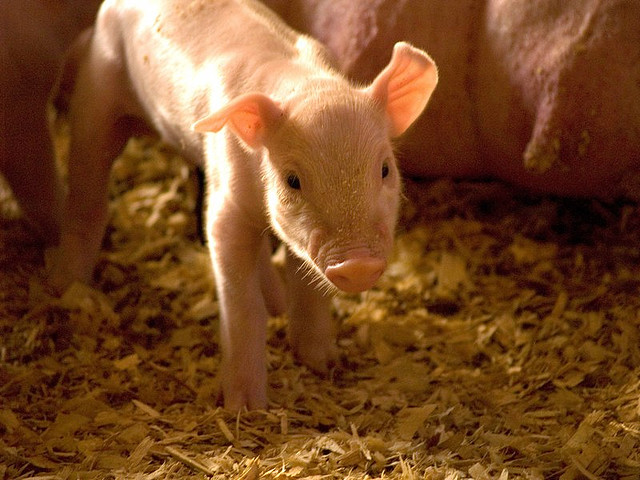
In God is not Great, Hitchens notes uneasy similarities between humans and pigs: Porcine DNA and human DNA are very similar, so much so that porcine heart valves can be transplanted into humans; pigs are noticeably smarter than other farm animals; and pig skin looks almost human, so much so that the smell and look of suckling pig and roasting human infants is, according to those who have had the misfortune of smelling and seeing both, disconcertingly similar. And make no mistake about it—many ancient Israelites had that misfortune. Hitchens thought this was the basis for the Jewish taboo against eating pork.
(Photo by Ariel Waldman)
 The Dish