“Literally A Textbook Case Of Executive Greed And Mismanagement”

Buzzfeed Politics digs up more shady behavior surrounding Romney's Bain years:

As for Romney, he had formally left [Bain & Company] about a year before the move, with Bain’s personal blessing, to start a sister company, Bain Capital. That meant he wasn’t involved in creating the [disastrous Employee Stock Ownership Plan], and didn’t personally profit from it; if he shared private opinions on the scheme at the time, they have not been revealed. (A Romney spokeswoman, Andrea Saul, declined to comment on the episode.) But Romney’s career did depend, if indirectly, on the ESOP deal.

Marriage Equality In New Jersey

Fast-tracked as the first item of business:

This afternoon in Trenton, legislative leaders and marriage advocates announced that the introduction and passage of a marriage bill will be a top priority during the upcoming legislative session. The bill has full support of the legislature's most influential members and figures, including Senate President Steve Sweeney, incoming Senate Majority Leader Loretta Weinberg, Assembly Speaker Sheila Oliver, incoming Assembly Majority Leader Lou Greenwald, and state Democratic Chairman Assemblyman John Wisniewski. A bill to extend marriage to gay and lesbian couples will be the first legislation introduced in both chambers.

Timothy Kincaid wonders if Chris Christie, who supports civil unions, will suffer politically for opposing marriage equality:

We see how anti-gay positions have destroyed a few campaigns already. And it is not Romney’s kinda-sorta gay tolerance that has become an albatross as right-wingers predicted, but Santorum’s views that have dogged his steps and defined his candidacy. Now we will soon learn in New Jersey whether marriage equality has become so socially accepted that civil unions support is a position that can hurt a politician.

How Bad Is The GOP Field?

Dan McCarthy takes issue with Douthat's claim that the current Republican field is the worst in a generation:

Yes, there are some bizarre and unappealing personalities among this year’s contenders, but most of them are no worse than the Republicans of yesteryear. The 2012 field has perfectly orthodox ideological and professional credentials. … Yet it’s true that Republicans look more foolish than ever. Why? Perhaps because the party is more indulgent than ever of a media even more infantile than that of the 1990s. The quantity no less than the quality of debates has been degrading. Pundits have hyped nonsense polls and nonsense candidates into the stratosphere.  

Douthat responds by citing the concept of "cable news candidates":

[W]hat we’ve seen in this cycle is the intersection of conservative media pathologies and mainstream media pathologies. The first has given us the rise of the cable news candidate, whose rhetoric and ambitions are geared toward a prime-time slot on Fox rather than the presidency, while the latter has encouraged the assumption that the Republican electorate is composed of fools, crazies and extremists, and therefore very likely to actually choose a cable news candidate as its nominee. Throw in a legitimately weak frontrunner, and you have the impetus for the seemingly endless series of quickly-dissipating boomlets that we’ve endured since last spring — all which will be seen in hindsight, I suspect, as sideshows in a race that was shaped more by who didn’t enter the field than by any of the non-Romney candidates who actually competed with him for the nomination.

Hipster Zealots

Kristin Rawls profiles Jason "Molotov" Mitchell and his wife, Patricia "DJ Dolce" Mitchell and their brand of Internet-driven dominionism:

Despite the violent rhetoric, the Mitchells are the friendliest—and some of the savviest—people I have ever interviewed. Avid followers of popular culture, they are not Quiverfull-style Christians who isolate themselves from outside influences. They want to emulate the Biblical mandate to "be in the world but not of it." So they laugh at The Daily Show and mention that they would enjoy hanging out with Jon Stewart, whom they consider a political foe. Molotov says he wants to emulate Jesus, who, he says, spoke harshly before crowds but showed compassion when people approached him one-on-one.

I suspect the Mitchells’ success has as much to do with their openness as their extremism. They are not scary, even if their views are. And for those of us who disagree with them politically, it will not do to ignore them. They believe they are following God’s mandate for their lives. They will not be going away any time soon.

One of Molotov's recent unhinged video rants (above) vilified Dan Savage for standing up to Santorum; another urges Ron Paul to sign the marriage pledge. In an infamous video from a few years ago, Molotov supported Uganda's "Kill The Gays" bill. Alyssa Rosenberg rallies the left in response:

Christian hipsters have been getting the anthropological treatment at least since Jeff Sharlet wrote about the "New Virgin Army" in Rolling Stone in 2005, the same year the New York Times profiled Jay Bakker. Earlier this year, the paper looked at a hipster-tinged Lower East Side evangelical church. In other words, it’s not really news that people who have tattoos, piercings, good haircuts and cool clothes believe that Christ is their savior and adopt hipster aesthetics to reach their target audiences. Thinking like this is one of the reasons I think progressives need not to get lazy about culture: it’s not enough to assume that our aesthetics and narrative power are just going to keep automatically bringing people over to support good policies and progressive worldviews.

Yglesias Award Nominee

"I am a traditional Republican. When you think about gay marriage, it’s the right thing to do and it’s very consistent with the tenets of being a Republican — such as individual freedom and personal responsibility," - Washington state Senator Steve Litzow, announcing his support for a marriage equality bill expected to be introduced this week.

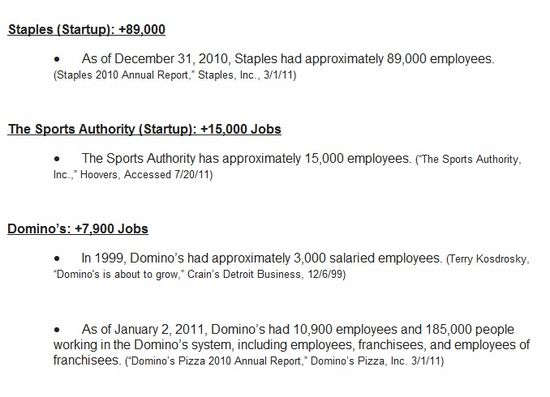
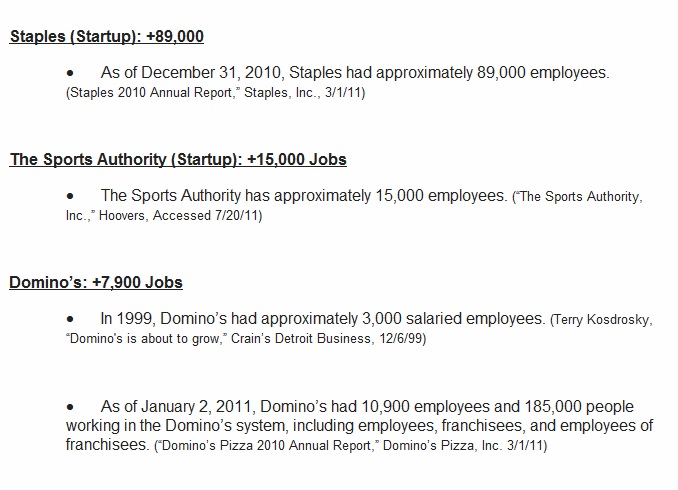
How Many Jobs Did Romney Create?

Romney_Jobs

The Romney campaign e-mailed James Pethokoukis the text above when he asked about Romney's claim that he created 100,000 jobs while working at Bain. Pethokoukis is unsatisfied:

Romney likes to say, "I love data." It’s time he does a better job showing it.

Ezra Klein likewise wants better numbers: 

Whatever you want to say about Romney’s time at Bain, the number he is providing to reporters, the number Stephanopoulos was asking about, the number Romney is using publicly, is not net-net. It takes three successful companies of the hundreds Romney was involved with and uses their employment totals now — long after Romney finished working with them. Even Pethokoukis, a Romney-friendly conservative, concludes, "That’s not going to cut it."

Does Ron Paul Enable The Carceral State?

Mike Konczal suggests Paul's commitment to federalism kneecaps his ability to take on mass imprisonment:

When researchers run statistics over state-level incarceration rates, they find things like "controlling for social disorganization, religious fundamentalism, political conservatism, and violent crimes, the results show that Republican strength [in state governments]…lead to higher imprisonment rates. Statistical interactions support predictions that these relationships became stronger after greater Republican stress on law and order."  States with a Republican governor and Republican legislatures show a greater increase in incarcerated populations, and that the effect is stronger in the 1990s.  Institutions like ALEC were most effective at the state level in changing laws to bias towards longer sentencing.  State laws are crucial to understanding the massive run-up in mass incarceration, and that is where much of the battle will be.

There’s a lot to be done at the federal level, but any serious critique of mass incarceration needs to tackle the states, and the federal level will need to play a part in it.

Damon Root thinks the "state rights" position is, in some ways, fundamentally unlibertarian.

The Vatican’s Loopy Paranoia

Maybe that many old men need to get out some more:

During his Boxing Day sermon, the Bishop of Córdoba, Demetrio Fernández, said there was a conspiracy by the United Nations. 'The Minister for Family of the Papal Government, Cardinal Antonelli, told me a few days ago in Zaragoza that UNESCO has a program for the next 20 years to make half the world population homosexual. To do this they have distinct programs, and will continue to implant the ideology that is already present in our schools.'

Half the world population gay? Wouldn't that simply bring it into line with the Catholic priesthood?

Today In Syria: Assad And The World

As opposition leaders allege the Arab League is simply "buy[ing] the regime more time, Daniel Serwer urges them not to give up on the international mission just yet (and explains why the Syria conflict isn't amenable to a Libya-style solution). Richard Gowan concurs. Brian Whitaker is guardedly hopeful about the international community's impotence:

The reality, harsh as it may be, is that there is very little that outsiders can usefully do to help the Syrian uprising beyond isolating the Assad regime as much as possible. This does not mean the revolution is doomed but it does mean the protesters will have to depend mainly on their own resources. In the long run, that could be beneficial if it eventually produces a government that is self-reliant and relatively independent of foreign influences.

The cost in human lives is certainly high, and it could get worse. But beneath the surface, the picture is shifting gradually but surely in the protesters' direction.

Michael Weiss thinks an intervention might succeed if the opposition were to unify. Russia appears to be undertaking an opposite sort of intervention by docking naval assets at a Syrian port. Ali Hussein Bakeer indulges in some Tehranology:

In general, based on the Iranian experience and analysis of the above data, which shows a shift in rhetoric and a practical support for Assad, we can conclude that the purpose of the Iranian tactics is to assist the Syrian regime all the way to the end, taking into consideration options that will help the survival of the regime as well as alternatives that could impose themselves in case of the regime falling. This is especially relevant to some circles within the Iranian regime and Hizbullah, who see that regardless of the form of the next Syrian regime, Damascus will still need them, particularly as Syria has land occupied by Israel; that would enable Tehran to return to the Syrian arena with strength, as they see it.

Ehsani updates on the terrible Syrian economic situation. Leila Nachawati Rego rounds up music, humor, and writing from Syrian revolutionaries. Here's a shaky video of a protest being fired on:

Here's a big funeral protest in Damascus:

Finally, even infants aren't immune to the crackdown: