Jay Ulfelder captures why even people generally supportive of humanitarian intervention (like me) have serious difficulty supporting one in Syria:
[T]he recommendations for military intervention I’ve seen all either assume the best, best-case scenario for how that intervention will unfold or simply declare that the current path is unacceptable and then fail to discuss in depth what kind of intervention we should undertake and the many consequences those actions might carry. Unless and until advocates of forceful intervention can make a convincing case that this time will be different, I will infer from the historical record that it will not be different, that the most likely outcome is a clash of armed forces that will itself kill many civilians, will likely require a substantial long-term commitment of forces and money, and could plausibly spiral into a wider war that would kill and destroy many more soldiers and civilians.
Daniel Serwer fleshes out his previous call for non-violent resistance by explaining how it could unsettle the Assad regime.
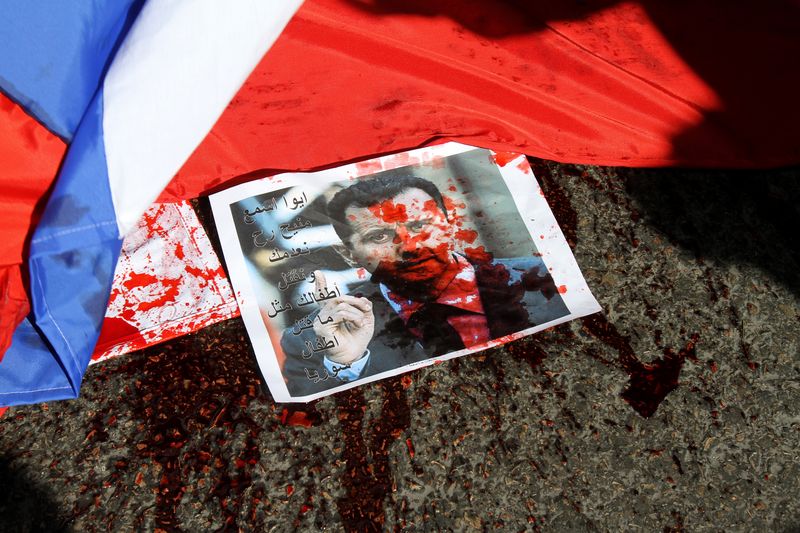
(Photo: A picture of Syria's embattled President Bashar al-Assad sprayed with red paint lies on the ground next to a Russian flag about to be set on fire by protesters opposed to the Syrian regime during a demonstration outside the Russian embassy in Beirut on February 5, 2012. Arabic writing on picture reads: 'Listen well, we shall hang you and kill your children just like the children of Syria are being murdered. By Anwar Amro/AFP/Getty Images.)
 The Dish