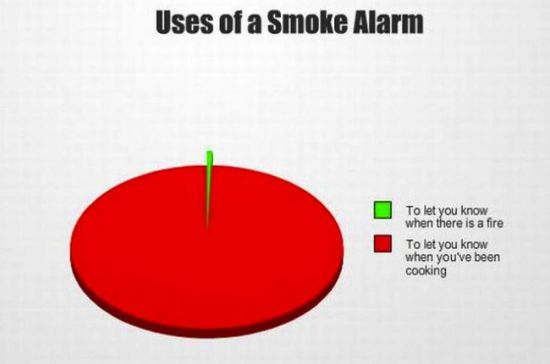
According to Boston Deputy Fire Chief Joseph M. Fleming, not much:
If the ionization smoke alarm was responsible for most of the decrease in fire deaths in the last part of the 20th century, shouldn’t the rate of decrease have been greatest over the time period that smoke alarm usage increased the fastest? Yet over the time period of 1977–1987, when the use of smoke alarms skyrocketed, the trend line remained relatively constant. The death rate was trending down before smoke alarms and continued to trend down after they saturated the market. … [The National Institute of Standards and Technology] inexplicably ignores the trends in better building codes, reduction in smoking, better firefighting equipment, and better emergency medical care as likely reasons for the reduction in fire deaths.
Fleming suggests using photoelectric alarms instead, since they "are far less likely to sound nuisance alarms and, as a consequence, are less likely to be disabled."
 The Dish