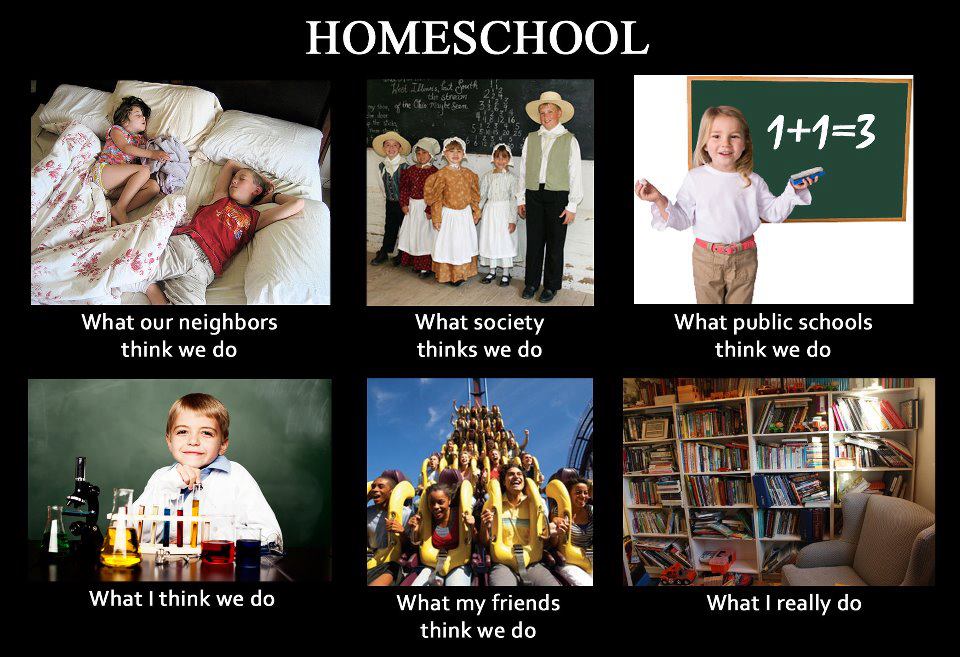
They lean left:
You only have to go to a downtown Starbucks or art museum in the middle of a weekday to see that a once-unconventional choice "has become newly fashionable," says Mitchell Stevens, a Stanford professor who wrote Kingdom of Children, a history of homeschooling. There are an estimated 300,000 homeschooled children in America’s cities, many of them children of secular, highly educated professionals who always figured they’d send their kids to school—until they came to think, Hey, maybe we could do better.
Dana Goldstein disapproves:
Although the national school-reform debate is fixated on standardized testing and "teacher quality"—indeed, the uptick in secular homeschooling may be, in part, a backlash against this narrow education agenda—a growing body of research suggests "peer effects" have a large impact on student achievement. Low-income kids earn higher test scores when they attend school alongside middle-class kids, while the test scores of privileged children are impervious to the influence of less-privileged peers. So when college-educated parents pull their kids out of public schools, whether for private school or homeschooling, they make it harder for less-advantaged children to thrive.
Dreher defends homeschooling against Goldstein (multiple times). The core of his rebuttal:
This is a liberal shibboleth: the idea that “diversity” is a measure of quality. I have worked in offices in which lower-quality work performed by a minority was endorsed on the grounds that “diversity” and “inclusiveness” is a positive good. The idea that people should put their children into a school that they have reason to believe will poorly educate them because they will learn a commitment to “diversity” is therapeutic crackpottery.
(Image via Dreher)
 The Dish