It may be one instance, as the NYT reported yesterday, in which the long game was too clever by half. Ezra has a helpful graph on the various versions of a Grand Bargain mooted this past year and a bit:
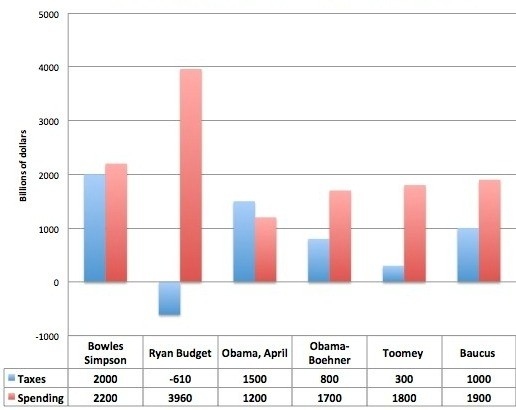
The main reason given for Obama's refusal to embrace Bowles-Simpson was that if he embraced it, the GOP would oppose it, and thereby kill the chance for real reform. So you try to get there by quiet negotiation – which led to the Obama-Boehner deal. Ezra notes that this was way to the right of Simpson-Bowles, revealing that the politics of this was misread by the Obamaites from the get-go.
This relieves Ezra. It does not relieve me. I'm fully prepared to believe that the GOP would have rejected anything Obama proposed – including Boehner-Obama and even Bowles-Simpson. I mean: they all voted against tax cuts in the stimulus in the first month of Obama's presidency. So the tactical analysis wasn't nuts. But it was in my view wrong. And Ezra explains why:
The administration didn’t recognize that it would be vastly more difficult for Republicans to compromise with them than with the abstract idea of "Simpson-Bowles," …
So the clever, behind-the-scenes, long-game strategy did two things: it ended with the debacle of the summer of 2011; it made Obama seem much less concerned about deficit reduction to the wider public than he is; and it failed to grasp the appeal of a bipartisan commission to give cover for real entitlement and defense cuts and real revenue increases. It would have clinched Obama's core electoral appeal to the middle – and balanced out healthcare reform as his signature achievement.
My suspicion is that the Commission was abandoned because the Democrats were too queasy with the proposed entitlement cuts (and the loss of an electoral weapon) and the Obamaites were too politically scared of the real defense cuts Bowles-Simpson proposed. So they got nothing. It's easily Obama's biggest mistake in his first three years. Even if he had lost, and Bowles-Simpson had gone down in partisan flames, by identifying himself unequivocally with bipartisan long-term debt reduction, Obama would have innoculated himself on the issue with Independents. And charted the right long term strategy.
He failed. But he need not continue to fail. The recent piece-meal offer of corporate tax reform was too little too late. What Obama needs this fall is much more and in time: an embrace of Bowles-Simpson, and a plan for long term debt reduction that he can call both fair and responsible. Compared with the Romney and Santorum plans, Bowles-Simpson is far fairer and far more effective.
Go for it, Mr president. Don't compound your original error with more fatal caution one more time.
 The Dish