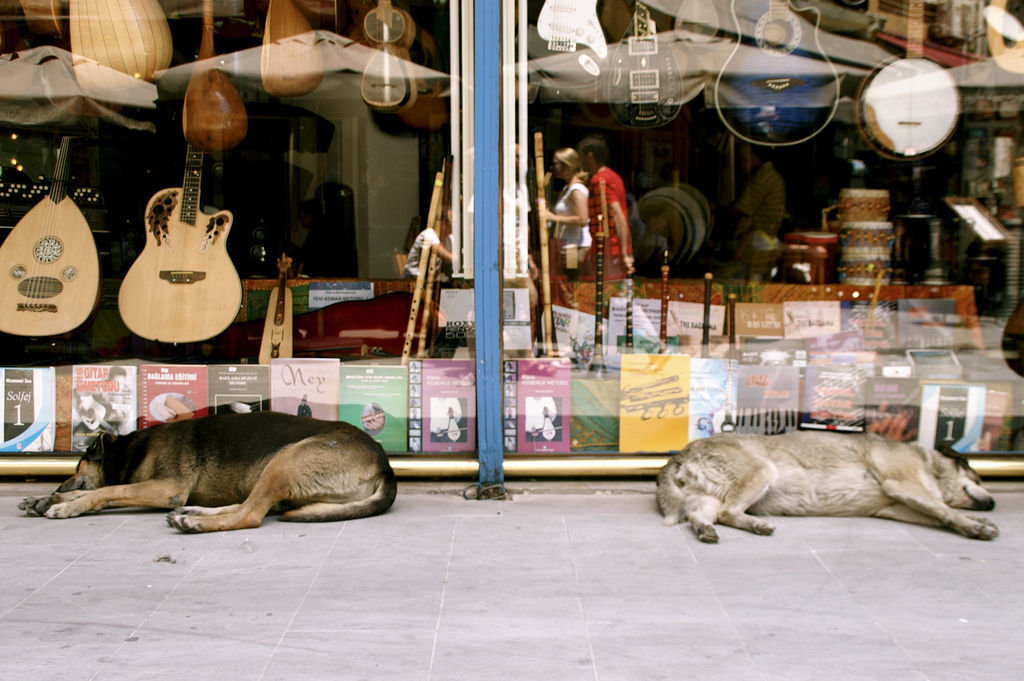
Bernd Brunner examines Istanbul's 100,000 street dogs:
Although there is no clear basis for this belief in the Koran, strict Muslims consider dogs — especially their drool — to be unclean. People don’t let the animals into their homes because they could dirty the prayer rug and because, even today, little tradition exists of keeping dogs as pets. Furthermore, a common belief holds that köpekler, as dogs are called, prevent angels from visiting. … Although dogs formed part of a romantic cityscape, caricatures from the Ottoman period depict them as threats to be stopped, along with cholera, crime, and women in European clothing.
Again and again, attempts were made to catch them and remove them from the city. In the late 19th century, Sultan Abdülaziz decreed that the dogs should be rounded up and deported to Hayirsiz, an island of barren, steep cliffs in the Marmara Sea. Sivriada, a tiny island to which Byzantine rulers once banned criminals, made headlines in 1911 when the governor of Istanbul released tens of thousands of dogs there. A yellowed postcard shows hundreds of dogs on the beach; their voices could be heard even at great distances. However, an earthquake that occurred shortly thereafter was taken as a sign of God’s displeasure, and the dogs were brought back.
(Photo by Joelle McNichol)
 The Dish