Daniel Serwer wants a withdrawal ASAP:
It would be a mistake to await the outcome of the negotiations with the Taliban, which could drag on for a long time. Better to go into these negotiations stating a willingness to withdraw–by the end of this year if feasible, or shortly thereafter–provided a satisfactory political solution can be agreed. That could actually accelerate the diplomacy rather than hinder it. And in any event the Taliban will know full well that public and political support for the war is fading in the United States.
David Dayen notes that, contrary to popular perception, US troops are planned to stop fighting in 2013. Joshua Foust thinks we can't accelerate the status quo timeline:
[A] more rapid withdrawal would be the worst possible outcome for Afghanistan right now. The desire to cut losses is understandable, even justified, but it would plunge Afghanistan into madness and anarchy. That’s because there remains no political process at work in Afghanistan than can address the fundamental conflict driving the war: a political contest between the current, corrupt government and the insurgency that rejects that government. The current line about so-called reconciliation – the negotiations process, which demands the Taliban accept the very Afghan constitution they’re fighting to upend – doesn’t account for any of Afghanistan’s politics. It is merely a call to surrender.
Peter Feaver worries about what comes next.
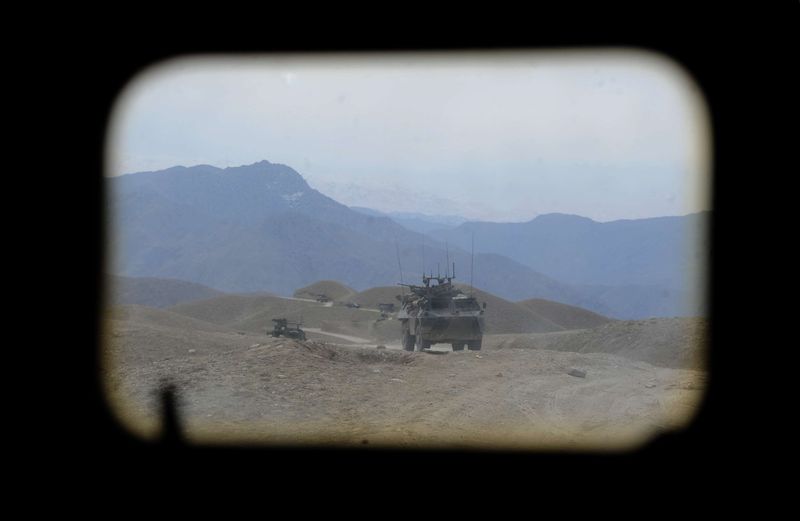
(Photo: French soldiers in armoured vehicles move towards a combat outpost base in Usbeen village in Surobi district of Kabul province on March 13, 2012. Some 600 soldiers are based in this camp, located east of the capital Kabul. All the combat troops are due to leave Afghanistan by end 2014. By Shah Marai/AFP/Getty Images.)
 The Dish