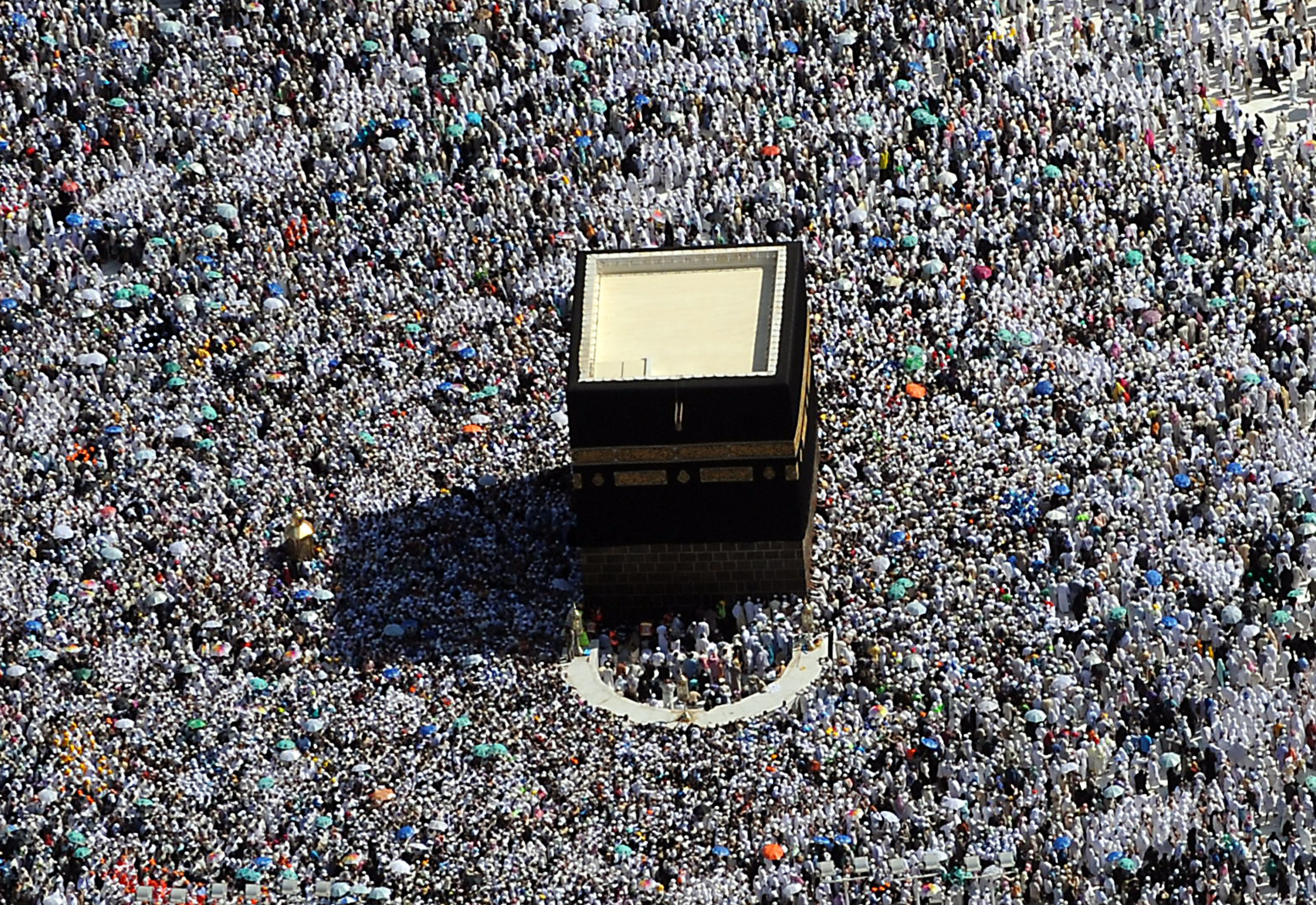
In reviewing the British Museum's new exhibition about the Hajj, Joy Lo Dico ponders Saudi dominion over the pilgrimage site:
Gulf News has estimated that the Hajj and the Umrah, the lesser pilgrimage that can be conducted at any time of year, contributes $30 billion to the economy, through the provision of accommodation, travel services, even animals for slaughter. That is 6 percent of the Saudi’s total GDP—with oil revenues stripped out, it’s more like 15 percent. Saudi Arabia’s status as patron has been repaid magnificently. As the river of black gold runs dry and the Hajj continues to grow, it not unthinkable that it will become the country’s greatest financial asset.
Malise Ruthven shares other concerns about the exhibit:
In part, the exhibition’s unskeptical approach seems also to reflect the fact that it is dedicated to a living religion, not an antique belief system. It lays out Muslim beliefs without exploring the archaeological and anthropological matrices from which they issue. The question this raises is: should a scholarly and secular institution refrain from such exploration in order to accommodate religious sensitivities?
(Photo: An aerial view shows Muslim pilgrims walking around the Kaaba in the Grand Mosque of the holy city of Mecca during the annual Hajj pilgrimage rituals on November 7, 2011. By Fayez Nureldine/AFP/Getty Images.)
 The Dish