Good With Faces, Bad With Names

You're certainly not alone:

[F]aces are given to us – they are there when we look at the person we are thinking about – and all we have to do is know whether we have seen them before or not. Names, on the other hand, are hidden in memory and we have to retrieve them, which is a far harder psychological task.

A trick to remembering:

If there is someone whose name you really need to remember, you should make an image in your mind that connects their name with something you have found out about them, ideally combining both in a striking or absurd image. So, for example, if you meet a Jennifer, and you find out that she is from Alaska, you could imagine her standing in the centre of a snowy town (Alaska is cold, right?) and wearing a fur coat (for JenniFUR). Just spending a few seconds building a mental image around the name will create hooks of memory, which will let you recall the name next time you meet her.

The Great Whaling Boom And Bust, Ctd

A reader writes:

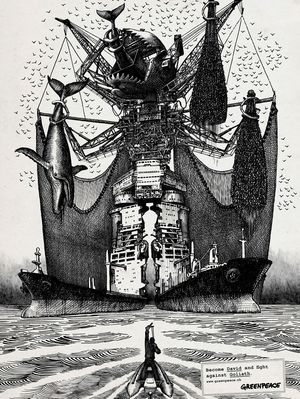
GreenpeaceSwiss3Whatever other economic lessons might be learned from the history of the whaling industry, surely the number one lesson is that if you exploit a biological resource at a rate faster than it is renewed, you eventually run out. This is what has led to the collapse of whale fisheries. The 19th century whaling industry's premier object was the right whale (so called because it was the 'right' whale to catch), which, in the Northern hemisphere, even after decades of protection, still numbers only a few hundred. Ugo Bardi, in a post about oil, used whales as an example of a non-renewable resource, so remorseless was the hunt relative to the whales' powers of reproduction.

The whaling industry moved on to less prized whales, and more distant and difficult whaling grounds, but populations of these whales also collapsed in their turn. There are lessons to be learned here, but they will not be mostly about technological innovation and wages.

Another writes:

The whaling industry fascinates me. I recommend watching the American Experience documentary by Ric Burns, "Into the Deep: America, Whaling & the World." On Moby Dick's endless canvass for allegory, the quest for oil fits perfectly. I wonder what would have happened had industrialists not discovered a perfect replacement for whale oil in petroleum, which seemed almost like a deus ex machina for appearing at just the right time to solve the crisis of depleting whale stocks. The discovery of petroleum erased all worries about what would happen when the whale oil ran out. What happens if we exhaust all the oil without a panacea waiting for us in the wings?

(Greenpeace anti-whaling ad via Copyranter)

The Singles’ Vote

Eric Klinenberg recommends that the GOP pay attention to it:

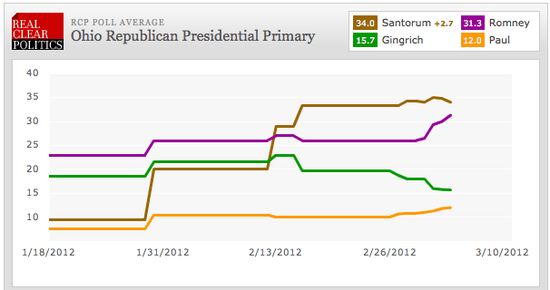
Some prominent pollsters, including Stanley Greenberg, argue that single women gave Obama a decisive edge in the 2008 election. But in 2010, the number of single, white women who voted for Republicans rose dramatically (to 50 percent, from 39 percent in 2008), and unless the economy continues to improve, they may still be receptive to Republicans who court them. Republicans risk alienating singles and singletons if they resurrect the "family values" theme in the 2012 campaign. That phrase implicitly casts judgment on roughly half the adult population, and they may not turn out for a candidate whose campaign insults them.

Previous Dish on the growing demographic here and here.

Saudi Women Need Not Compete

GT_OLYMPICS_120301

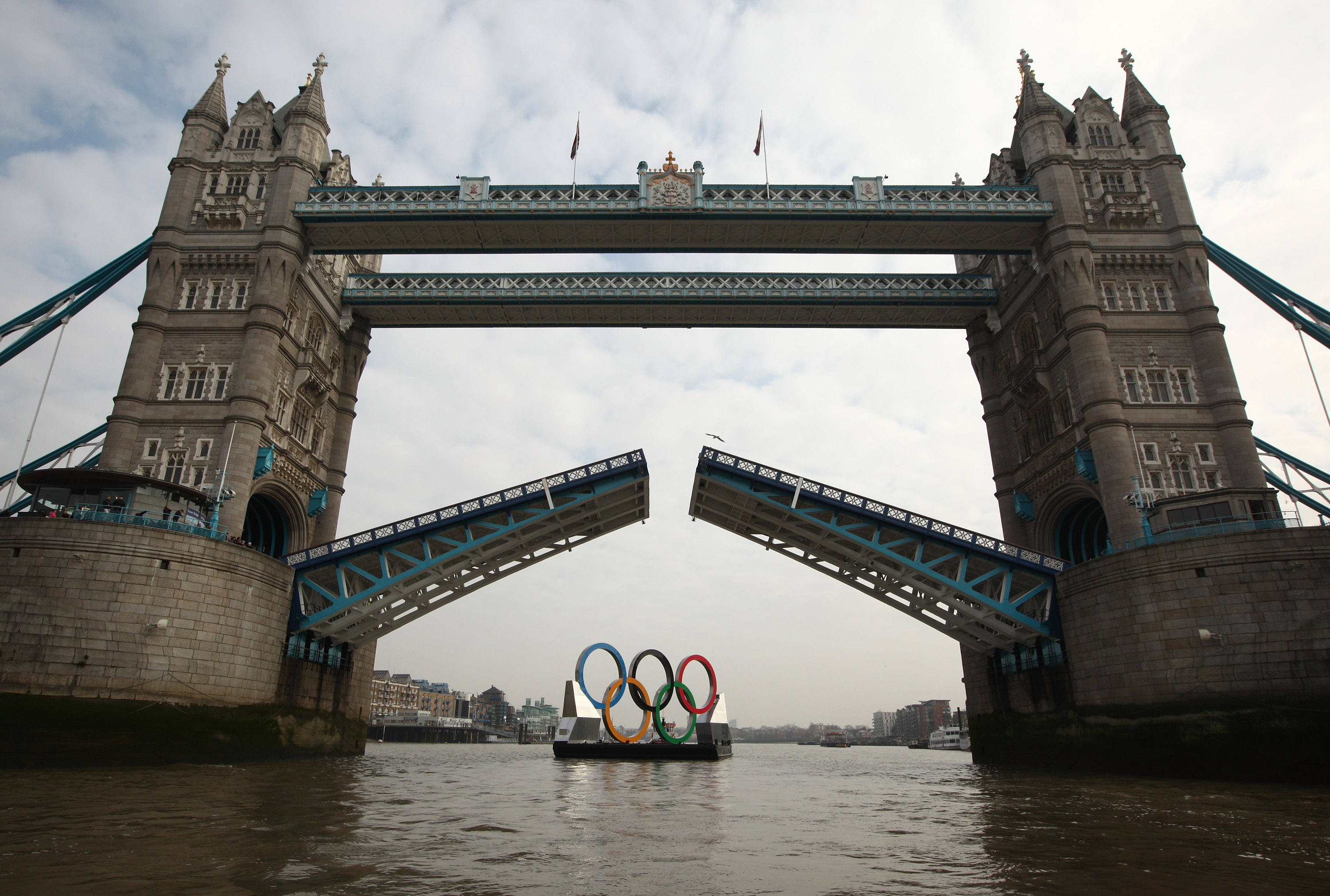
Nina Burleigh laments the Saudis' refusal to allow women to participate in the Olympic games:

Women in the Kingdom are legally prohibited from breaking a sweat over anything more strenuous than wearing the burka in 120 degree desert heat. To exercise publicly is to risk being smacked with the sticks of the religious police, or worse. … Imagine, for a moment, a world where your daughter was not just discouraged from playing soccer or swimming or doing gymnastics but prohibited from running in public. Is there a nation in the world that would single out a male minority for similar treatment, and not face diplomatic complaints or sanctions?

(Photo: Tower Bridge opens as Giant Olympic rings pass through on The River Thames on February 28, 2012 in London, England. By Peter Macdiarmid/Getty Images.)

Where Stuff Bought Online Comes From

Reporter Mac McClelland worked as a "warehouse wage slave" at the Amalgamated Product Giant Shipping Worldwide Inc.:

Amalgamated has estimated that we pickers speed-walk an average of 12 miles a day on cold concrete, and the twinge in my legs blurs into the heavy soreness in my feet that complements the pinch in my hips when I crouch to the floor—the pickers' shelving runs from the floor to seven feet high or so—to retrieve an iPad protective case. iPad anti-glare protector. iPad one-hand grip-holder device. Thing that looks like a landline phone handset that plugs into your iPad so you can pretend that rather than talking via iPad you are talking on a phone.

And dildos. Really, a staggering number of dildos. At breaks, some of my coworkers complain that they have to handle so many dildos. But it's one of the few joys of my day. … [I]t's a welcome distraction, really, to imagine all these sex toys being taken out from under a [Christmas] tree and unwrapped.

Rebecca Greenfield compares the working conditions to those at Foxconn in China. Paul Waldman broadens the discussion:

I don't know too many liberals who shop at Walmart. The primary reason is principle—the company is notoriously cruel to its largely low-wage workforce, works to crush the faintest hint of a desire for collective bargaining with a ferocity that would be the envy of any early 20th century industrialist, and imposes vicious cost-cutting all the way down its supply chain. But not shopping at Walmart is also easy. …

But what about Amazon? A few months ago, Harold Pollack explained why he no longer shops there: nearly every sin of which Walmart is guilty, Amazon also commits.

Has This Gone Bad?

IMG_0718

Edible food sensors could let you know:

When a fruit ripens or rots, chemical changes churn around inside it. Those changes and differences in the stiffness of the fruit translate to what’s called their dielectric properties. [Creator Hu Tao]’s gold sensors pick up on that change, and emit a different electromagnetic signal when monitored with a reader. … The working principles behind the sensors are based on existing RFID tech–the difference here is that the sensors aren’t hard electronics, they’re flexible, edible stickers.

On a related note, Jonathan Bloom complains about how much food we waste:

Globally, at least one-third of all food isn’t consumed. Domestically, that figure jumps to about 40 percent. And zooming in further, we squander about 25 percent of the food we bring into our homes.

Lying To Your iPhone

Janelle Nanos contemplates a future where we will hide things from our smartphones, like credit card spending or food binges. She spoke with sociologist Sherry Turkle:

"We’re entering into a whole new level of relationship with inanimate objects. And they’re not just inanimate objects that we can project on. We have objects that have little minds of their own." So that’s why I lie to my phone about my calories, because I feel like it thinks less of me when I screw up? "The calorie counter externalizes our self-­expectations," Turkle says, explaining that these devices are becoming extensions of us. "We don’t want to have some piece of ourselves punishing us."

Milk First, Then Cereal

Uprooting your normal routine can increase creativity:

Doing something in an unconventional way, such as fixing breakfast in the "wrong" order, violates an expectation of how the world usually works and how actions usually unfold. When someone personally and actively experiences such unconventional events, she is presumably pushed outside her comfort zone and thus "learns" a lesson: "The world can be different. I can do things differently."

Researchers argue this logic explains a major benefit of immigration:

Previous research showed that periods of immigration have been historically followed by exceptional creative achievement. Our findings suggest a potential explanation: Immigrants bring new customs and ideas that may act as ‘diversifying experiences’ for the local population, and thus may enhance creativity via cognitive flexibility.

Revelation, Revealed

Cathedral

Adam Gopnik reviews Revelations: Visions, Prophecy, and Politics in the Book of Revelation by Elaine Pagels. In Pagels' view, Revelation was probably written by a refugee mystic named John and isn't prophecy but "a highly colored picture of the present":

It’s essentially a political cartoon about the crisis in the Jesus movement in the late first century, with Jerusalem fallen and the Temple destroyed and the Saviour, despite his promises, still not back. All the imagery of the rapt and the raptured and the rest that the “Left Behind” books have made a staple for fundamentalist Christians represents contemporary people and events, and was well understood in those terms by the original audience. Revelation is really like one of those old-fashioned editorial drawings where Labor is a pair of overalls and a hammer, and Capital a bag of money in a tuxedo and top hat, and Economic Justice a woman in flowing robes, with a worried look.

PBS excerpted the book:

[W]e have seen that the story of this book moves beyond its own pages to include the church leaders who made it the final book in the New Testament canon, which they then declared closed, and scriptural revelation complete. … Orthodox Christians acknowledge that some revelation may occur even now, but since most accept as genuine only what agrees with the traditional consensus, those who speak for minority—or original—views are often excluded. Left out are the visions that lift their hearers beyond apocalyptic polarities to see the human race as a whole—and, for that matter, to see each one of us as a whole, having the capacity for both cruelty and compassion. 

Cris Campbell contemplates how the story got so distorted:

For it to become the Religion of (Roman) Empire, early Christianity had to be tamed and institutionalized. Its fate was domestication for purposes of power and consumption.

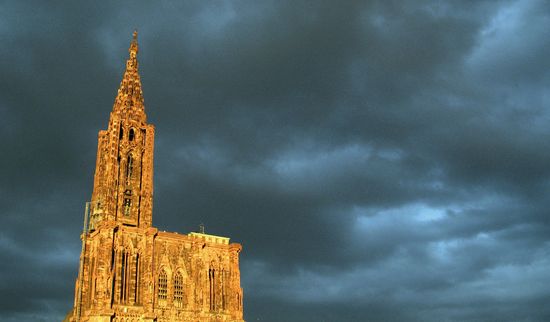
(Photo by Patrick Hertzog/AFP/Getty Images)