Yes, It Was Clinton Who Signed DOMA

Frank Rich, in a must-read, calls out the left for whitewashing history over gay rights. He's dead-on about how amnesiac some Democrats now are. And I remember all too well the morning that four of us testified in the first Congressional hearings on DOMA in 1996. My old trench-buddy, Evan Wolfson, was about to make a case for DOMA's unconstitutionality when word came in, as we walked into the room, that Clinton's Justice Department had just said it saw no constitutional problems with DOMA. We were kicked directly in the balls as we went into battle. Clinton went on to run radio ads in the South boasting of his anti-gay stands. He also signed into law the existing HIV travel and immigration ban, as well, of course, as DADT, which doubled the rate of gay discharges from the military. Rich recalls:

[DOMA] was strictly a right-wing political ploy cooked up for the year of Clinton’s re-election campaign. It had no other justification. In the spring of 1996, same-sex marriage wasn’t legal anywhere in the country or a top-tier cause for many gay leaders; it was solely in play in a slow-moving court case in Hawaii. But fear and demonization of gay men was off the charts: In 1995, a record 50,877 Americans with AIDS died—a one-year count rivaling the 58,000 Americans lost in the entire Vietnam War. The Christian Coalition, under the Machiavellian guidance of the yet-to-be-disgraced Ralph Reed, saw an opening to exploit homophobia to galvanize a Republican base unenthusiastic about Bob Dole.

In a consummate display of bad taste, Clinton announced that he would sign DOMA that spring just two days after the Supreme Court, in a rare national victory for gay rights, struck down a Colorado constitutional amendment that had barred anti-discrimination laws benefiting gay men and lesbians. In the months to come, Clinton’s stand on DOMA gave political permission to many nominally liberal Democrats to join Rick Santorum, Jesse Helms, and Larry Craig in voting for the bill that September—among them Charles Schumer (then in the House) and the senators Joe Biden, Tom Harkin, Frank Lautenberg, Patrick Leahy, Joe Lieberman, Carl Levin, Barbara Mikulski, Patty Murray, and Harry Reid. Only fourteen senators, also Democrats, had the courage to vote against it.

Erik Loomis objects:

I’m not sure what Rich is trying to say here. Are liberals making a claim to having been pro-gay 20 years ago? He talks about Bill Clinton whitewashing his own past. Well first of all, Bill Clinton is barely a liberal. Second, Clinton is whitewashing his past because he knows he was wrong. And isn’t that good that he knows he is wrong?

Yes, it is. But substantively, Clinton signed into law the most anti-gay agenda of any president in history. Yes, this was initiated, fueled and exploited by the Christianist right. But Clinton not only surrendered; he also tried to gain politically from it. I'm glad he has come around now that it's easy for him to do so. But fourteen senators can look back on history with less shame.

The Hardest Subject To Teach

Sexual assault, according to criminal law professor Khiara M. Bridges, who outlines strategies to teach it properly:

[F]irst, I avoid any attempts at humor during the unit, which is a departure from my approach to the rest of the class. Criminal Law frequently involves people doing horrible things to other people. The fact patterns of the cases are awful much of the time. So, as a professor, one could go into the classroom and lament man’s inhumanity to fellow man for an hour and a half; or, one could treat it like a dark comedy. I typically choose the latter. I prefer the Fargo approach to the There Will Be Blood approach … except during the unit on sexual assault.

In the comments section, Andrew Selbst makes a salient point:

One thing that gives the sexual assault class an added sensitivity requirement is that you can be pretty sure no one in the class has been murdered, but it’s quite possible (likely, even?) in a large class that someone has been sexually assaulted. Even if you extend the consideration to people knowing someone who was a victim, rapes are much more common, yet harder to talk about. I’d be more likely to share that a friend was murdered than raped, because it’s less of a private thing. So perhaps there’s a gendered element to it, but I think there’s more to it than that, for sure.

HRC And Marriage Equality

I have to say that the appointment of Chad Griffin to run the biggest gay lobby this coming June is a great sign of how far we've come. There was a time when HRC wanted nothing to do with marriage rights. Now it has selected a grass-roots, if highly networked, champion of them for its new head. Promising … and encouraging.

A Tipping Point On Limbaugh?

His foul misogyny is now drawing a mild rebuke from Boehner, which must be a first. Fiorina has called Rush's typical rhetoric "insulting" and "incendiary." An advertizer has also withdrawn support. Georgetown has rightly backed up their student against Limbaugh's poison:

"One need not agree with her substantive position to support her right to respectful free expression," Georgetown University President John J. DeGioia said. "And yet, some of those who disagreed with her position – including Rush Limbaugh and commentators throughout the blogosphere and in various other media channels – responded with behavior that can only be described as misogynistic, vitriolic, and a misrepresentation of the position of our student."

Georgetown does not include contraception in its health insurance for employees. Update from a reader:

Not correct actually; I am a Georgetown employee and my health plan covers contraception. You are given the choice of four plans, and three out of four include contraceptive coverage. This has been the case for years. (Ironically, the plan that does not cover contraceptives is the most expensive, gold-plated one.)

Another sends a PDF of Catholic-affiliated universities that provide contraception in their healthcare plans.

Why Cats?

Perry Stein studies the Internet's peculiar love affair: 

Steve Dale, a cat behavior consultant and pet journalist, told me that cat aficionados have been particularly drawn to the Internet because they lack other public safety valves where they can express their affection. "In the world of cats, there is no dog park," Dale says. "For cat owners, the dog park is the Internet."

Electoral Tribalism, Ctd

A reader writes:

It should be noted that in the article you cite as evidence of Obama's electoral advantage among black voters that Clinton originally held the lead among African-Americans. Indeed, in early January 2008, Obama's gains among black voters were seen as noteworthy:

In a national survey by CNN/Opinion Research Corp., 59 percent of black Democrats backed Obama, an Illinois Democrat, for their party's presidential nomination, with 31 percent supporting Clinton, the senator from New York. "The 28 point lead for Obama is a major reversal from October, when Clinton held a 24 point lead among black Democrats.

The related poll [pdf] tracks the fall of Clinton and the rise of Obama among African-Americans from October to January: black men supported Obama over Clinton 46% to 43% in October, which shifted to 74% to 21% in January; black women supported Clinton over Obama 68% to 25% in October, which shifted to Obama over Clinton 49% to 38% in January.

What happened between October and January?  Iowa.

But Obama's increased viability was also combined with race-based attacks from the Clinton camp that continued throughout the primaries. Certainly excitement over Obama as the first viable black presidential candidate was part of his appeal (among black and white voters), but it was also a failure on the part of Clinton to maintain her connection with black voters. Simple electoral tribalism doesn't explain the ebb and flow of the Clinton-Obama campaign.

Another reader points to a lesser known contest:

In the 2010 Democratic primary for Alabama governor, Congressman Artur Davis, who is black, ran against State Agriculture Commissioner Ron Sparks, who is white.  Davis had taken a more conservative voting record in hopes of appealing to white voters in Alabama.  He was, for instance, the only Black Democrat in Congress to vote against the health care bill.  Black voters in Alabama overwhelmingly turned against him and gave Sparks the nomination.  An example that blacks will indeed vote white over black if they feel it is in their better interest. 

More details on the Davis-Sparks race:

During the primary campaign, Davis downplayed matters of race and emphasized his independence from Democratic party orthodoxy. He caused controversy, including within his heavily minority congressional district, by voting against President Barack Obama's new health-care law—the only black Democrat in Congress to do so. He also refused to sit for the endorsement screenings of Alabama's black political groups, drawing criticism from some that he was an opportunist in search of white votes.[15] As a result, he became described as "the first African-American candidate in a statewide Alabama race to lose the black vote."[16]

An even better example of anti-tribalism is the continued success of Steve Cohen, a white Jewish US congressman representing the predominantly black 9th district in Memphis. From the 2008 primary:

The campaign quickly turned ugly, with [opponent Nikki Tinker, an African-American lawyer] putting together a raft of negative ads. One attacked Cohen for voting against a proposal that would have removed a statue and the remains of Nathan Bedford Forrest, a Confederate lieutenant-general who was involved in the founding of the Ku Klux Klan,[20] from the Medical Center park. The ad falsely implied that Cohen had ties to the Klan by juxtaposing Cohen with a white-clad Klansman.[21] Another ad accused Cohen of "praying in our churches" [22]

Cohen crushed Tinker at the polls, 79 – 19. The following cycle:

Former Memphis Mayor Willie Herenton announced that he would challenge Cohen in the 2010 Democratic primary for the seat. In a guest column in the Memphis Commercial Appeal, Herenton wrote that while he hoped the campaign would focus on issues rather than race or religion, that "it remains a fact that the 9th Congressional District provides the only real opportunity to elect a qualified African-American to the all-white 11-member delegation representing Tennessee in Washington." In September 2009, Herenton drew controversy when he stated in a radio interview that Cohen "really does not think very much of African-Americans" and that "[Cohen]’s played the black community well."

79 – 21.

The Dignity Of The Human Person

The governor of Maryland offers the true Catholic case for civil marriage equality:

Yesterday was a day for Maryland’s children. It was a day for human dignity. After years of hard work, we signed a bill into law that protects individual civil marriage rights and religious freedom equally. Yesterday, we came together as One Maryland and showed that there is more that unites us than divides us. Our efforts were in essence about the dignity of every child’s home. All of us, wherever we happen to stand on the marriage equality issue, can agree that all our children deserve the opportunity to live in a loving, caring, committed, and stable home, protected equally under the law.

Obama: “We’ve Got Israel’s Back”

139766359

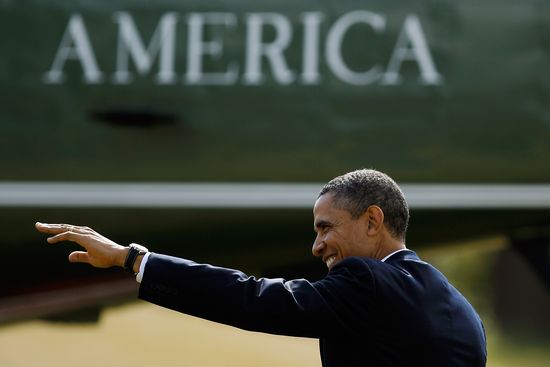
Jeffrey Goldberg has an exclusive interview with the president on the topic. The first thing to say is that Obama's mastery of the detail and strategy, and his ability to relay it with nuance and conviction, remains gob-smackingly impressive. Compared with the crass, apocalyptic, binary rhetoric from the GOP candidates right now, it's another reminder of how impressive the current commander-in-chief is. And no, he had no TelePrompter.

And the message Obama is sending is well delivered via Jeffrey. Very few journalists want this issue resolved to America's and Israel's advantage more than Goldblog. You can see the strain in his prose as these two countries' core interests have seemed to collide (in fact, have collided). And so Obama tells Jeffrey exactly what he wants to hear and exactly what Obama wants the Israelis to hear: that he has always been a staunch defender of Israel, has delivered on every promise and more, has orchestrated the most successful isolation of Iran since 1979, and delivered the most punishing sanctions in history. There is also no mention of the Palestinian question in the interview, which itself is revealing. Netanyahu has won on that question – until an Obama second term (which is why he and his neocon allies are doing all they can to defeat Obama this fall).

But there's no question, it seems to me, that Obama, through this interview, has pre-empted Netanyahu's reported demand that the president intensify his rhetoric to include an iron-clad commitment to US military action against Iran if sanctions fail. He unpacks the "all options are on the table" diplo-speak thus:

It means a political component that involves isolating Iran; it means an economic component that involves unprecedented and crippling sanctions; it means a diplomatic component in which we have been able to strengthen the coalition that presents Iran with various options through the P-5 plus 1 and ensures that the IAEA [International Atomic Energy Agency] is robust in evaluating Iran's military program; and it includes a military component. And I think people understand that. I think that the Israeli government recognizes that, as president of the United States, I don't bluff.

My italics. I think that is about as explicit as he can possibly be. More to the point, Obama has ruled out containment of Iran, the position I take, and never raises the issue of Israel's nuclear weaponry. What more could AIPAC want? What they lack is trust. And here's where I think Obama gives a reason for trust. He believes that a nuclear Iran would destroy nuclear non-proliferation in the Middle East, which, in his eyes, is a core threat to US interests:

If Iran gets a nuclear weapon, this would run completely contrary to my policies of nonproliferation. The risks of an Iranian nuclear weapon falling into the hands of terrorist organizations are profound. It is almost certain that other players in the region would feel it necessary to get their own nuclear weapons. So now you have the prospect of a nuclear arms race in the most volatile region in the world, one that is rife with unstable governments and sectarian tensions. And it would also provide Iran the additional capability to sponsor and protect its proxies in carrying out terrorist attacks, because they are less fearful of retaliation … [Even taking Israel out of the equation], it would … be a profound national-security interest of the United States to prevent Iran from getting a nuclear weapon.

So what Obama is clearly saying to the Israelis is: I've got this. Now he needs them to believe this for the policy to work. And by framing this in terms of his liberal and long-held position on nuclear non-proliferation, he makes it, to my ears, much more credible. For what it's worth, I see no reason to disbelieve him. He's never said anything else, and it's where his liberal realist instincts lie. For my part, I think containment is a perfectly feasible strategy – and the sanest one – but I am not Obama. I would never call the alliance with Israel "sacrosanct." No alliance, in my view, should ever be "sacrosanct" or "unbreakable". But Obama is comfortable with the permanent, even sacred, fusion of the US and Israel. Nothing in his career from Hyde Park on has ever suggested otherwise. That he disagrees with the policy of continuing to expand Greater Israel through settlements is no contradiction to this. In his eyes, such settlements are dooming Israel, imperiling its most important diplomatic relationship, and empowering its enemies.

So you see the long game here as well. He maximizes non-military pressure on Iran, holds Israel at bay from unilateral action, and then promises to follow through in a second term by military strike if necessary. There's a chance that the chaos in Syria, the crippling nature of the European-US sanctions, and regime fragility and division in Tehran could lead to a win-win: an Iranian nuclear energy program subject to full and constant international inspection. Why rule that out now prematurely? Why isolate Israel and make Iran a victim and unleash a global terror wave if we can avoid it and still retain a US capacity and pledge to destroy Tehran's alleged nuclear weapons program if necessary?

Obama has essentially committed the US to war as a last resort to stop nuclear proliferation in the Middle East. He's said it before. But it's clear he means it. It's not a trap for Israel. It's a core public pledge in terms of a profound national-security interest. Obama went to war in Libya where no such interest was involved. So why would you disbelieve this pledge when he says it is? Netanyahu has all the assurance he could possibly ask for – and one suspects that most Israelis will be persuaded by Obama's clear language. A unilateral Israeli war with Iran against these pledges from the US would not just isolate Israel in the world; it would isolate Netanyahu in Israel. Meep meep again.

Under these circumstances, all I can say is that I hope the sanctions work – and that Obama proves me wrong (again). But I have found myself to be less bellicose in this first term than the president himself – vis-a-vis Afghanistan, Libya and Iran. Obama's defense of just war in his Nobel speech was not insincere. Ask Bin Laden. Or Qaddafi. Or al Qaeda in Afghanistan and Pakistan. The man likes being commander-in-chief and killing this country's enemies.

But will Bibi bite? That is the question. The answer? Next week.

(Photo: Chip Somodevilla/Getty.)