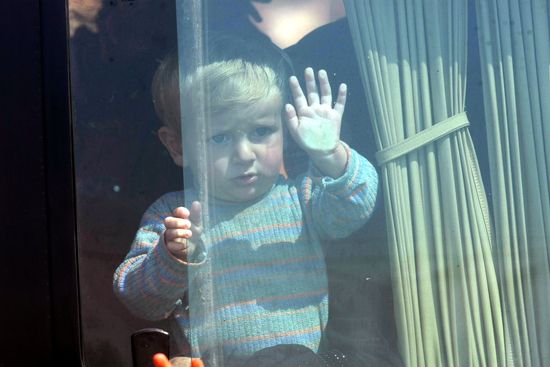
The Weekly Wrap

6a00d83451c45669e20167646eb176970b-550wi

By Hazem Bader/AFP/Getty Images

Friday on the Dish, Andrew penned his full-on, in-depth review of Peter Beinart's book oriented around one core question – "Why continue to build the settlements?" We looked at Peter's response to a review far more hostile than Andrew's, worried that America's Israel neck-albatross was getting heavier, dove into the decision process behind drone strikes in Pakistan, noticed an American double-standard about international law, pushed back against the idea that war was a virus, and figured the TSA did more harm than good.

We also guessed at why analysts were unprepared for the court's harsh treatment of the mandate, discovered just how conservative the Roberts Court was, looked into the history behind a healthcare-free Constitution, debated whether the Supremes were listening to bloggers, predicted only a weak hit at best to SCOTUS' legitimacy if it struck down the mandate, and called for the Walmart of health care. Romney endorsements were tepid and Mitt's ads were "Obamaville"-style ridiculous.

Liberals and conservatives fought over faith's role in success, your politics shaped your accent, and there was more to life than red vs. blue. The "Big Football" reader series continued here and here, Dartmouth fraternities threatened students and corporate culture alike (follow-up here), and the catcalling thread produced more reader insights. We found out the long term threats posed by mass unemployment and rubbished the lottery. Neuroscience had limits, constraints created love, bikers fought drivers, and a Chinese reality show about death row chilled. Malkin Nominee here, Cool Ad here, FOTD here, MHB here, and VFYW here.

Thursday on the Dish, Andrew wondered if America was on the road to post-Obamacare single payer while we detailed the specific path down that route, noted the somewhat circumscribed role of the mandate, guessed at whether the Medicad expansion would get thrown out by SCOTUS, cautioned against seeing the Constitution in black-and-white, developed a timeline for hearing the Court's decision, compared Obama's fight with the Court to Bush's, and forecasted the negative consequences of the mandate's defeat for Obama's reelection campaign. Rubio endorsed Romney (but looked like a terrible Veep choice), Mitt's approval rating remained abysmal, foreign policy wasn't the presumptive nominee's strong suit, he gaffed again, Dems faced severe challenges in the Congressional elections, and pink balls freaked out Santorum.

Andrew also dipped his toe in on Trayvon Martin (follow-up here), expressed some optimism for the Arab Spring, worried about signs of an impending Iran war, and picked out one nuggest suggesting war wasn't over. Iran seemed fundamentally different from the Soviets, #Kony2012 rose on the backs of teenage Southern girls, drone attacks declined, and robots definitely could jump. One reader labelled the Trayvon case "like the Duke lacrosse scandal but worse," American politics rewarded the old at the young's expense, Congress killed Bowles-Simpson, and Obama's scandals were lame. Atheist proliferation terrified Christianists but non-believers lacked an organized community with which to push back. We put up a preliminary response on the football question, continued the catcalling discussion, checked Hollywood's math, and praised "low-end innovation." Virologists advanced, "dude" changed, and the "Conservative Teen" photos wowed. Yglesias Nominee here, Quotes for the Day here and here, Cool Ad here, FOTD here, VFYW here, and MHB here.

6a00d83451c45669e201630361f6be970d-550wi

Antananarivo, Madagascar, 8.30 am

Wednesday on the Dish, Andrew weighed in on the blogospheres' wideranging debate about the Obamacare case, wondered if the mandate's defeat would help Obama in the fall, and delved into the numbers on just how weak a nominee Romney is. The mandates' odds went up from a 50/50 baseline, readers gave their two cents on the case, the Solicitor General really was that bad on Tuesday, the "limiting principle" peanut gallery debate expanded, and overturning the whole health care law would crush Obama's attempt to deal with drug addiction. Readers explained all the details on Romney's status in the Mormon hierarchy, elites leaned conservative, and the right had difficult with race. Ad War Update here.

Andrew also noted a collapse in support for the War in Afghanistan, defended the logic behind a settlement update, flagged a lengthy interview with the boycott's originator, and speculated about whether Big Football was engaged in a tobacco-like coverup. The Daily Mail served as Fox News for the fish-and-chips set and Tim Tebow took in a Wicked show. We located the culprits for the loss of public sector jobs (Republican state legislatures, if you're curious), announced the rebirth of the salesman, and proposed "fair trade porn" for the ethical masturbator. We also noted a new film adaptation of 1984, wanted television to tell more science fiction stories, blurred the line between reality TV and documentaries, discussed an example of the latter about chess, and listened to a ghostwriter spill secrets of the craft. Catcalling still terrified, learning styles were made up, and effective passwords had to be "memorable and secure." A tumblr catalogued terrible apologies, the buttfish swam out on video, and life found a way – to play pool. Quote for the Day here, Tweet for the Day here, Yglesias Nominee here, Map of the Day here, Hathos Alert here, MHB here, VFYW here, and FOTD here.

6a00d83451c45669e20168e94d83e3970c-550wi

By Adem Altan/AFP/Getty Images

Tuesday on the Dish, Andrew clarified his reasons for supporting Obamacare,  declared the GOP unserious until it could specify precise spending cuts, zoomed in on the evidence as to whether Christianists would vote for Romney, explained why a Mormon was a less likely theocrat than his Catholic competitor. We compiled reax to both Day 1 (here) and Day 2 (here) of the Obamacare case, examined what would happen if the mandate were struck down, reality check'd health care reform's approval ratings, figured the name we used to refer to the legislation didn't matter much, and guessed the GOP establishment was too afraid to rally 'round the Romney. Ad War Update here.

Andrew also engaged with a strong reader critique of his debate with Goldberg, deepened his explanation of Catholicism to Bill Maher, delved into NOM's divide-and-conquer attempts to split gays and minorities, and scoffed at Romney's silly remarks on Russia. We checked on whether sanctions on Iran could escalate, put ourselves in Netanyahu's headspace about a "bluff" on Iran, flagged an interesting debate that came up in the wake of Peter Beinart's book, read an awesome write-up about playing paintball with Hezbollah (for real), aired ideas about how to get out of Afghanistan with grace, thought about the psychology of drone warfare, imagined war as a virus, and debated Kiwi exceptionalism.

Readers raked Andrew over the coals for his discussion of Hillary Clinton, shared their experiences with catcalling, and developed theories about why women paid more for certain items. Marriage remained the norm, sharing commutes brought couples together, and politicians acted like humans. Neuroscience couldn't explain everything, bionic arms befuddled scientists, NPR weighed in on farting etiquette, and you couldn't get there from here. Quote for the Day here, Yglesias Nominee here, VFYW Contest Winner here, VFYW here, MHB here, and FOTD here.

Monday on the Dish, Andrew demanded substantiation from Jeffrey Goldberg on the "lying" charge, argued that the line between Israel and the settlements was being irrevocably blurred, said "finally!" to the Obama Administration's decision to defend the term Obamacare and the policy the label describes. Arguments on the Supreme Court case about the law began, trying to read the decision tea leaves from the oral arguments was a fraught endeavor, Obamacare wasn't just the mandate, the case seemed unlikely to change the public's view of the law, and pundits projected the political implications of the law's (hypothetical) defeat. Santorum won Catholic voters (for once) and feuded with the NYT, Gingrich called for a very unlikely open convention, GOP turnout looked kinda-okay, 2016 speculation was silly, and SuperPACs (maybe) pushed the GOP in a libertarian direction. Ad War Update here.

Andrew also opened the Ask Charles Murray Anything poll to your questions, campaigned for the petition to get Alan Turing on the 10 pound note, posted some clips from his Bill Maher appearance, and confessed his delight at receiving drunken emails. We drew some conclusions from the coup in Mali, spotlighted New Zealand's economic excellence, debated the markup on legal weed, and weighed the relative merits of credit cards and cash in terms your propensity toward profligate spend. Specific advice formed good habits, readers contested math's supposed uselessness, algae (potentially) replaced oil as fuel, companies measured our digital selves' value, defriending hurt Facebook, and science saw around corners. We wondered if humans could catch a computer cold, checked on our Xanax addiction, worried that American dialects were going stale, got confused by the super-hot March, moved "Toward a Social Psychology of Flatulence" with Andrew's help, and demanded the government release its death grip on our Taco-Copters. Quotes for the Day here and here, Hewitt Nominee here, VFYW here, MHB here, and FOTD here.

Z.B.

Recruited From The Kiddie Pool, Ctd

A reader protests over Reitman's piece:

I'm so sick of this trope where the liberal media makes this argument: "Fraternities haze and are therefore evil. Look at all these conservative elites that came from fraternities! These elites are probably evil too." At one point the author basically implies that Bush Sr. and Jr. are rapists.  There's no statistical information in this trash. There's no objectivity. The author offers absolutely no defense for Fraternities, never once explains why Lohse' brothers were so loyal to SAE.

At my fraternity, there was no hazing. We did have mandatory study hours though. Our average GPA for our pledges was annually the highest in the Greek System, and the average Greek GPA was higher than the average non-Greek GPA. We had a strict no-drugs policy in the house. We had curfew. Honestly, Andrew, for every hazing anecdote Reitman digs up, I can give you a counter anecdote. I would never attempt to defend fraternities that haze their pledges; I find it detestable. But there's never any attempt to argue for culling just the bad apples in these editorials.

Another writes:

I'm a recent Dartmouth alum, and I'd just like to add two points of context to the article: First, Dartmouth's suffering a real crisis of leadership at the moment.  As the Rolling Stone article notes, Dartmouth's president for the past three years, Jim Kim, has shown a certain degree of aloofness during his tenure. 

To many students, it seemed like Dr. Kim was just biding his time in Hanover, looking to punch his ticket as president of an Ivy League university before moving on to greater things.  And they may not have been wrong.  Just a week before the Rolling Stone story hit the streets, President Kim was nominated to head the World Bank.  And over the next few days, Dr. Kim will be on a worldwide "listening tour" to stump for his new job, even as this story attracts national attention back at Dartmouth.

Second, I doubt this article will do much to change Dartmouth's frat culture.  As I see it, there are two ways the administration could put an end to hazing.  It could either (a) get rid of the frats (perhaps by forcing them to go co-ed), or (b) more aggressively police the rush process.  But both of these solutions would be wildly unpopular, not just with the student body, but also with the wealthy alumni who really call the shots at the College.

Another:

I am a Dartmouth '08 alumnus, and my friends and I have been discussing this article on email all week; Ms. Reitman pissed me off, but her article cannot and should not be swept under the rug. At one point, Ms. Reitman says, "Dissent, a signature part of the undergraduate experience at many liberal-arts colleges, is, at Dartmouth, common only to the faculty." I hope I don't have to go into why I personally object to that statement, and I challenge her to back that statement up with hard data. Honestly, I read the whole article as a shock-jock opinion piece – albeit one that touches on truths.

Ms. Reitman spends an embarrassingly short amount of time on what should be the main issue – sexual assault and violence. By focusing on vomlets and quick sixes, Ms. Reitman gives the whistleblower, Andrew Lohse, a free-ride (so to speak) for his complicity in a frat system that includes pervasive sexual assault, date-rape drug use, and other crimes. Ms. Reitman gets caught up in the hazing debate and as a consequence walks past a much more dangerous part of the forest.

Ms. Reitman also avoids apportioning excessive blame; in my opinion, the buck stops at the top. The current president of Dartmouth, Jim Kim, was quoted in the article as saying, "I barely have any power. I'm a convener." If that is an accurate quote, then that means Jim Kim is unable or afraid to to face down frat boys and their admittedly wealthy and influential alumni backers. If he can't control college bros, can we trust him to lead the WHO?

Context for the hathos-filled video embedded above:

During a videotaped show last March, Dr. Kim, the president of Dartmouth College, appeared midway through a live stage rendition of "Time of My Life" with the Dartmouth Gospel Choir, which puts on an annual “American Idol”-style competition at the college, "Dartmouth Idol."

Ad War Update

The DNC embraces Paul Ryan's endorsement of Romney ("When they meet to prepare / ways to end Medicare / that’s amoré"):

From the other side, the RNC relishes Obama's budget woes:

Meanwhile, the Super PAC American Crossroads pounces on Obama's hot mic comments with this bizarre, conspiracy-based, action-comedy trailer:

Previous Ad War Updates: Mar 27Mar 26Mar 23Mar 22Mar 21Mar 20Mar 19Mar 16Mar 15Mar 14Mar 13Mar 12Mar 9Mar 8Mar 7Mar 6Mar 5Mar 2Mar 1Feb 29Feb 28Feb 27Feb 23Feb 22Feb 21, Feb 17, Feb 16, Feb 15, Feb 14, Feb 13, Feb 9, Feb 8, Feb 7, Feb 6, Feb 3, Feb 2, Feb 1, Jan 30, Jan 29, Jan 27, Jan 26, Jan 25, Jan 24, Jan 22, Jan 20, Jan 19, Jan 18, Jan 17, Jan 16 and Jan 12.

Seeing Politics In Everything

Julian Sanchez rejects the gulf between partisans "as reflecting some essential fact about human nature, or as providing a frame within which to understand all intellectual or cultural life":

It starts to seem, as Albert Camus once put it, that we’ve made the mind into an armed camp—in which not only politicians and legislative proposals, but moral philosophies, artworks, even scientific theories, have to wear the insignia of one or the other army. … We’re at the point where people are morally certain about the empirical facts of what happened between Trayvon Martin and George Zimmerman on the basis of their general political worldviews. This isn’t exactly surprising—we are tribal creatures who like master narratives—but it feels as though it’s gotten more pronounced recently, and it’s almost certainly making us all stupider.

Face Of The Day

GT_FACE-PALESTINIAN_120330

Palestinians mourn for Mahmud Zakut during his funeral in Beit Lahia, north of the Gaza strip, on March 30, 2012. Israeli troops shot dead 20-year-old Zakut in Beit Hanun near the border fence with Israel, north of Gaza, after a day of protest which saw thousands rallying to mark Land Day, a medical spokesman told AFP. By Mohammed Abed/AFP/Getty Images.

Drivers vs Cyclists

Scott Carlson explains why the two groups are so at odds:

Seeing cyclists blow stop signs and ride with their hands off the handlebars really irks [Andy Clarke, president of the League of American Bicyclists]. "It doesn’t help our cause to be seen as scofflaws." At the same time, he says, "I can understand why people behave the way they do on a bike, because the system isn’t set up to help them."

That’s the understatement of the week. Mia Birk, an urban planner in Portland, Ore., who specializes in bike issues, says most rule-breaking by bicyclists is the result of poor design. The few people willing to brave the streets on bikes "have to be road warrior types because bikeway infrastructure stinks," she says in an email.

Where Is The Walmart Of Healthcare?

Yglesias recently addressed the low-end innovation that has eluded healthcare and higher education. Scott Galupo notes the particular perversity of the healthcare market, flagging the above conversation from last year:

This is a reality that many conservatives simply refuse to reckon with. To his credit, as governor of Massachusetts, Mitt Romney accepted it. And now, out of a combination of cravenness and ambition, he's desperately trying to swat it away.

Is War A Virus? Ctd

Norm Geras is skeptical of John Horgan's analogy:

[I]f some people become warlike, even despite war not being a general human disposition, other people may have to go to war to defend themselves.

But this simple analogy points to a much broader difficulty: namely, that wars may be entered upon for a number of reasons that have primarily to do neither with innate human aggression nor with culturally transmitted attitudes of a bloodthirsty kind; they may arise out of conflicts of economic interest, national or ethnic hatreds, competing territorial claims, religious or other ideological beliefs concerning the superiority of one's own people and the inferiority of others, the yearning to be free from foreign or even domestic oppression, the desire to defend one's country against invaders, and so on.

I do not say that the elimination of war is impossible. I don't know that; like Horgan, I hope it is possible. But the complexity of war's causes isn't well captured by calling it either a cultural innovation or a virus.

America’s Growing Israel Problem

GT_ISRAELIRAN_120329

Marc Lynch believes the Arab Spring has pulled the rug out from under America's Israel strategy:

The United States should support Israel and help it as a real friend. America's ties to Israel are deep, at the societal level as well as at the military and intelligence levels, and for all the turbulence in the relationship friends should not be abandoned lightly. But the relationship will have to change if the U.S. hopes to navigate the new Arab public.

Put bluntly, it has never been more important to America that Israel solve its Palestine problem, but it has never been less likely that Israel will be able or willing to do so. The old dodges and workarounds simply will not work anymore. Decades of American policy have been based on the ability to manage the tension between its alliance with Israel and its alliance with the Arabs through the pretense of a never-ending peace process and a reliance on dictators to crush public opposition. With dictators gone or under pressure, and the peace process dead, such a strategy cannot be sustained.

(Photo: Lebanese and Syrian demonstrators burn Israeli (R) and Iranian flags during a weekly protest against the Syrian regime in the northern Lebanese city of Tripoli on March 23, 2012. Monitors say more than 9,100 people have been killed in the Syrian unrest that started with peaceful protests in March 2011 before turning into an armed revolt, faced with a brutal crackdown which has cost dozens of lives each day. By STR/AFP/Getty Images.)

How America Decides Whom To Bomb

Steve Coll zooms in on Af-Pak border drone strikes:

A signature target can be a house in North Waziristan where many bearded men wearing turbans and carrying arms gather for dinner, chatting on their phones. The U.S. drone operators may listen in and watch over such a suspicious-looking dinner party, and, back at Drone Central, officers on duty may conclude there is sufficient cause to fire missiles at the house—but they could have little or no idea about the names of all the guests. The Americans insist that "signature" drone strikes of this kind are necessary because that is how the United States has regularly, semi-accidentally killed Al Qaeda leaders along the Pakistani border in recent years, resulting in a reduction of Al Qaeda’s global capability. But they have also semi-accidentally killed Pakistanis who are not tied to Al Qaeda.