Could it be this year’s version of this:
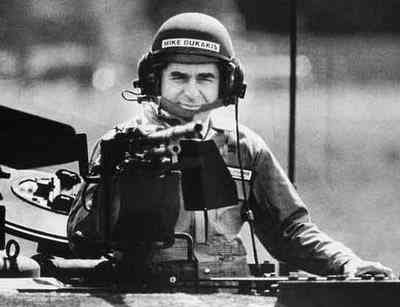
Or this:
More epic campaign FAILs here.
Beinart asks his critics:
Today, the Israeli government—with the active consent of the organized American Jewish community—provides myriad subsidies for Jews to leave democratic Israel to settle across the green line. Regardless of your opinion about the Palestinian willingness to make a two state deal today, such policies are deeply self-defeating since they make a two-state solution harder ever. A settlement boycott could help to rebalance the scales. If critics disagree—and yet still profess a belief in the two state solution—then they should offer their own alternatives for how to stop the settlement growth that threatens Israel’s democratic future. I’m all ears.
The gaffe worth a thousand ads bears another, this time from the Gingrich campaign:
Newt launched the ad on SketchyRomney.com. The DNC gets in on the fun:
Meanwhile, the Romney campaign forges ahead in Wisconsin:
Romney has campaigned on fiscal conservatism before, but the message seems significant now for a couple of reasons. First, it develops a theme that he'll have to rely on more heavily if the national job market continues to improve. Second, it lines up Romney's argument in Wisconsin with the Republican message in Gov. Scott Walker's recall campaign. Wisconsin is distinct from every other primary state so far in that the presidential race is not the most urgent and high-profile race in progress; the recall is. It makes sense for Romney to deliver a message that harmonizes with what the state GOP and the governor are saying, instead of trying to break through with a different set of themes.
Previous Ad War Updates: Mar 21, Mar 20, Mar 19, Mar 16, Mar 15, Mar 14, Mar 13, Mar 12, Mar 9, Mar 8, Mar 7, Mar 6, Mar 5, Mar 2, Mar 1, Feb 29, Feb 28, Feb 27, Feb 23, Feb 22, Feb 21, Feb 17, Feb 16, Feb 15, Feb 14, Feb 13, Feb 9, Feb 8, Feb 7, Feb 6, Feb 3, Feb 2, Feb 1, Jan 30, Jan 29, Jan 27, Jan 26, Jan 25, Jan 24, Jan 22, Jan 20, Jan 19, Jan 18, Jan 17, Jan 16 and Jan 12.
Last week, in response to the US soldier who slaughtered 16 Afghan civilians, Katie Drummond grappled with the hazy connection between violence and traumatic brain injuries (TBI):
One report followed 850 young civilian adults over eight years, and found that those who’d suffered a TBI "reported more interpersonal violence" than their peers. Another, out of Sweden, tracked over 20,000 people for 35 years. That one, published earlier this year, noted that 9 percent of all TBI-afflicted study participants were implicated in a violent crime at some point after sustaining the injury. By comparison, only 3 percent of those without a brain injury ever committed a violent crime. The researchers concluded that TBI "significantly increased [the] risk" that an individual would behave violently.
Meanwhile, the military's framework for addressing TBI is severely flawed:
Traumatic brain injuries are so common among today’s troops that the military has spent over $42 million for a test to detect them, a test that [Staff Sergeant Robert] Bales most likely took before his final deployment to Afghanistan. … Soldiers are meant to take the test twice – once before deployment and then again after a suspected head injury. Soldiers must answer a series of questions that score basic thinking abilities such as reaction time, short-term memory and learning speed. In theory, the initial test serves as a baseline to compare the results of the second test; a discrepancy signals a possible injury and the need for more evaluation.
But the test – which a former Army surgeon general has called no better than a "coin flip"– is rarely implemented that way. The Army was so unconvinced of the test’s accuracy that it issued an order not to send soldiers with a troublesome score for further medical evaluation.
So now he's going on hiatus. But before he does, he refuses to substantiate his baseless claims that I have lied about his work, and refuses to retract two patent untruths he has written about me.
Then, for good measure, he throws in another disgusting, despicable smear: that I am a "scape-goater of Jews." Not a critic of current Israeli policy, with a long history of support for the Jewish state, whose blog has long had an anti-Semitism watch feature, and who has written, to take one sentence out of countless, that anti-Semitism is "an eternal toxin for which my own Church bears a huge amount of responsibility and which needs to be confronted whenever it appears". No: "a scape-goater of Jews." He knows what resonances that phrase has. It's an assertion of anti-Semitism without even the courage to use the words. Then he announces he is on hiatus. Having accused two writers, me and Peter Beinart, of errors, omissions, bigotry and ignorance, he refuses to substantiate any of his charges, and walks off in a huff.
The core identity of the Atlantic is intellectual honesty. It's clear by now that this is something Goldberg has difficulty understanding.

A Balinese performer poses before a parade of effigies called 'ogoh-ogoh' symbolising evil, in Denpasar on March 22, 2012, as part of a traditional celebration ahead of the Day of Silence or locally known as 'Nyepi'. Hindu devotees in Indonesia and around the world will celebrate the 'Day of Silence' on March 23. By Sonny Tumbelaka/AFP/Getty Images.
Mike Daisey changed facts to improve his narrative. Dreher, who is writing a book about his late sister, sees value in loose ends:
It can be frustrating to be bound by the truth because there are times when I wish the story with my sister were more straightforward. But it turns out that these irritating bits that won’t allow me to tie up the narrative in a neat bow are actually essential to the story I’m telling.
Was the way she dealt with cancer an example of unambiguous courage, or did it require a degree of self-deception? That is, was what we all saw as raw courage really the product of Ruthie lying to herself about the seriousness of her own condition? Even the people closest to her aren’t totally sure — or at least they aren’t unanimous in their judgment. And if Ruthie did deceive herself to a certain extent about how sick she was, how is that not still courage? Is a firefighter who runs into a burning building to save children uncourageous if, in order to motivate himself to do his duty in conditions of almost certain death, he tells himself that he’s going to survive the ordeal before him?
"I’m very much in favor of people recognizing that these high gasoline prices are probably here to stay," – Mitt Romney, 2006.
"Gov. Romney believes the best way to help lower gas prices is for long-term structural reform, which is why he supports aggressive action to expand domestic production and guarantee the American people a reliable, affordable supply of energy for the future," – Romney spokesperson Andrea Spaul, today.
Shake, shake.
One reason the Etch-A-Sketch comment resonates:
[T]he feeding frenzy highlights a bigger problem for Romney, especially as we begin transitioning to the general election: He gets almost no benefit of the doubt. Every gaffe becomes a story; every mistake become fodder for late-night comedians. And more importantly, this is what happens when you don’t have a solid base of support that can serve as a cocoon of protection during the toughest of times.
Joe Klein expects the gaffe to keep on giving. Ezra Klein differs:
My hunch is that these moments only become “campaign defining” if the campaign was already defined that way in the first place, and in that case, they don’t have much of an impact. If that’s right, the election won’t be any different at all because of the Etch a Sketch comment. Which isn’t to say that it won’t be defined by it.
The Clintons are immortalized with a few runways.
 The Dish