Do The Primaries Still Matter?

Andrew Sprung thinks so:

The delegate math still says Romney, overwhelmingly. But that doesn't mean that the contest doesn't matter. My personal interest is to see Romney pushed to the right, bloodied by intemperate attacks, and exposed as the pseudo-conservative fraud he is for as long as possible.  If Alabama and Mississippi can reasonably be taken to indicate that there will be hard-fought primaries from now through June, that's huge news.

R.M. at DiA is on the same page:

[H]ow Mr Romney wins matters. Whether he runs across the finish line in May, or crawls across in June, or successfully negotiates an open convention, will affect his campaign going forward.

The story of the primaries may no longer revolve around whether Mr Romney can be beaten, but the account of his humiliations—like failing to woo his party's base—on his way to victory is just as significant. And the more states Rick Santorum wins, the closer we are to having Mr Romney's would-be coronation degraded to a moment of bitter relief. So far from being a "predictable Republican primary", as Mr Douthat claims, the race is still quite compelling, even if we know who's going to come out on top. 

More on Douthat's confidence in Mitt here.

Face Of The Day

Imgrund-4

Colossal captions:

German photographer Florian Imgrund acquired his first film camera in the summer of 2010 and has made incredibly good use of it since. All of his double exposure work is done completely in camera without the use of photoshop, and often merges human forms with the natural landscape. I don’t think I’ve been this impressed with double exposure work since first discovering Dan Mountford

Why Won’t People Stop A Bike Thief?

In a redo of his 7-year-old experiment, Casey Neistat stole his own bike [NYT] without any interruptions, even in front of a police station. Brian Merchant wonders what it would take for society to change:

I was in Copenhagen last year, where I saw a number of bikes leaning on buildings, unlocked. Then I saw more, just tossed over on the grass. I asked a Dane what the deal was. Nobody really wanted the bikes, it turns out, because everyone that wanted one already had one. Or had access to one, through the city's bike-share system. No bike thief could make any serious money selling bikes. Besides, income equality was much greater in Denmark, and the have-nots were not nearly as destitute or desperate as those in a city like New York. The incentive for organized bike-stealing was simply not there.

The Art Of War

Thomas Bruscino wonders why anti-war literature and film have become the norm:

For generations, American students have read Hemingway, Mailer, and Heller supplemented by Remarque, Vonnegut, and the occasional viewing of The Best Years of Our Lives. Just as importantly, they have been inoculated against patriotism in all its forms, taught to sneer at the Romanticism in Washington Irving’s portrayal of George Washington’s youth, the plain backwoods heroism of Sergeant York, and the supposedly misplaced sunset in the Green Berets. … [T]he bias has become self-perpetuating: great artists depicted war as meaningless brutality; serious critics determined that such depictions were great art; and aspiring artists and critics, hoping to be taken seriously, followed suit.

Adam Elkus draws on the complexity of the genre:

The best antiwar art, while sometimes glamorizing combat (an near-intractable problem for an artist), emphasizes the folly of men. But there is more to conflict than the folly of men. If war were merely attributable to moral defects, political incompetence, or greed, it would be easier to understand (and perhaps prevent).

Dish discussion of the movie Act Of Valor, a recent example from the other end of the spectrum, here

(Video: The Best Years Of Our Lives recut as a thriller)

A QR Disaster

Airplane-towing-qr-code

Hugo Macdonald is flabbergasted by the rise of Quick Response barcodes in advertising:

The idea might be simple to a boardroom of ad and marketing execs – but did nobody stop to question if it might be a tiny bit ridiculous? An advert is about selling an idea instantly, cleverly, mesmerisingly through an image and a message. Who has time to stand in front of an advert, fiddle around with a smartphone and then read reams. The whole concept is a complete anathema to what the advertising industry stands for. 

Christine Erickson spoke with one of the creators of the new tumblr WTF QR Codes:

"I started taking pictures of them just to capture the ridiculousness," says Brad Frost, a mobile web strategist and front-end designer at digital ad agency R/GA. "I started scanning them because many should go to worthwhile mobile-optimized web experiences, and as a web designer I was curious to see if that actually happens — it almost always doesn’t."

Frost captions the above image: "Look! In the sky! It's a bird! It's a plane! It's the dumbest thing I've ever seen in my life!" On a more serious note, Jon Barocas lists other reasons QR codes are doomed, including security fears:

Recently, there have been documented cases of QR code misuse and abuse around the globe. For instance, infected QR codes can download an app that embeds a hidden SMS texting charge in your monthly cellphone bill. QR codes can also be used to gain full access to a smartphone — Internet access, camera, GPS, read/write local storage and contact data. All of the data from a smartphone can be downloaded and stolen, putting the user at risk for identity theft — without the user noticing.

The Cotton Conundrum

Pamela Ravasio wonders if we are designating our land resources appropriately:

[T]he plantations of the three largest cotton growers – the US, China and India – alone account for 50 million acres, 42% of all agricultural land. In contrast, food crops amount to some 40 million acres and fuel crops to 32 million acres. In other words: It is the 'white gold', cotton, not fuel, that is in direct competition with food.

Tom Philpott takes issue with Ravasio's numbers but thinks her overall point has merit:

According to the UN's Food & Agriculture Organization (FAO), global cotton production doubled between 1960 and 2001. In that period, some of the most hunger-prone countries on the planet shifted significant farmland to cotton for the global market, hoping to build wealth from a valuable commodity crop. …

But as production ramped up, the global price of cotton plunged, the FAO report shows, driven down by abundance as well as competition from synthetic alternatives like polyester. The price drop meant severe disappointment for cotton producers in poor countries in Africa (while US cotton growers treaded water with a boost from crop subsidies).

A while back, Stacy Mitchell crunched some stark numbers on the cheap clothes that resulted from cheap cotton:

In the mid-1990s, the average American bought 28 items of clothing a year. Today, we buy 59 items. We also throw away an average of 83 pounds of textiles per person, mostly discarded apparel, each year. That’s four times as much as we did in 1980, according to an EPA analysis of municipal waste streams [pdf].

The Weekly Wrap

6a00d83451c45669e2016763c9223a970b-550wi

By Mandel Ngan/AFP/Getty Images

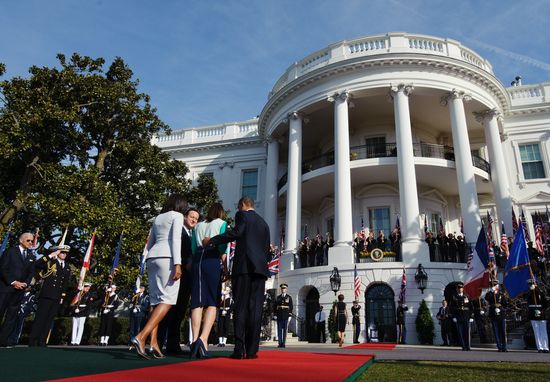
Friday on the Dish, Andrew explored Prime Minister Cameron's truly conservative view of Obama, understood Romney's campaign strategy as a Seinfeldian endeavor, matched the campaign directly to its demographics, called for more debates, marvelled at Coulter's sanity, and saw Santorum cross a true Dittohead redline. We delved into the roots of Romney's lies, chomped onsome popcorn while Santorum took the gloves off, checked in on the candidates' Puerto Rico campaigns, and tried to, uh, understand Montana's delegate allocation rules. Dependence on rural populations hurt the GOP, college degrees divided our political parties, anti-Obama racism was real, and debate kept up on the Mississippi racism video here and here. Ad War Update here.

The prospects for an Iran deal looked up, Hamas may – or may not – have decided to stay out of an Israel-Iran war, and the Syria didn't appear to be in store for a happy ending to the violence. Rowan Williams was a true Christian Archbishop (foll0w-up here) and the chronic pain thread continued. We wondered why there were no black Senators, ferreted out consequences of paying congresspeople more, thought through America's fertility rate, and examined whether health care reform could get you a raise. People hated censoring violence in entertainment, dystopia became the new YA vampire, television did psychoanalysis better than film, having the ending spoiled probably was alright, Don Draper went gay, and "Andrew in Drag" was "so post-post gay, it's almost post-trans." Mike Daisey deceived about China on NPR, comment sections on blogs sucked, 4G was oversold, Internet Explorer tried way too hard, and Apple-esque sex male toys hit the market. Moore Nominee here, Quote for the Day here, Chart of the Day here, FOTD here, MHB here, and VFYW here.

Thursday on the Dish, Andrew situated the Cameron and Obama Administrations in the same, intelligently conservative sphere, opened up about last night's dinner at the White House, aired a disturbing video of interviews about Obama in the Deep South (prompting dissent and further discussion here, here, and here), half-heartedly lamented the end of the GOP debates, and parsed Shelly's approach to funding in what remains of the primary. We chronicled an "enough, already" reaction to anyone pretending the GOP contest isn't over, noted that Romney had a good delegate month ahead of him, watched Mitt squirm when pressed on his former love for mandates, wondered whether he'd ever pick Santorum for veep, worried that Santorum's brand of conservatism would come to define the Republican Party, debated zombie Newt's effect on the race, and started a "Get. Out. Now." watch for the ego-maniac. Gingrich's $2.50 gas pledge was ridiculous and the GOP fielded an (un)-Orthodox candidate for Congress in New Jersey. Ad War Update here.

Andrew also explained why no priest could ever come out as gay and mocked the Pope's extravances. We made the conservative case for subsidized birth control, kept up the chronic pain and medical pills discussion, checked out an idea to save money by paying Congresspeople more, worried about our infrastructure, and examined the theory that overtime was counterproductive. Strange things surrounded Zionism and "Zion Square," #Kony2012 educated us on how social media does and doesn't work to advance causes, a screed against online publishing got refudiated, and fictionalizing journalism was not okay. Science explained love of violent movies, sibling rivalry, and a glorious light effect (follow-up here). Cool Ad here, Yglesias Nominee here, VFYW here, MHB here, and FOTD here.

Wednesday on the Dish, Andrew framed the election as a choice about a war over Iran, fit Cameron's state visit into Obama's reelection campaign, parsed the poll suggesting an Obama blowout, and found Santorum's nomination strategy in the video above. We compiled reax to the Deep South primary, wondered if Santorum could win Illinois, debated Rick's chances down the road, pinpointed the difference between a "brokered" and "open" convention, and aired a situational explanation for the "weakest field ever." SuperPACs grew by hurting the GOP candidate's chances and voters failed to grasp that Obama lowered their taxes. Ad War Updates here and here.

Andrew praised one of the most insightful reviews of Charles Murray's new book to date, wished the Derb well during chemo, and previewed tonight's South Park premiere. Syria divided evangelicals and neoconservatives, Assad's chemical weapons threatened both his people and the world, and withdrawing from Afghanistan faster was complicated. We shared another terrible story about gays in Catholic institutions (this time, the choir), noted Roy Moore's victory, thought about the consequences of the spreading anti-Limbaugh campaign, updated you on Balko's pain pill series, and checked McGinniss' experiment in online publishing.

Factory farms and PETA alike made their killing of animals invisible (albeit on different scales), while corpse flowers merely smelled awful. Nerds went mainstream, John Carter's in-the-know trailers destined it for box-office flopdom, and rom-coms weren't necessarily so staid. Encyclopedia Britannica ended print publication, TED turned people into ideas, millenials looked likely to move out (eventually), the waiting population boomed, cellphones outpaced toilets in India, and a man charted his life. Chart of the Day here, Correction of the Day here, VFYW here, MHB here, and FOTD here.

6a00d83451c45669e20168e8bb2aab970c-550wi

Glen Ellyn, Illinois, 10 am

Tuesday on the Dish, Andrew liveblogged Santorum's Southern resurgence (with no real prediction), guessed evangelicals were punishing Romney for insufficient radicalism, glumly noted that we "live in a country where Obama polls just a few points higher than Rick Santorum as a potential president," recanted his criticism of Game Change, and chuckled at sign language Santorum. Romney won where it counted, the GOP establishment hid out of fear, Newt cleaned up with the demographic who opted to recriminalize interracial marriage in a poll we debated here and here, and Santorum, amusingly enough, lashed out at Fox News for bias. We wondered if immigration would hurt Romney against Obama, thought Obamacare wouldn't really risk its eponymous architecht's reelection, labelled the bully pulpit overrated, and asked for clarification on when the Kenyan Socialist Plot would take over America. Ad War Updates here and here.

Andrew also decried continued participation in the Afghan war by any NATO state, worried about Israel's direction, and raged against Bill Donohue and the Catholic hierarchy's attitude towards sex abuse. We documented pro-gay "Cameron conservatism" in the UK, kept track of the worsening Murdoch scandal over there, flagged some parody AIPAC-friendly tweets, compared Israel's semi-socialist reality to Sheldon Adelson's capitalist ideal, proposed an "odious debt" tactic with respect to Syria, and watched Putin's iron fist rot. The interaction between political dynasty and democracy was complicated around the world, the US probably was more unequal than its global peers, and friends of politicians lobbied them professionally. "Homeless hotspots" created an online ethical uproar, gays went in for terrible treatment under the new management of LA's parochial schools, dogs withstood weed, and science suggested psychoactive drugs (including heroin) to treat heroin. Pundits debated the impact of advances in genomics on the health market, robo-surgery took off, nuclear power went out of style, pink existed, comments created a whole new site in a Community review, and the rom-com felt super-staid. Yglesias Nominee here, Cool Ad here, VFYW Contest Winner here, VFYW here, FOTD here, and MHB here.

6a00d83451c45669e2016763acfabb970b-550wi

By Carli Davidson

Monday on the Dish, Andrew penned an encomium to the Conservative-led drive towards marriage equality in Britain, situated the Cathlolic Church's attitudes towards homosexuality at the heart of its troubles, and noted that the openness of The New Republic's top gay brass was a sign of the times (follow-up on TNR's new direction here). We collected reax to the murder of Afghan civilians by a deranged American soldier, were sickened by Fox Nation's response to the massacre, examined the pschology surrounding the drive to war with Iran, listened to an expert Holocaust historian on whether Iran was a similar level of threat, flagged an amusing cartoon about AIPAC, worried about Syria's long war, and saw tragedy unfold for Iraqi youth.

Andrew also acknowledged the election could well be close, guessed at what motivated Sheldon Adelson to donate the way that he does, and gaped at the above instance of Palinsanity. No one knew who was going to win tomorrow's primaries in Alabama and Mississippi (seriously, no one knew), Deep South bigotry lived on, Santorum attempted to keep Romney under 50% of delegates despite Newt's obstruction, and Mitt dominated the early voting rounds. Ad War Update here.

Finally, Andrew explained the last ever round of Ask Andrew Anything and the new Ask Anything series that would replace it. A cashless world seemed likely to have a middling effect on crime, computers were today's architectural marvels, the GIF (re)took the internet by storm, typing altered our thinking, driverless cars eliminated traffic lights, and the first Monday of Daylight Savings time caused lazy web surfing to surge. DST also didn't cause people to save electricity, fasting offered an end-around past jetlag, band-aids mailed to bone-marrow clinics saved lives, changing routine fixed bad habits, and humans couldn't OD on pot (but dogs could). Victorian London was photographed, a man broke his penis, and a British beard mashup baited the Dish. Malkin Nominee here, VFYA(irplane)W here, VFYW here, MHB here, and FOTD here.

 – Z.B.

The View From Mississippi, Ctd

R.L.G. joins the debate:

It is interesting that in response to Alexandra Pelosi's condescending video … ,some have made arguments similar to my own—that you can be gay, lefty and Obama-loving and it doesn't make you any less Mississippian. But I know Southerners, Mississippians, who would disagree, who would take the proud version of the same position that my friend took, that to be a true Southerner, you have to love God and guns and football and sweet tea. This view dovetails with, but isn't co-extensive with, the Palinesque view that there are parts of America, and Americans, that are only technically American. They're not "real America".

A subset of this belief exists in the South—you have to be X, Y and Z to be a real Southerner. To be just born and raised there makes you only technically a Southerner. (They'd never say it to me, but I know my family in Macon thinks I'm less Southern than they are. Not because I live in New York, but because I grew up in fancy Atlanta, speak Portuguese, and wrote a book.) And so in a funny way, Ms Pelosi and the Southern rah-rah crowd are allies: they both want the South to be an essence, not a messy mix of gays and straights, Democrats and Republicans, blacks and whites, atheists and Christians, readers and football fans. 

Ad War Update

The Obama campaign releases the Guggenheim film in full:

Steve Benen marvels

[T]he name of the film, "The Road We've Traveled," is clearly intended to communicate a specific message: look less at where we are and more at what where were and what we've been through. When the narration tells viewers, "Not since the days of Franklin Roosevelt had so much fallen on the shoulders of one president," that's not hyperbole. Given that FDR "only" had to deal with the Great Depression, and Obama inherited a financial crisis and two wars, Michael Beschloss has argued that Obama's job was actually harder than anything any incoming president had to deal with in modern American history. 

Put it this way: Obama entered the cockpit of a plane that was crashing, and managed to gain altitude, slowly but surely. As easy as it is to complain about the ongoing turbulence, the point of videos like these is to remind folks that the nose isn't pointed down anymore.

Eliza Shapiro has more. The RNC lampoons the film with a mock poster here. Meanwhile, Romney returns to his core message, targeting Santorum in Illinois as "another economic lightweight": 

The Romney campaign is also invoking Santorum's humiliating 2006 reelection defeat over the radio in the Land of Lincoln: 

VOICEOVER: Is Rick Santorum electable? Remember his last Senate race? CLIP 1: In Pennsylvania, CBS News estimates Republican incumbent Rick Santorum has been defeated by Democrat Bob Casey. CLIP 2: The independent vote went overwhelmingly for the Democrat. VOICEOVER: By historic margins, Pennsylvania voters rejected Rick Santorum. … CLIP 3: Santorum is the third-ranking Republican in the Senate leadership but tonight, Pennsylvanians rejected him. He lost across the board with voters – among Democrats and independents, women and men, blacks and whites, young and old, rich and poor. ROMNEY: I’m Mitt Romney and I approved this message.

Alex Burns has a rundown of campaign spending in the state (unsurprisingly, Romney is outspending Santorum by $2 million). At the same time, Gingrich goes full Hewitt: 

And Ron Paul's PAC issues this clever spot:

Previous Ad War Updates: Mar 15Mar 14Mar 13Mar 12Mar 9Mar 8Mar 7Mar 6Mar 5Mar 2Mar 1Feb 29Feb 28Feb 27Feb 23Feb 22Feb 21, Feb 17, Feb 16, Feb 15, Feb 14, Feb 13, Feb 9, Feb 8, Feb 7, Feb 6, Feb 3, Feb 2, Feb 1, Jan 30, Jan 29, Jan 27, Jan 26, Jan 25, Jan 24, Jan 22, Jan 20, Jan 19, Jan 18, Jan 17, Jan 16 and Jan 12.

Would Paying Congress More Save Money? Ctd

Matt Glassman explores the potential consequences of PEG's idea. Another reason to consider greater funding for Congress:

I’d like to see legislative branch staffing beefed up a bit, but that’s mostly because I see it not only as a general good for a legislature, but also as a relative good for a legislature vis a vis the executive. As I’ve written before (here and here), information production and dissemination is a serious weapon the branches can use against each other in political battles, and in my view, the legislature could use a more even balance with the President right now.