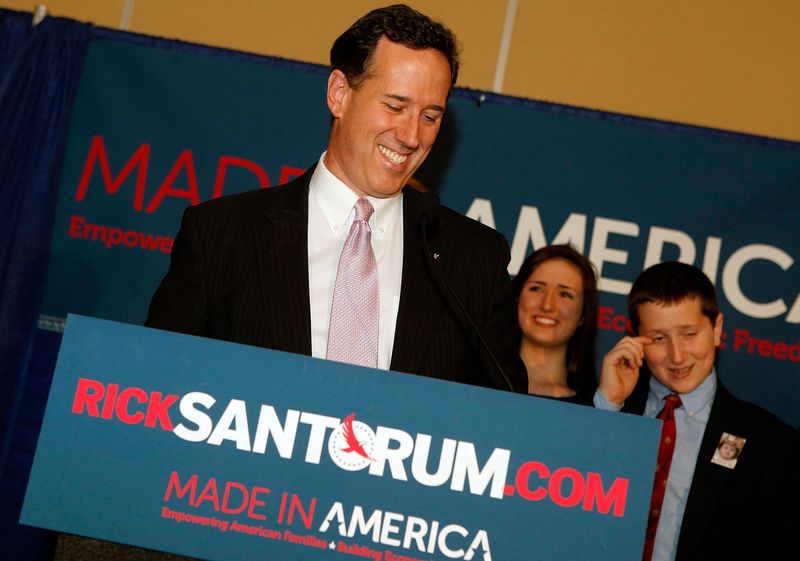
11.19 pm. Here's my take-away. Even with the full backing of the Mississippi political establishment, and with a 5 – 1 money advantage, Romney came in third. He lost by a larger margin in Alabama. If this were a race between him and Santorum, he would have been wiped out tonight. The pressure on Gingrich to quit will be intense, but if Adelson wants to keep financing him, his own ego would rather rip his own party apart than concede to allow a final fight for victory between Mitt and Rick.
So the odds of a brokered convention rise slightly; Romney remains unable to get any serious momentum; and Santorum keeps winning the vote of those earning under $50k. The evangelical vote against Romney remains solid, unchanging, resilient. The dynamic of the race has not altered; it has complicated marginally in Santorum's direction.
11.14 pm. Reality check:
For every 50 delegates awarded, Santorum needs to gain 8 on Mitt. After tonight's 50 delegates, Santorum +4.
11.12 pm. Lowry joins in the anti-Newt chorus:
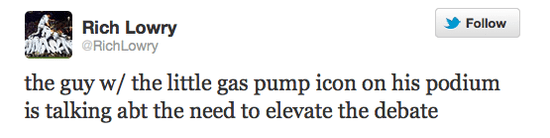
11.06 pm. Gingrich reveals his strategy: stagger on to Tampa and make sure nobody wins. Then pitch himself to the brokered convention as the best candidate to defeat Obama. He's running against the "elite media" and "the millionaires" to deny Romney a delegate victory. A brutal war of attrition and revenge against Romney. Not a good sign for the party.
11.03 pm. Matt Lewis articulates what will surely be a conservative chorus pretty soon:
[I]f [Gingrich] truly believes Mitt Romney is a “Massachusetts moderate” masquerading as a conservative, then he owes it to Republican voters to give former Sen. Rick Santorum a clean shot at wresting the nomination from him. I’m pretty sure Santorum has earned it.
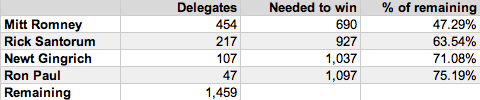
11.01 pm. The delegate struggle for Romney is not over:
As you can see, Romney needed to win over 47 percent of the remaining delegates to lock up the nomination before the convention. Today's results will set him back. It's still tough to see how Santorum wins the necessary delegates, but it's clear that he and Gingrich can continue to deny Romney his nomination, and could do so at least until June (when the last states vote), if not beyond.
The data from Kos:
They could all lose.
11 pm. Newt says it: "If a front-runner keeps coming in third, he's not the front-runner." And then pitches his alleged debating prowess over Barack Obama.
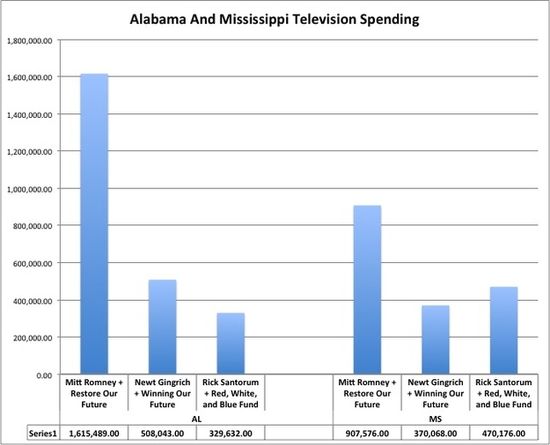
10.53 pm. Santorum wins both states; Romney comes third in both. When you consider the simply enormous gap in terms of ad-spending, this is another humiliation for Romney.
Bottom line (what I've been saying for a while now): Gingrich has to get out to settle this clearly. We need a Santorum-Romney showdown for the good of the party. This now has to become a two-man fight. Or it will end with a deeply wounded nominee.
10.51 pm. Why did the polls overstate Romney's strength? Blake Hounshell goes there:
Results tonight in MS and AL raise the question of whether evangelical voters are lying to pollsters about willingness to vote for a Mormon.
Someone has to come up with a Mormon version of the Bradley Effect.
10.47 pm. A couple of things emerge from the exit polls: Santorum did very well among married women and Romney only really showed strength among the elderly. Among younger Republican demographics, Romney is weak, weak, weak. Nonetheless:
If Mitt sweeps Hawaii, American Samoa, and given current projections in 'Bama, Ole Miss, he may be delegate winner tonight.
10.43 pm. Electionate:
10:41PM: Rankin County, MS, the affluent suburbs of Jackson, MS are done and Romney still trails by 6,000 votes and Gingrich by 2800. Call it.
10.39 pm. I suspect Santorum will be declared the winner in Mississippi pretty soon. And Romney is still third in both states. In Louisiana, Santorum gets his biggest applause when he touts "the centrality of faith in our lives."
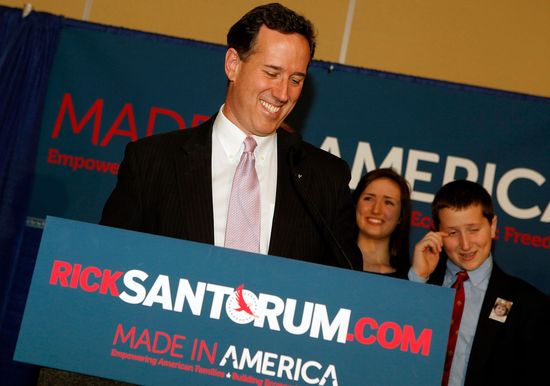
10.31 pm. Santorum is about to speak. His first remarks are about prayer and God and being outspent. In fact, he is mocking the Super PAC money and Mitt's alleged insuperable advantage: "Romney spent a whole lot of money against me for being inevitable."
10.29 pm. Poring over the counties, I can't see anywhere Romney can make up his deficit in Mississippi – apart from those counties where no votes are yet in at all. But this is so close – only around 6,000 votes separate the first from the third.
10.19 pm. A potential headline tomorrow? Romney comes in third in both Deep South primaries, despite out-spending his opponents by an avalanche:
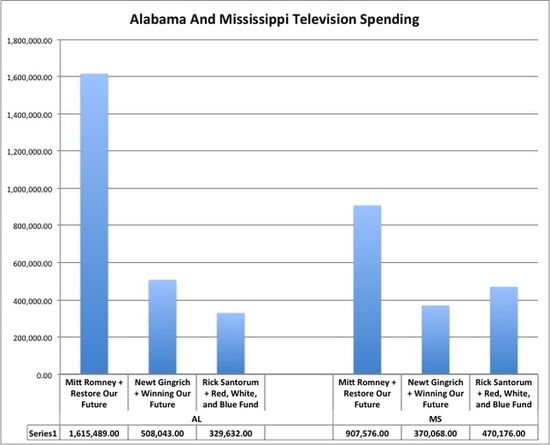
There are some things even the 1 percent can't buy. Like the votes of the bottom 20 percent.
10.18 pm. More rubbing it in:
Mr. Romney said he won’t be filling out an NCAA college basketball tournament bracket this year. “I’m not plugged in well enough this year to do that,” Mr. Romney told reporters traveling with him on Tuesday in Missouri, the Associated Press reported. Mr. Obama, on the other hand, is making his choices public again this year. The First Fan even brought British Prime Minister David Cameron to a “First Four” game in Dayton, Ohio, on Tuesday between Mississippi Valley State and Western Kentucky. ESPN disclosed the president’s Final Four picks — Kentucky, Ohio State, Missouri and North Carolina – and will release his entire bracket on Wednesday.
10.11 pm. Romney's in deepening mud:
The math: So far, Romney has netted 2200 votes in the Jackson area. He needs to get 4500 more votes in Mississippi, even though most of the Jackson area has been counted and the Delta is under-populated. Uphill battle.
10.10 pm. Tweet of the night from a base voter:
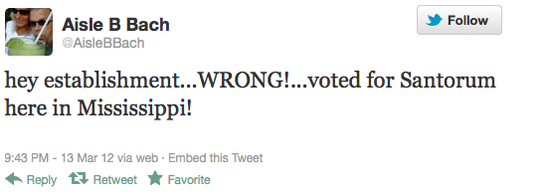
10.06 pm. Another brutal Romney gaffe from earlier today, calling these primaries "the desperate end" of Santorum's campaign. So Mitt lost to a desperate loser. Chuck Todd notes that Romney's Mississippi vote is around 30 percent – 2 points above his usual proportion. He adds: Haley Barbour's machine is therefore worth around 2 percent of the Republican vote. Oooh snap.
10.02 pm. Worsening news for Romney, as the exit polls begin to reflect a late surge of working class voters for Santorum:
Existing trends are real bad for Romney in Mississippi. If current vote percentages hold, Romney’s going to lose. He’ll need to do better in outstanding areas. It’s possible and it happened in Ohio (led by 12% early in Cuyahoga, finished at 20%), but he doesn’t want to be there.
Still, he won the catfish vote. The latest data suggests the polls were off:
Rick Santorum holds a small lead in Mississippi with about 40 percent of the vote in; he's won 33 percent of the votes there so far. That's quite a bit better than Mr. Santorum was running in pre-election surveys; our projection from the polls had him winning 26 percent of the vote there instead. And one poll conducted over the weekend, from American Research Group, had him with just 22 percent of the vote.
9.59 pm. A week ago, I assumed that Santorum would win both these states. Then the polls scrambled that assumption. Now the actual results may be confirming my off-the-cuff suggestion. But it will be a close win in both states. Bragging rights? Rick's – so far.
9.56 pm. Romney is currently running third in Mississippi, with 80 pervcent of the vote in. Brutal. But still close. Or maybe this is part of a master plan:
In the long run, Romney campaign might be happiest coming in third in both AL and MS. Keeps Gingrich in the Race.
Gingrich's ego keeps him in the race, but point taken.
9.51 pm. The vote numbers remain tiny – and turnout was indeed down. Bad weather didn't help.
9.47 pm.We often talk about Romney's cultural otherness in the Deep South – but the same is true for Pennsylvanians like Santorum and Gingrich. Santorum has no real cultural connection to the deep South. And yet, outspent by 5 – 1 in Mississippi, he's still ahead and looks increasingly comfortable in Alabama.
If Santorum beats Romney in Alabama and Mississippi, it's not exactly a sign of momentum for the man who is still overwhelmingly the favorite to win the nomination.
9.45 pm. Some bad omens for the front-runner:
Romney’s in real trouble in Mississippi. A disproportionate number of votes have been counted from urban areas, including Desoto/Rankin/Biloxi/Hinds Co (Jackson, Memphis burbs/Biloxi)… yet Romney still trails. If he’s to win, he’s going to need a strong showing in the Mississippi delta, which is largely outstanding.
9.44 pm. Quote for the night: "We keep rolling. Flat tires and no engine, but we keep rolling," – a
source on Gingrich's campaign.
9.43 pm. Newt confesses another "very open relationship."
9.40 pm. It looks increasingly likely that Santorum will win Alabama. Mississippi? We could be here all night. Silver:
Rick Santorum's red color, Mitt Romney's blue and Newt Gingrich's orange seem to be distributed almost randomly on that map. We'll still be looking for patterns, of course, as more votes come in. But this doesn't seem like the kind of case that we had last week in Ohio, when there was a fairly crisp urban-rural split that was apparent early on.
9.37 pm. Good news for Romney:
Newt Gingrich's campaign has just sent out a memo that reveals (to no one's surprise) a defiant determination to stay in the race until the end. If you read between the lines, it looks like he's almost conceding tonight's races in advance. The memo notes that today's contests "are big, but it's still early," and calls the Louisiana contest on March 24 "halftime." Even by halftime, he asserts, the race will not be over.
9.35 pm. Core truth of the race so far:
Romney has yet to win a state where the evangelical portion of the vote has been over 50 percent.
If he wins in Mississippi tonight, that changes. But Santorum is still ahead.
9.30 pm. Terror as an issue? It's disappeared completely:
[B]asically, public attitudes are about exactly where they were the weeks before September 11th, 2001, when only .5% of Americans rated terrorism as a top concern. The difference is that we have gone through a decade of war, created a Department of Homeland Security, live under a Patriot Act, and have seen the authority of the Executive branch of government grow and grow under the mandate of protecting us from terrorism.
9.26 pm. The exit polls offer four qualities for a candidate: basically, an ability to beat Obama, moral character, true conservatism, and right experience. In both states, Romney loses on everything but the ability to defeat the president. These voters think he doesn't have an edge on experience, ideology or character.
Only 8 percent of Mississippi Republicans view Romney as a true conservative, and only 5 percent do in Alabama.
9.21 pm. Some fresh analysis:
Alabama has finally counted a few thousand votes and they look solid for Santorum. He’s narrowly winning in Jefferson County, home to Birmingham and plenty of wealthy whites south of city. If Santorum can prevent Romney from winning anything in Birmingham, he’s almost certainly going to win statewide. It also suggests that Santorum might win the very conservative suburbs of Birmingham: Shelby County. Santorum is also winning big (43-27 over G) in Limestone County, an upland area just west Huntsville where there are a few affluent/exurban voters.
9.19 pm. At this point, with staggeringly slow counting, Santorum is leading in both states.
9.14 pm. "Conservatives" unite in one state and divide in the other:
In Alabama, where the initial results look best for Santorum, self-described conservatives voted 37 percent for Santorum, 33 percent for Gingrich, and 25 percent for Romney. "Very conservative" voters (36 percent of the electorate) went 41 percent for Santorum, 35 percent for Gingrich, and 19 percent for Romney. …
In Mississippi, where the early numbers look best for Romney, conservatives split 33 percent to 32 percent between Santorum and Gingrich. Very conservative voters — a 42 percent plurality of the state's GOP primary electorate — split evenly between Santorum and Gingrich at 35 percent apiece. The 50 percent of voters who thought Romney's positions weren't conservative enough divided evenly between Santorum and Gingrich, at 39 percent each. If these numbers hold up, it suggests that conservatives mostly coalesced around one candidate in Alabama and divided in Mississippi.
It also suggests that the basic reality of this campaign endures: Romney has yet to persuade his ideological base to support him – even after his delegate math has gotten close to insuperable.
9.09 pm. A reader writes:
You said exit polls show Republicans putting electability over ideology. I don't think that's quite right. It shows they believe the ability to beat President Obama is the most important thing in a candidate. And that is their ideology: above all else, "take back" their country, or restore their future; however you'd like to phrase it, remove the illegitimate usurper.
Another asks:
Where's the Fox News Primary tonight? Laura Ingraham's hosting The O'Reilly Factor right now while CNN and MSNBC are going with full election coverage. Why is Fox ceding coverage to the two other cable nets? Is it a ratings-driven decision or is it political?
Maybe they realize this slow counting of votes is not the greatest television. Ailes does know how to entertain.
9.03 pm. Rubbing it in?
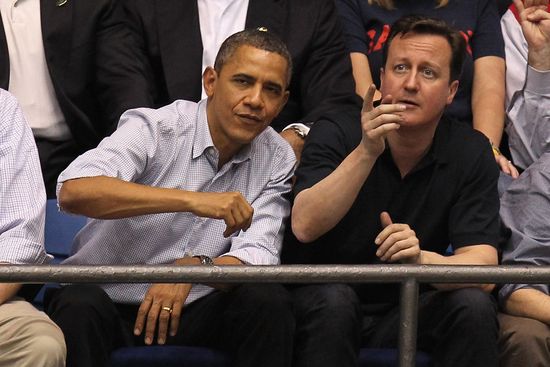
(U.S. President Barack Obama and British Prime Minister David Cameron watch the action at UD Arena in the first half as the Western Kentucky Hilltoppers take on the Mississippi Valley State Delta Devils in the first round of the 2011 NCAA men's basketball tournament on March 13, 2012 in Dayton, Ohio. By Gregory Shamus/Getty Images.)
9 pm. Thank Heaven for small mercies: there will be no Romney speech tonight. The consonant "g" will no doubt be relieved.
8.53 pm. Who can claim the national appeal? If you look at the counties, and not the states, you get a slightly different picture:
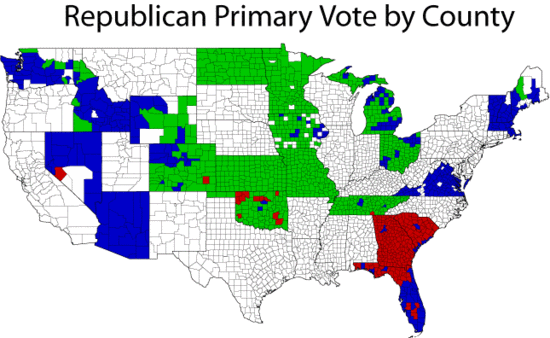
Sean Frende notes about this map that over time, there has been no real momentum for Romney. It's been a replay of the same demographic factors that have shaped this race from the get-go:
The same basic demographic factors control the results. Romney does well in counties with high levels of Latinos, college-educated voters, and LDS populations. The various not-Romneys do well in counties with high levels of evangelicals and African-Americans. Now remember, we aren’t necessarily saying that Romney is doing all that well with, say, Latino voters, many of whom won’t be voting in a Republican primary. We’re just saying he does well in counties with high Latino populations. The results could indicate that Anglo voters in these counties responded to Romney’s relatively hard-line stance on illegal immigration. Regardless, these are very stable trends.
Romney wins among whites who dislike Latino illegal immigrants; Gingrich does well among whites who are hostile to African-Americans.
8.48 pm. This could take some time:
Southern states have a reputation for counting their vote slowly. The reputation is not always fair: Georgia, Tennessee, Virginia and Oklahoma all tallied their votes reasonably quickly on Super Tuesday, for instance. But things may be a bit slower in Mississippi. In the 2008 primary there, only about a third of the vote was counted by 9 p.m., an hour after polls closed, and only about half was counted by 10 p.m. The rest of the vote then trickled in slowly over the course of the evening; just over 80 percent had been counted by midnight.
8.41 pm. It's worth recalling the massive spending advantage Romney had in these two races. His Super-PAC outspent Santorum by at least 5 – 1 in Alabama and by more than 2 – 1 in Mississippi. I'm inclined to agree with this assessment:
How can we be this late in the game and still have a situation where Romney is avoiding any real barrage of negative advertising? It's because his Super PAC sugardaddies have more money than the creepy Santorum and Gingrich sugardaddies. Yet despite the barrage of Anti-Santorum ads, he remains competitive — a testament to just how much conservatives hate Mitt Romney.
8.34 pm. Some interesting insight into where Gingrich's and Santorum's appeal to white Southerners part ways:
Santorum's conservative Catholicism — against abortion in all cases, against contraception — and his outsider appeals against Washington "elites" seem to be resonating with the voters who live in the Evangelical Epicenters and that should help in those 29 counties in Alabama.
Former House Speaker Newt Gingrich, meanwhile, has won the Minority Central counties, which hold large black populations, in states where he has seriously competed — South Carolina, Florida and Georgia. Those places too have an Evangelical bent, but often also have higher racial and socioeconomic tensions. Gingrich's comments about an entitlement society and labeling President Obama the "food stamp president" may be resonating with Republican voters there.
8.29 pm. Quickly rising consensus: these results make it more important that Gingrich stay in the race for Romney and get out of it for Santorum:
Romney doesn’t want a two-man race with Santorum: If Team Sweater Vest starts beating him head to head, then Mitt could well end up in June with a plurality of delegates (thanks to proportional rules) but a badly weakened case for why he should be the nominee at a brokered convention. I’m thinking maybe his optimal scenario is to win one state and have Newt win the other. That’ll keep Gingrich in the game while still giving Romney bragging rights about a win in the deep south. By the same token, the Romney (and Gingrich) disaster scenario is Santorum winning both states. It would give RS a killer talking point about the base lining up behind him to be the RINO dragon-slayer, which might be the death blow for Newt.
Given the closeness of the exit results in Mississippi, it's still possible.
8.22 pm. For the first time, Romney has won a working poor demographic: in Mississippi among those earning between $30k – $50 k. It's a narrow win: 32 percent to Santorum's 31 percent and Gingrich's 29 percent. And that's it. If you divide income between those earning above or below $50k, Romney loses or ties the under $50k set. Even in states where electability is paramount, Romney can't get a real hold on the under $50ks.
8.18 pm. CNN has updated its exit polls show a tighter race – and Romney's chance of a victory in a Southern state has dropped a little. It means Santorum has a chance of winning both states.
8.17 pm. Big tent update: the black vote was 2 percent of the total, in states where the African-American population is 37 percent (MS) and 27 percent (AL).
8.12 pm. It seems to me that Gingrich is going to have to quit the race after tonight. We've gotten mixed signals before now. But the biggest factor for me tonight is the chance of a Romney victory in Alabama. If he wins, it shifts the dynamic. And it will be because, yes, some hardcore Republicans are putting electability above ideology:
Primary voters in Alabama and Mississippi say being able to defeat President Obama in 2012 is the most important quality in a Republican presidential candidate, according to CBS News early exit polls. In Alabama, thirty-nine percent of voters said defeating Mr. Obama was the most important candidate quality; in Mississippi, 42 percent said the same thing. Both states are holding their Republican primaries on Tuesday.
8.06 pm. In the evangelical vote, the exit polls suggest that it's a dead heat among white evangelicals in Mississippi, 31, 31, 32 and in Alabama, Santorum has won the evangelical vote 36 percent to Gingrich's 30 and Santorum's 28 percent. We're still waiting for a state where Romney gets a majority of white evangelicals. So far: nada. But tonight's exit polls suggest a small possibility it could happen in Mississippi.
8.01 pm. The exits polls suggest a Romney win in Mississippi and a Santorum win in Alabama. And look at how dominated the vote is by white evangelicals: 81 percent compared with 76 percent last time.
(Photo: JayDanny Cooper urges Alabama residents to vote in the primary along the side of a highway March 13, 2012 in Birmingham, Alabama. As the race for delegates continues, voters in Alabama and Mississippi will cast their ballots in their primaries today. By Win McNamee/Getty Images.)

 The Dish