The Early Voting Advantage

Belongs to Romney, whose campaign is organized enough to get supporters to the polls early. On early voting more generally:

Once-meaningful distinctions between early voting, voting-by-mail, and absentee ballots are being erased as 32 states now offer voters the chance to cast their ballot before Election Day without a justifying excuse (as traditional absentee balloting required). It probably amounts to the most radical change to American voting culture since the abolition of poll taxes. In 2008, one-third of Americans are believed to have voted by a method other than showing up in person at a polling place on the first Tuesday in November, some doing so as early as September.

Syria’s Long War

Anita McNaught manages to file a report from Idlib:

Nir Rosen, who just returned from Syria, shares his thoughts:

I think it’s inevitable that the regime will collapse.  But I don’t think that the collapse will be one that resembles the other Arab Spring uprisings, even Yemen. I think you’re going to have a long, drawn out civil war.  This is barring direct military intervention which takes out the regime and which I think is highly unlikely. As a result, I think that you’ll see covert support for the insurgency.  They’ll gradually carve out autonomous zones.  Then you’ll have militias fighting each other and that could last for years.

The Digital Cathedrals Of Our Time

George Dyson's new book, Turing’s Cathedral, tells the story of the "proto-hackers" such as Alan Turing and John von Neumann, who built the first computer. Dyson explains how they envisioned the world we live in today:

In Turing’s 1950 paper, "Computing Machinery and Intelligence," he argued that when we build intelligent machines, we will not be creating souls but building the mansions for the souls that God creates. When I first visited Google, right about the time it went public, I walked around and saw what they were doing and realized they were building a very large distributed AI, much as Turing had predicted. And I thought, my God, this is not Turing’s mansion—this is Turing’s cathedral. Cathedrals were built over hundreds of years by thousands of nameless people, each one carving a little corner somewhere or adding one little stone. That’s how I feel about the whole computational universe. Everybody is putting these small stones in place, incrementally creating this cathedral that no one could even imagine doing on their own.

Francis Spufford marvels at the mastery of both intellectual and technical skill involved:

[N]o other book about the beginnings of the digital age brings to life anything like so vividly or appreciatively the immense engineering difficulty of creating electronic logic for the first time; of creating originally, and without a template, the pattern of organisation which has since become absolutely routine, and been etched on silicon at ever smaller micron-distances in chip foundries. The very word "foundry" insists that logic is a commodity, a material, the steel of the information age. But it didn't start like that. It started as an elaborate, just-possible accomplishment, requiring both conceptual brilliance and ingenious hands-on tinkering. 

You can read an excerpt from Turing’s Cathedral here.

Who Will Win Tomorrow?

Nobody's sure:

Nate Silver notes via Twitter that his compilation of past primary polls shows that pollster error in Alabama and Mississippi "has been about 50% higher than in other states." Also, as blogger Harry Enten points out, three of the final four polls on the Alabama Republican primary in 2008 showed Sen. John McCain (R-Ariz.) leading former Arkansas Gov. Mike Huckabee — two polls showed McCain leading by fairly wide margins. Yet Huckabee defeated McCain, 41 to 37 percent.

Given the close and inconsistent findings of the final polls in Alabama and Mississippi and the poor track record of past horserace polling there, the potential for a Tuesday night surprise is significant.

Despite the close numbers, Philip Klein doubts Romney will be able to pull off wins in either Mississippi or Alabama: 

[W]hen there's a critical mass of evangelical voters, Romney loses. To add some numbers to back up this perception, I went back and analyzed data from the 14 exit and entrance polls that have been conducted over the course of the current presidential race. In the nine of those states that Romney won, evangelical voters comprised an average of 33 percent of the electorate. In the five that he lost, the evangelical vote averaged 66 percent of the electorate. In the 2008 primaries, evangelicals made up 77 percent of the vote in Alabama and 69 percent of the vote in Mississippi. And by the time the Mississippi primary had rolled around last time, Mike Huckabee had already dropped out of the race and John McCain had effectively clinched the nomination, so the evangelical turnout will likely be even higher this time around. 

TNR Gets A Friend, Ctd

Shafer welcomes Chris Hughes into the media mogul club. Lizzie Widdicombe reports that Leon may be spared the sort of digital comeuppance I envisioned:

Wieseltier said that so far, his connection with the new boss had been "a little uncanny," and added, "He has no interest in blogging, which, I have to say, sounded like Mozart to me."

Driverless Traffic

What intersections would look like in a world dominated by driverless cars:

Emily Badger captions:

Right now, you may wind up sitting at a red light for 45 seconds even though no one is passing through the green light in the opposite direction. But you don’t have to do that in a world where traffic flows according to computer communication instead of the systems that have been built with human behavior in mind. … Because of this, we won’t need traffic lights at all (or stop signs, for that matter). Traffic will constantly flow, and at a rate that would probably unnerve the average human driver.

David Alpert urges caution in specifically designing roadways for driverless cars. Kevin Drum isn't worried.

Malkin Award Nominee

"Sandra Fluke is the model Welfare Queen for the 21st Century. Upper middle class to start, going to a very expensive (and very liberal law) school on scholarship, and now (as we know from news reports) a tool of the White House media shop. She won't have kids like the old-style welfare queens. Instead, she will first absorb all the government benefits she can while in school, and then work for a liberal law firm or political organization as a political activist. Or she may become another trusted lieutenant of Eric Holder at Justice. She is a product of the American version of the cradle-through-career indoctrination and career of the old Soviet Komsomol," – Jed Babbin, American Spectator

What It Takes To OD On Weed

A Department of Justice/DEA brief from 1988 reads:

[A] marijuana smoker would have to consume 20,000 to 40,000 times as much marijuana as is contained in one marijuana cigarette. … A smoker would theoretically have to consume nearly 1,500 pounds of marijuana within about fifteen minutes to induce a lethal response.

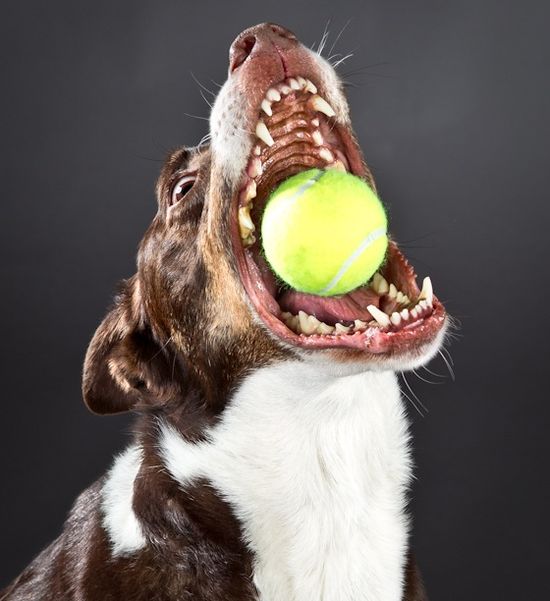
Hence the urgent need for the federal government to classify it in the same category as heroin, i.e. "there is a lack of accepted safety for use of the drug", and more dangerous than cocaine or morphine. However, Richard Metzger warns: "[W]hereas you can see that it’s impossible for a human to OD on cannabis, the plant is HIGHLY toxic to dogs."

Last Chance To Ask Me Anything

Last Chance To Ask Me Anything

[Re-posted from earlier today, with an update below]

The "Ask Andrew Anything" video series has lasted a lot longer than I thought it would, and before we get around to investigating my bowel movements, I thought it would be an interesting experiment to open it up to other writers, thinkers, public figures. We're calling it the "Ask Anything" series. Our first guest will be Jonah Lehrer and the new format will use Urtak polling for you to come up with and vote on the questions you want to ask. It's interviewing by crowd-sourcing, if you will.

To get started, I thought we'd have one last round of questions for me. We've already primed the poll with five questions from the in-tray, but please add any further (short!) questions in the field at the top of the survey, and vote on them. Or just vote on the possible questions. I'll answer the top five questions over a week, as will our subsequent guests. Answer "Yes" if you would like to see the question asked or "No" or "Don't Care" if you don't think the question is that interesting.

Update: Urtak's algorithm was automatically removing questions that were getting a certain percentage of "Don't Cares", but we want readers to see and respond to as many good questions as possible, so we asked the very helpful and savvy Urtak team to tweak future polls for us.  In the meantime, we switched out the original poll with a new one that is seeded with the 10 best questions submitted from readers thus far.  If you have 30 seconds to spare, please answer the questions with either "Yes" (if you want the particular question answered by me) or "No" (if the question doesn't interest you).  Please don't respond with "Don't Care" – it screws with the algorithm, at least for our purposes. If you don't care about a question, just respond "No". And feel free to submit more questions at the top of the Urtak. Thanks for your help and patience.