Face Of The Day

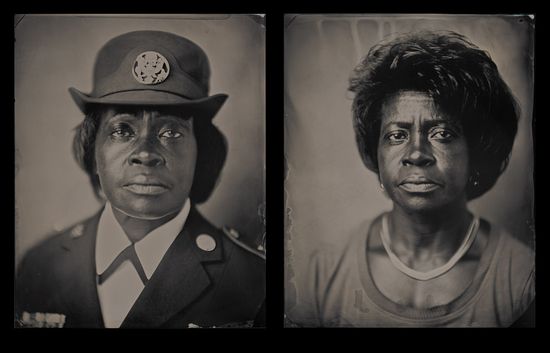
War and Peace_Sylvia

Claire O'Neill peruses Melissa Cacciola's photographs of today's military:

Her latest series, War and Peace, takes two looks at men and women who serve: in uniform and in civilian garb. "Through the photographic lens," she writes in a statement, "we can study just how the airman in his dress blues relates to the man in the Guns N' Roses T-shirt."

(Photo of Sylvia, command sergeant major, US Army, (1984 – present), courtesy of Cacciola)

A Massacre In Afghanistan: Is This The End?

There is much we do not know about what happened today in Panjwai when one US soldier walked out of his base and went on to kill at least sixteen civilians, including several children. But if the least of what happened is what we now hear, after the Koran burnings, I cannot see a future for US forces in that country. The pressure to quit before 2014 will grow.

It would be lovely to believe that we can do more than wipe out al Qaeda in Afghanistan, that we can somehow tame the Taliban, or get the current government to be less than corrupt two-faced, or make Pakistan less ambivalent about our success. But our cultures are far too far apart to mesh; and the more we insist on succeeding with an unwinnable transition, the deeper into the mire we go.

Maybe the soldier snapped. But one has a sinking feeling that this is the kind of flashpoint that sets the landscape aflame. Please pray for those families affected, and the souls of those just killed.
The Limited Sexual Vocabulary Of Evangelicals

Rachel Held Evans bemoans it:

Currently, evangelicals tend to force young adults, especially young women, into simplistic sexual categories. They are either “pure” or “impure,” “whole” or “damaged,” “virgins” or “sluts.” There does not seem to exist a vocabulary within evangelicalism with which to talk about men and women who are sexually active, but not promiscuous. 

But like it or not, nearly every study you find shows that unmarried Christians are just as sexually active as unmarried non-Christians. … [I]f evangelicals feel that the word “slut” is the only appropriate one to use for a woman who is sexually active, then we have a real problem on our hands. 

The Staggering Complexity Of Cancer

Ed Yong explains why finding a cure is so difficult:

For a start, cancer isn’t a single disease, so we can dispense with the idea of a single “cure”. There are over 200 different types, each with their own individual quirks. Even for a single type – say, breast cancer – there can be many different sub-types that demand different treatments. Even within a single subtype, one patient’s tumour can be very different from another’s. They could both have very different sets of mutated genes, which can affect their prognosis and which drugs they should take

Even in a single patient, a tumour can take on many guises. Cancer, after all, evolves. A tumour’s cells are not bound by the controls that keep the rest of our body in check. They grow and divide without restraint, picking up new genetic changes along the way. Just as animals and plants evolve new strategies to foil predators or produce more offspring, a tumour’s cells can evolve new ways of resisting drugs or growing even faster.

Now, we know that even a single tumour can be a hotbed of diversity.

Our Place In The Universe

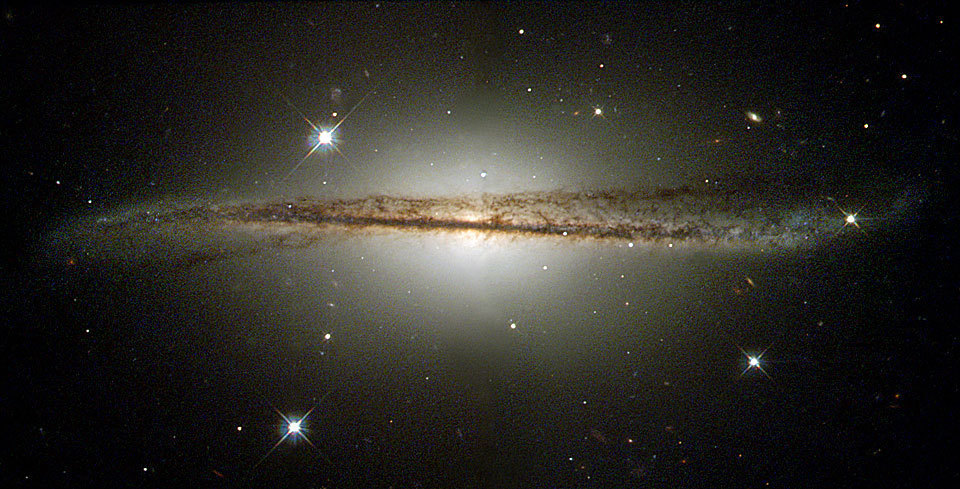
Eso510_hst_960_custom (1)

Adam Frank contemplates the "dark universe," the sum of Dark Matter and Dark Energy:

Observations put the dark universe at about 95 percent of the total…. So it is not that the universe is big and we are small that robs us of significance. We are barely part of the universe at all.  That is why we don't matter. And yet … As far as we can tell, the dark part of the universe is immune to "clumping" on our kinds of scales (i.e. stars, planets, people). Left to its own devices, it seems the dark universe would never be able to make something as remarkable as life. Now that is truly something worth a moment's reflection. Perhaps the dark universe makes us matter more than we ever realized.

(Image by Hubble Heritage Team (STScI/AURA), C. Conselice (U. Wisconsin/STScI) et al., NASA)

The Death Of An Iceberg

Steven Kotler contemplates our connection to nature during a trip to Patagonia's Chico Glacier:

As I stand and stare, the iceberg starts to groan and wobble and calve. Seconds later, a gargantuan chunk sloughs off, sending five-foot waves in every direction. … And this is when it all clicks into place—as I am watching the death throes of this iceberg. This is the real impact of industrial repression, the impact of our environmental arrogance. Once this meltdown is complete, it will not reverse. The freshly melted water will never become ice again, at least not in any time frame that is fathomable in human terms. What does it feel like to witness these end times? Awful. Like murder. Like I’m the one who is melting.

A Poem For Sunday

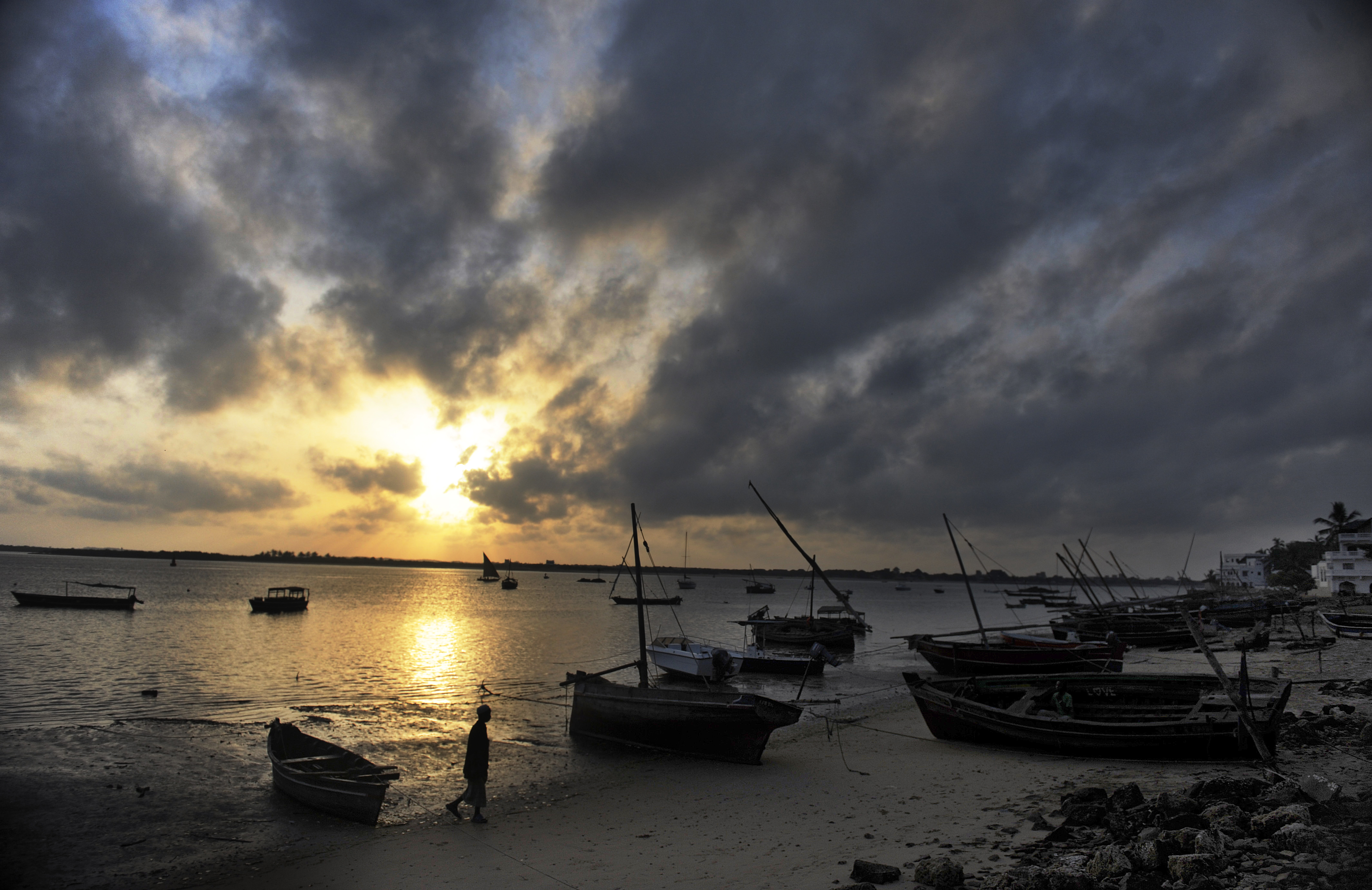
GT_LAMU_120307

"Happiness" by Raymond Carver:

So early it's still almost dark out. 
I'm near the window with coffee, 
and the usual early morning stuff 
that passes for thought. 
When I see the boy and his friend 
walking up the road 
to deliver the newspaper. 
They wear caps and sweaters, 
and one boy has a bag over his shoulder. 
They are so happy 
they aren't saying anything, these boys. 
I think if they could, they would take 
each other's arm. 

Continued here along with other Carver poems.

(Photo: A picture taken on March 3, 2012 shows boats moored on a beach at dawn in the Indian Ocean island of Lamu. By Tony Karumba/AFP/Getty Images.)