Romney’s Weak Night

Yes, he decisively wrapped up the last morsels of the nomination last night, but he still couldn't get over 60 percent of the GOP vote even in his more natural constituencies of Delaware and Pennsylvania:

Romney won only 56 percent of the vote in Delaware and 58 percent in Pennsylvania, home to Rick Santorum who dropped out on April 10th. While Romney avoided the embarrassment of winning with a mere plurality, never has a presumptive nominee won a primary contest with such a low level of support at this stage of the race with his chief challenger no longer actively campaigning…

Overall, GOP frontrunners have averaged 78 percent of the vote in contests conducted after the last credible challenger left the race.

Romney is 20 points behind the average at this point in the process.

Yglesias Award Nominee

"We can easily find truly disturbing commentary and actions by members of the Egyptian Brotherhood, or by the Tunisian Rachid Ghannouchi, the intellectual guru behind the ruling Nahda Party. But we can just as easily find words and deeds that ought to make us consider the possibility that these men are neither Ernest Röhm and his fascist Brownshirts nor even religious versions of secular autocrats. Rather, they are cultural hybrids trying to figure out how to combine the best of the West (material progress and the absence of brutality in daily life) without betraying their faith and pride," – Reuel Marc Gerecht, defending Islamist participation in Muslim democracies in the WSJ.

The Israeli Military vs The Neocons

I'm beginning to worry that the real problem with Netanyahu is that he has more in common with American neocons than Israeli generals. Here's the latest in what Jeffrey Goldberg has described as the existential threat haunting Israelis like a potential Second Shoah:

So far, Israel and Washington do not believe that Tehran has actually taken the decision to develop a nuclear bomb, a decision which would require the ability to quickly produce weapons-grade uranium.

“In my opinion, he would be making a huge mistake if he does so, and I don’t think he will want to go the extra mile,” [Israel’s military chief] Benny Gantz said, referring to Iranian supreme leader Ayatollah Ali Khamenei who is the final authority on all national issues. The Iranian leadership was made up of “very rational people,” he said, and the international regime of hard-hitting sanctions was “starting to bear fruit.”

It's worth recalling that many in the Israeli military leadership thought the war against Saddam was nuts.

The Great Lunch Break Debate

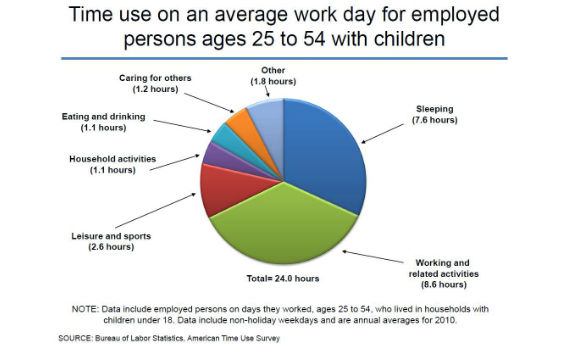
120424_WHINE_chart1

Rachael Levy decries the American habit of eating at one's desk:

There’s a lot to be said for Americans’ strong work ethic—you won’t hear us complaining, like the French sometimes do, about arduous 35-hour workweeks. But there is also something to be said about living our days to the fullest. Dedicating a mere half hour to lunch each day isn’t going to reduce our efficiency. It will actually improve it, and make us happier, more productive workers in the long run. Listen to the French. Take that lunch break. You’ll be glad you did.

Rachael Larimore counters:

Everything we might prefer to working is crammed into one- or two-hour slices: an hour to eat and drink, an hour devoted to “caring for others.” If you’re an office worker with a few kids, you first must wake up and endure a mad scramble to get everyone dressed and out the door—that’s an hour or two of non-quality family time. Then there’s the commute. If it’s 30 minutes each way, that’s another hour wasted. And then you work for eight or nine hours. If you take an hour for lunch, that’s just another hour that you’re not spending at home with your spouse and kids or at the gym. It’s another hour that you’re paying the sitter. With lunch, an office drone could leave home at 8 a.m. and not get home until 6:30 p.m. When are you supposed to cook dinner? How are you supposed to get to Little League on time?

(Chart by Bureau of Labor Studies via Larimore)

“We All Hate Our Women”

Egyptian revolutionary Mona Eltahawy pens a searing polemic on the status of women in the Arab world:

Not a single Arab country ranks in the top 100 in the World Economic Forum's Global Gender Gap Report, putting the region as a whole solidly at the planet's rock bottom. Poor or rich, we all hate our women. Neighbors Saudi Arabia and Yemen, for instance, might be eons apart when it comes to GDP, but only four places separate them on the index, with the kingdom at 131 and Yemen coming in at 135 out of 135 countries. Morocco, often touted for its "progressive" family law (a 2005 report by Western "experts" called it "an example for Muslim countries aiming to integrate into modern society"), ranks 129; according to Morocco's Ministry of Justice, 41,098 girls under age 18 were married there in 2010.

How Twitter Ruins TV

Daniel Carlson wants to do away with live-tweeting:

The creative teams behind your favorite shows do not intend for them to be half-watched through an ironic lens that’s constantly searching for a pun or .gif fodder. To hover over your computer’s keyboard or phone’s glossy screen is to miss out on the moment of connection and possibility that makes art worth experiencing. Next time your favorite show is on, try just sitting and watching it. The act of watching requires a kind of patience and focus that are key to the whole thing. And if you find yourself moved to say something when it’s finished, that’s great, really. Just keep the spoilers to yourself.

Republishing Hitler

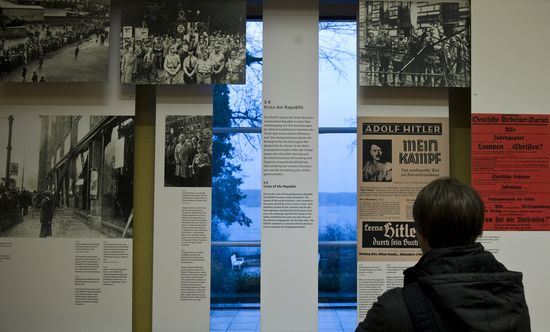
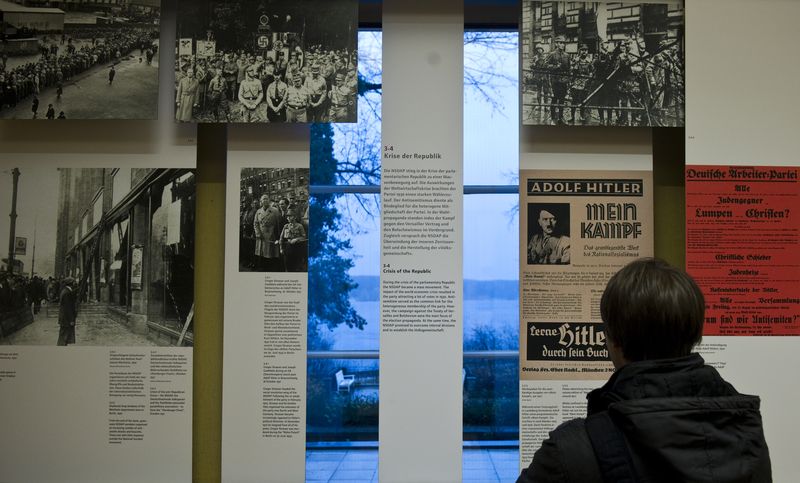
GT_MEINKAMPF_120424

Jacob Heilbrunn takes a look at the Bavarian government's decision to reissue Mein Kampf for the first time in Germany since WWII:

Is its decision to publish Hitler's autobiography a sign that Germany is backsliding? Not at all. Mein Kampf has been banned in Germany since World War II and the Bavrian justice system recently prevented the English publisher Peter McGee from publishing excerpts from it in Munich. But the ban, it must be said, no longer makes much sense. The book can be easily acquired abroad or on the internet. In announcing the publication of the book, Bavarian Finance Minister Markus Soeder says that he wants to contribute to the "demystification" of it. In 2015 the Bavarian state's copyright to the book will expire. The idea is to publish a scholarly version that will help stem its appeal for commercial publishers.

Hitler himself would surely be displeased to know that his book was, in effect, being further defanged by a democratic Germany, which is treating it in a calm and clinical manner. 

(Photo: A visitor looks at a display featuring a vintage ad for Adolf Hitler's book 'Mein Kampf' at the Wannsee House museum and memorial in Berlin January 5, 2012. At the Wannsee Conference, which took place on January 20, 1942, top Nazi official Reinhard Heydrich announced the plans for the deportation and extermination of all Jews in German-occupied territory. By John MacDougall/AFP/Getty Images.)