The Vatican vs American Nuns

GT_NUNS_120420

This week, the Church cracked down on the Leadership Conference of Women Religious, which represents 80% of American nuns. How Barbie Latza Nadeau frames the dispute: 

[Sister Beth Rindler of Detroit, who is part of the National Coalition of American Nuns as well as a member of the LCWR] believes the Vatican is focused on the American sisters because they tend to be more independent than their European, Latin American, and African colleagues. While nuns in the rest of the world still wear conservative habits and head covers, the majority of American nuns stopped the practice shortly after the Second Vatican Council reforms.

Many American nuns also live independently and reach high education levels—all while still serving the church. Rindler says she believes that the hierarchy in Rome is really worried that the American nuns will influence other sisters around the world. “That’s why the men in the Vatican want control, what they see as influence, we see as enlightenment,” she says, adding that some nuns are brainwashed into thinking they are lesser beings than their male counterparts. “What woman truly believes she is not equal to a man?”

I don't think the bishops will either ever forgive the nuns for backing universal healthcare as the highest priority rather than the control of women's contraception. Their witness to a balanced and sane Christianity put the cramped authoritarianism of Dolan et al in an unflattering light, and Dolan takes his orders from Rome. An example of the nuns' alleged "doctrinal problems":

In 2009, a woman arrived in the emergency room at St. Joseph’s hospital in Phoenix. She was twenty-seven years old, eleven weeks pregnant, and she was dying. Her heart was failing, and her doctors agreed that the only way to save her life was to end her pregnancy, and that her condition was too critical to move her to another, non-Catholic hospital. The member of the ethics committee who was on call was Sister Margaret McBride. She gave her approval, under the theory that termination of the pregnancy would be the result but not the purpose of the procedure. The woman, who had four small children, went home to them. When the Bishop Thomas Olmsted of Phoenix heard what happened, he excommunicated Sister Margaret on the spot. A Church that had been so protective of priests who deliberately hurt children—keeping them in its fold, sending them, as priests, to new assignments—couldn’t tolerate her. A spokesman for the diocese called her a party to “murder.”

Why the bishops might be scared:

American sisters do outnumber the priests, and it’s the women who have the troops, too – at schools and hospitals the bishops couldn’t close if they wanted to. The nuns no longer only empty the bed pans, you see, but now also own the institutions where they work. And you have to wonder whether that’s the real problem.

The timing is also politically suspect as the Vatican subtly tries to campaign against Obama's re-election:

Hard to believe it’s a coincidence that the Vatican moved to curb the nuns for implicit insubordination against the Bishops just as the USCCB announced a big summer series of protests for “religious liberty” keyed to categorical opposition to the Obama administration’s efforts to implement a contraception coverage mandate, particularly since LCWR has been notably willing to support compromise efforts and earlier supported the health reform legislation that authorized the mandate.

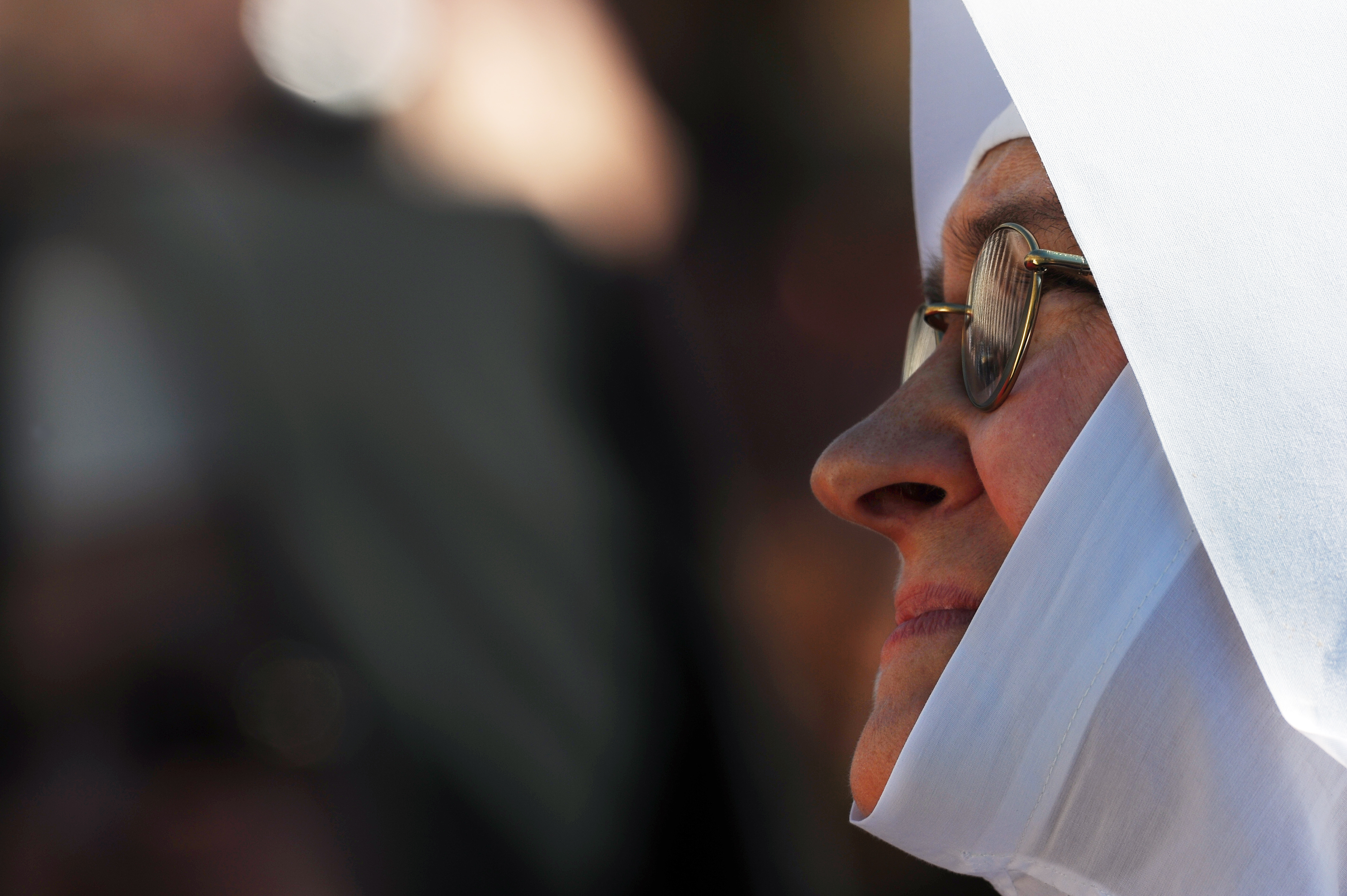
(Photo: A nun listens to Pope Benedict XVI address, from the window of his private apartments, pilgrims gathered in St. Peter's square at Vatican on March 11, 2012, to attend his sunday Angelus prayer. By Vincenzo Pinto/AFP/Getty Images)         
Self Defection

9763910_636a9b5545

Michelle Legro reviews Ambroise Paré's On Monsters and Marvels, a compendium of 16th century birth defects:

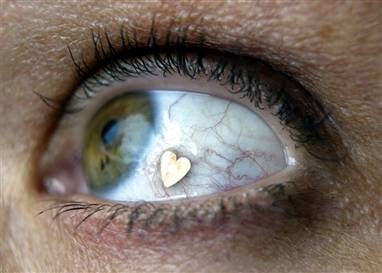
Today, people feel compelled to make themselves as marvelous as the creatures Paré once beheld. Plastic surgery can pierce tongues in two like a snake’s, stretch faces to look like jungle cats’, and cover a circus performer’s body in scaly tattoos to resemble a lizard. In a 2001 profile in Harper’s, Joe Rosen, a radical plastic surgeon at the Dartmouth-Hitchcock Medical Center suggested that we should have the freedom to make marvels of ourselves, implanting wings into our shoulder blades, replacing our eyes with far-seeing owl eyes: "Why are plastic surgeons dedicated only to restoring our current notions of the conventional, as opposed to letting people explore, if they want, what the possibilities are?"

(Photo by Flickr user satragon)

Pink For Boys, Blue For Girls

From a history of gendered colors:

Pink and blue arrived, along with other pastels, as colors for babies in the mid-19th century, yet the two colors were not promoted as gender signifiers until just before World War I—and even then, it took time for popular culture to sort things out. For example, a June 1918 article from the trade publication Earnshaw's Infants' Department said, "The generally accepted rule is pink for the boys, and blue for the girls. The reason is that pink, being a more decided and stronger color, is more suitable for the boy, while blue, which is more delicate and dainty, is prettier for the girl."

Lucinda Rosenfeld delves into the fascination children have with colors:

"If people want children to act in a calmer way, they should go with blue or another cooler color," [Marilyn Read, an associate professor of design and human environment at Oregon State University] advises. Even little girls’ love affair with the color pink—forever the object of much hand-wringing by parents uneasy with the message it sends—may be innate. "Pink is a color that makes us hungry. It’s also a color that boys like until they’re told not to like it," says Read, who notes just one case in which gender differences in color preference might be nature not nurture: Some researchers suggest that boys tend to prefer yellow-based reds (think: tomatoes), while girls prefer blue-based reds (think: rubies). Both boys and girls tend to dislike orange.

Motherland’s Milk

Enhanced-buzz-27416-1334068608-10

From a short history of vodka:

For a long time, vodka was similar to whiskey: it tasted and smelled strongly of the grains used to make it, and was called "bread wine." Until the twentieth century, only bread wine infused with herbs or berries was called vodka. The crystalline, nuanceless spirit that we now know as vodka emerged in the late nineteenth century, when the monarchy monopolized alcohol production and marketed the measure as a health initiative that removed the impurities in homemade bread wine.

That wasn't the only state intervention: 

[Victor] Erofeyev argues that the daily ration of vodka given to Russian soldiers during the Second World War was "as important as Katyusha rocket launchers in the victory over Nazism."

(He also cites those who see that ration as the cause of post-War Russia’s skyrocketing alcohol-dependency rates.) He tells us that the name "vodka" comes from Dmitry Mendeleyev, the chemist who established the standards for the beverage’s production and set the mark of forty per cent alcohol by volume. "Etymologically, the word ‘vodka’ is derived from voda, the Russian word for ‘water.’ (The addition of the letter ‘k’ makes it diminutive.)" But vodka also has many nicknames. Erofeyev lists, "the monopolka," “the bubble," "the crankshaft," and "the bitter stuff." Another euphemism for vodka appears in Faubion Bowers’s 1958 article, "Encounters in Moscow": "milk from a demented cow."

Buzzkill Mark Duffy collects "25 Fascinating Soviet Anti-Alcoholism Posters, 1929-1969." His caption for the one above: "Not until he's 10!"

Relative Fame

Celebrity is pretty easy to fake these days: 

Jessa Crispin examines posthumous celebrity, which is often subject to the whims of an artist's relatives. For instance, Lord Byron's family burned the only copy of his memoir without reading it. Van Gogh's sister-in-law, Johanna, did slightly better:

The world responded to Van Gogh because of the mad energy of the work, but also because of the life story of the underdog and suffering artist — storylines we love and respond to so well. Had Johanna been at all cagey or hesitant to expose her brother-in-law’s less charming characteristics to the world, it might be another artist altogether on all of those coffee mugs.

What Else Could An iPhone Do?

Alexis Madrigal wants to know what the next wow moment will be:

[W]e mostly do a lot of the things that we used to do years ago — stare at web pages, write documents, upload photos — just at higher resolutions. On the mobile side, we're working with almost the exact same toolset that we had on the 2007 iPhone, i.e. audio inputs, audio outputs, a camera, a GPS, an accelerometer, Bluetooth, and a touchscreen. That's the palette that everyone has been working with — and I hate to say it, but we're at the end of the line. The screen's gotten better, but when's the last time you saw an iPhone app do something that made you go, "Whoa! I didn't know that was possible!?"

Tom at Manifest Destiny fuels the disappointment:

It’s almost as if these endless cresting waves of technical fads are never actually going to carry us beyond the threshold that we perceive but can’t name — that we won’t achieve transcendence through apps, that HTML5 won’t remake human nature, that meaning might be more than one more MacWorld away. 

He recently addressed the larger issue:

[T]he most urgent uses for a technology will be addressed first. That’s the beauty of markets. But a consequence is that, during a given technological milieu, engineers will generally find themselves working on tasks that increasingly seem trivial.

Living Posthumously

Yes, some of what I felt yesterday before the Hitch service was survivor's guilt, as this post echoes. It does not present itself as guilt as such, but as depression. I remember being surprised years and years ago when my HIV viral load went to zero that my response to this astounding good news was an immense slackening ache, a bewilderment, a darkness. And it emerges again and again for us veterans of a war that took five times more young Americans than Vietnam.

The Bathroom Library

The poet Charles Simic contemplates the collections he has stumbled across in strangers' homes:

It was unclear to me whether Plato’s dialogues in original Greek, together with Marx’s The Communist Manifesto, Thomas Pynchon’s latest novel were there to impress the visitor, or in the case of another fellow who had a pile of memoirs by ex-presidents going back to Reagan, to make him laugh. I can’t say that I’ve encountered a whole lot of poetry in bathrooms, even in the homes of poets, though I’ve come across many an anthology. Would reading one of Hamlet’s soliloquies or John Keats’ "Ode to a Nightingale" in such a setting be unbecoming? I don’t know. I’ve heard of people reading the Bible on the toilet, which even for an unbeliever like me came as a shock. Even more appalling to me was the discovery, in a famous art collector’s bathroom, of a painting of the Madonna and the Child, either by some highly competent imitator of Raphael—or perish the thought!—by the master himself. …

I’m convinced that a lot of serious thinking has always been done in bathrooms, and that it is an irreparable loss to humanity that the names and ideas of these philosophers are not known. No doubt Pascal was right when he said that most evils in life arose from "man’s being unable to sit still in a room."

Previous coverage here.