An Awkward Embrace


Norman Ornstein cringes at the arranged marriage between Romney and congressional Republicans:

[T]he Ryan budget … poses headaches for Romney right now. It jettisons the bipartisan agreement reached last year to avert default, offering sharply lower discretionary domestic spending numbers for next year’s budget. That means there’s a looming confrontation between the House and the Senate over their respective spending bills, which could result in a government shutdown when the new fiscal year begins on October 1—less than five weeks before the election. For House Republicans, mostly from safe seats dominated by a feisty conservative base happy to have a confrontation, that is just fine. For Romney, not so much.
How Much Of The Internet Is Porn?

Lots:

[YouPorn, the Internet's second largest porn site] accounts for almost 2% of the internet’s total traffic. There are dozens of porn sites on the scale of YouPorn, and hundreds that are the size of ExtremeTech or your favorite news site. It’s probably not unrealistic to say that porn makes up 30% of the total data transferred across the internet.

Is God On His Way Out?

A new report (pdf), "Beliefs About God Across Time And Countries," takes a global look at the question. Waldman pores over the research:

[T]he variations are enormous. In the Philippines, 83.6 percent of people say, "I know God exists and I have no doubts about it." In Great Britain it's only 16.8 percent. Even among some similarly developed countries there can be a wide variation; 38.4 percent of Spanish people have no doubts about God, but only 15.5 percent of French people feel the same. One fascinating result comes from Japan, where only 4.3 percent have no doubts about the existence of God, but only 8.7 percent say they don't believe in God at all. So almost nine out of ten Japanese are in the believing-ish category.

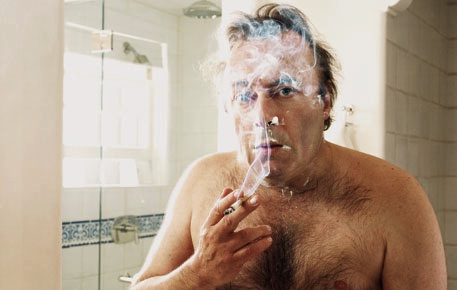
Hitch’s Memorial Service

Hitchens

I'm here and the Dish won't post until the service is over. Vanity Fair is highlighting a slide show of Hitch's life and directing fans to share their remembrances via Facebook and Twitter (NYMag has a great curated feed). Our readers remembered Hitch here. A Dish tribute to the man here.

Update: Vanity Fair has up the video tribute that was screened at the service.

The Settlements Are The State?

Shaul Magid has mixed feelings about Beinart's new book on Israel. A major criticism:

While Beinart gestures to his leftist critics that he is aware of the argument that one cannot separate the settlements from the state, he never responds to them. Probably because he can’t. His suggestion that we should boycott the settlements and give that money (and more!) to the state belies the reality that the state funds the settlements, which is why no one I am familiar with ever suggested boycotting the Afrikaner farmers while giving more aid to the South African government.

I've been persuaded that Peter's specific proposal is basically unfeasible – precisely because of the dead end his book so grimly describes.

Norway After July 22

GT_NORWAYJULY22_120419

The mass murderer and right-wing extremist Anders Behring Breivik's trial is underway in Olso. How Norwegians have grappled with the July attacks: 

In a nation of five million where most people either knew one of the victims or know someone who did, the attacks have cut deep. Survivors – including more than 240 wounded – still get flashbacks, panic attacks or the strange feeling they are spectators of their own lives. Young people have become more involved in politics. But it is striking too what "July 22," as the attacks are commonly called in Norway, has not done. It has not made Norwegians more fearful of one another, or triggered calls for tougher anti-terrorist measures. Instead, many Norwegians say it has reaffirmed their faith in a society they like to see as liberal, tolerant and egalitarian. …

One study found Norwegians trust each other more, not less, after Breivik. The attacks have certainly fired up existing activists such as [Vegard Groeslie] Wennesland, whose friend Haavard Vederhus, the head of the Labour Party Youth League's Oslo branch, was shot dead on Utoeya, and was replaced by Wennesland. "This guy wanted to kill me because I believe in democracy, openness, tolerance and dialogue," Wennesland, dressed in a hooded top and Converse shoes, said. "Well, fuck it. If that is what he wanted to kill me for, I am going to carry on fighting for it."

More on the trial here

(Photo: This photo taken on April 18, 2012, at Utvika, shows flowers in front of the island of Utoeya where many youths were killed by self-confessed mass murderer and right-wing extremist Anders Behring Breivik. By Tore Meek/AFP/Getty Images.)

Is Romney Dangerous?

Charles Blow thinks so:

I have no personal gripe with Romney. I don’t believe him to be an evil man. Quite the opposite: he appears to be a loving husband and father. Besides, evil requires conviction, which Romney lacks. But he is a dangerous man. Unprincipled ambition always is. Infinite malleability is its own vice because it’s infinitely corruptible by others of ignoble intentions.

Andrew Sprung makes a related argument:

There is opportunist Romney, who will say anything and adopt any position to get elected, and there is committed Romney, whose current policy positions have been set in concrete by his extremist party. He is not an Etch-A-Sketch, who can shake himself at will, but a Ouija Board, to be played by the GOP base … He has no core, but he's been cast in a mold that won't be broken until the GOP transforms itself. That is, until hell freezes over.

For Hitch

Bluebells

He preferred Auden to Eliot, but that's one reason to tweak him today, the day of his Memorial Service. If I had to pick a reading, this is what I would pick:

So here I am, in the middle way, having had twenty years—
Twenty years largely wasted, the years of l'entre deux guerres
Trying to learn to use words, and every attempt
Is a wholly new start, and a different kind of failure
Because one has only learnt to get the better of words
For the thing one no longer has to say, or the way in which
One is no longer disposed to say it. And so each venture
Is a new beginning, a raid on the inarticulate
With shabby equipment always deteriorating
In the general mess of imprecision of feeling,
Undisciplined squads of emotion.
And what there is to conquer
By strength and submission, has already been discovered
Once or twice, or several times, by men whom one cannot hope
To emulate—but there is no competition—
There is only the fight to recover what has been lost
And found and lost again and again: and now, under conditions
That seem unpropitious. But perhaps neither gain nor loss.
For us, there is only the trying. The rest is not our business.

But there is no competition …

(Photo: the annual brief flowering of bluebells in English forests and woodlands. By Matt Cardy/Getty).

The Case For A Vanilla GOP Ticket

It relies on affluent suburbs, according to Michael Barone: 

Paul Ryan wins big every year in Waukesha County west of Milwaukee. [Rob] Portman ran well enough in suburbs to carry Ohio's three biggest metro areas in 2010. [Mitch] VanillaDaniels won a higher percentage in Indiana's most affluent area, Hamilton County, than Ronald Reagan did in 1984. And in 2009 [Bob] McDonnell carried Washington's Northern Virginia suburbs, where he grew up, though they had voted heavily for Obama the year before. 

A double-vanilla ticket will be attacked as un-diverse by the media. But if the nominees have rapport and energy, as Clinton and Gore did in 1992, who cares? The Clinton-Gore ticket regained Southern ground for Democrats. A double-vanilla ticket might enable Republicans to regain ground in affluent suburbs this year.

(Screenshot from a Colbert segment on Romney veep speculation. A rice cake and a Joseph A. Bank mannequin were also considered.)