Johann Hari has done another one of his epic podcasts with the bloggy lion of the left. It’s here and here. Did you know that Glenn ran for office in high school? Me neither.
Month: April 2012
Face Of The Day

Right-wing extremist Anders Behring Breivik, who killed 77 people in twin attacks in Norway last year, makes a far-right salute as he enters the Oslo district courtroom at the opening of his trial on April 16, 2012. Breivik told the Court that he did not recognise its legitimacy. Since Breivik has already confessed to the deadliest attacks in post-war Norway, the main line of questioning will revolve around whether he is criminally sane and accountable for his actions, which will determine if he is to be sentenced to prison or a closed psychiatric ward. By Odd Andersen/AFP/Getty Images.
Are Romney And Obama Neck-And-Neck?
Gallup's initial tracking poll finds Romney ahead by two points. Joyner is cautious:
I’m not at all confident that Romney has moved into the lead; indeed, I think Obama has the inside track to keeping his job and have thought that even before the economy started to improve and Romney reminded me how wooden he is as a campaigner. But it’s sure looking like we’ll return to the very tight races that we saw in 2000 and 2004 rather than the perfect storm of last cycle.
Jonathan Bernstein, who notes a new CNN poll showing Obama ahead by 9, warns that statistical noise can create odd results:
[W]e're going to get some poll that says that African-Americans in the south are suddenly swinging away from Obama, or that LDS members in the West have suddenly tilted away from Romney, and everyone is going to freak out until it eventually turns out that it was just a fluke of one poll.
The State Of Afghanistan
The Taliban unleashed a series of attacks in and around Kabul this weekend. Max Boot sees them as evidence of the insurgent group's weakness:
Just look at the casualty count: Apparently two Afghan police officers were killed in the attacks and 14 injured along with some 30 civilians. There were no reports of any serious casualties to Americans or other international forces. The attackers failed to gain possession of the Parliament building or any other target, and they were swiftly defeated by Afghan Security Forces who needed minimal assistance from coalition forces.
Along those lines, Walter Russell Mead issues a call to stay the course. Juan Cole isn't buying it:
One local Afghan newspaper was left puzzling as to the purpose of these attacks, which, like those in Baghdad, likely have not hope of tactical success. The article speculates that the Taliban are trying to keep the US boots on the ground, just as President Hamid Karzai is, so as to extract strategic rent from the ongoing Western presence in Afghanistan. That is, some allege that the attacks in Kabul were motivated by a desire to draw the US into a longer-term occupation, so that the Taliban can be assured of having someone to fight. (Seems unlikely to me, but interesting that it appeared in the Afghan press. And, I don’t think it would work. Most Americans, even Republicans, want out, and I think most US troops will be out by 2014…)
Steve Saideman selects a few more interesting nuggets from the story.
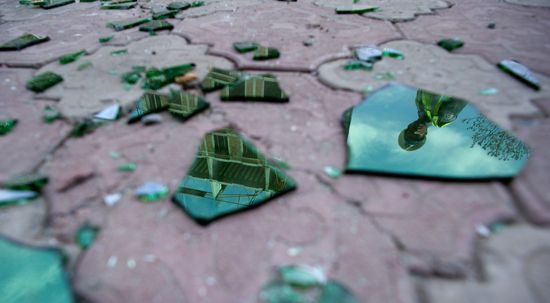
(Photo: Afghan policemen are mirrored in glass from a broken window as they stand guard outside the building where Taliban fighters launched an attack in Kabul on April 16, 2012. A total of 36 Taliban militants were killed as they mounted a wave of attacks across Afghanistan, Interior Minister Bismillah Mohammadi said on April 16. By Johannes Eisele/AFP/Getty Images.)
Has The UN Failed?
Walter Russell Mead makes the case:
The reality is that the UN today is less prestigious and influential than it was in the 1940s and 1950s. …I don’t favor abolishing the UN, but unless it figures out how to reform and restructure itself, it will continue to diminish as a force in international life. That is sad; while the world doesn’t need a world government, we could use an effective international body that facilitated international cooperation.
Hayes Brown counters:
The facilitation of international cooperation is precisely what the United Nations does, as noted by the fact that we haven’t had a Great Power war since 1945. As David Bosco argued in his book “Five to Rule Them”, the UN Security Council acts as a pressure release valve for the Great Powers to vent their concerns about global situations, as well as providing a forum for coordination of response. Also, cooperation is seemed to very narrowly here refer to “prevention of armed conflict”. Anything actions taken by the United Nations not related to international security is cast to the side in this piece, as highlighting successes in eradicating diseases and providing shelter to refugees goes against the premise of massive failure.
Daniel Solomon sides with Brown.
Mental Health Break
Quote For The Day III
"I’m not the guy you come in and dump on without getting punched in the mouth," – Orrin Hatch, on his "radical libertarian" primary challengers.
Cannabis Cabernet
It's the most popular form of marijuana wine:
[Crane Carter, president of the Napa Valley Marijuana Growers,] said cabernet, Napa’s main grape, is the variety of choice for marijuana-seasoned wine, and that fruit from the Stag’s Leap district is thought to pair particularly well with pot. According to Carter, pot wine delivers a quicker high than pot brownies, and the combination of alcohol and marijuana produces “an interesting little buzz.” He believes cannabis wine has a bright future in Napa. “People love wine,” he says, “and they love weed.”
“Sit Still And Pray”
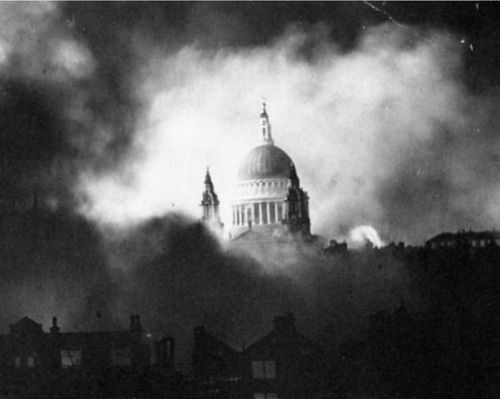
From The New Republic archives, W.H. Auden reviews a translation of Rilke. What's most remarkable is Auden's concluding recommendation, given the date of the essay – 1939:
Rilke’s influence is not confined to certain technical tricks. It is, I believe, no accident that as the international crisis becomes more and more acute, the poet to whom writers are becoming increasingly drawn should be one who felt that it was pride and presumption to interfere with the lives of others (for each is unique and the apparent misfortunes of each may be his very way of salvation); one who occupied himself consistently and exclusively with his own inner life…
This tendency is not to be dismissed with the cheery cry “defeatism.” It implies not a denial of the importance of political action, but rather the realization that if the writer is not to harm both others and himself, he must consider, and very much more humbly and patiently than he has been doing, what kind of person he is, and what may be his real function.
When the ship catches fire, it seems only natural to rush importantly to the pumps, but perhaps one is only adding to the general confusion and panic: to sit still and pray seems selfish and unheroic, but it may be the wisest and most helpful course.
Romney’s Secret Tax Plan
The tax proposals NBC overhead are pretty tame, according to Yglesias:
The timidity of these proposals is somewhat regrettable, though also understandable. The key point is simply that these are not the kind of ideas that will support large cuts in tax rates. To enact those, you either need to substantially increase the medium-term deficit or else you need to enact much deeper spending cuts than Romney has indicated.
TPM questions Romney's math:
Chuck Marr, director of federal tax policy at the Center on Budget and Policy Priorities, said all the deductions Romney proposed to scrap "would pay for less than 20 percent" of the $5 trillion cost of his tax plan. "The deductions he unveiled would raise less than $1 trillion," he said.
So does James Kwak:
Republican tax cut plans fall into two categories: the ones that don’t bother pretending that they’re going to be revenue neutral and the ones that do. But the latter can never make the numbers add up because you can’t have massive rate cuts and be revenue neutral unless you’re willing to eliminate popular tax expenditures for the middle class, the preference for investment income (the most important tax break for the rich people who pay for Republican politicians’ campaigns), or both.
Josh Barro, on the other hand, would support Romney eliminating HUD, which Romney said he is considering.
 The Dish
