What If We Can’t All Get Along?

by Zoë Pollock

Sasha Issenberg considers how much genetics influence our politics:

[M]oral concerns have seemed to exhibit the strongest hereditary influence and to manifest themselves earliest in life. They are the most stable over a lifetime and the least susceptible to persuasion. That may explain why the most angry, permanent divisions in modern American politics have surrounded “God, guns, and gays” and why an intra-Republican truce on such cultural issues strikes nearly everyone as particularly fanciful. What if positions on these issues evoke the most primal responses because, in animal terms, they are most primal?

Is The Ryan Budget Christian?

by Zoë Pollock

He recently tried to claim so:

To me the principle of subsidiarity, which is really federalism, meaning government closest to the people governs best. Having a civil society, the principle of solidarity, where we through our civic organizations, through our churches, through our charities, through all of our different groups where we interact with people as a community, that’s how we advance the common good.

Meghan Clark disagrees. Steve Thomgate makes related points:

Subsidiarity, in short, means not just taking care of things at as local a level as possible but also actually taking care of them. It's hard to see how deep cuts–sorry, "repairs"–to safety-net programs can accomplish this.

Larison goes into the weeds on the encyclical, Rerum Novarum.

Is Hating A Murderer Irrational? Ctd

by Patrick Appel

A reader writes:

I've noticed that the Dish has given a lot of space recently to posts skeptical of the existence of free will, be it arguments made by neuroscientists or philosophers. With regards to the latter, I'm just concerned that you create the impression that, in line with the perception of philosophers as a little odd and counterintuitive, they unanimously doubt the reality of free will, which isn't the case at all. From my experience, I'd say more philosophers are compatibilists than incompatibilists about free will. That is, they do not think the truth of scientific determinism means free will is impossible, and they don't think it undermines human emotions like hate, praise and so on either.

This tradition started with Hume, and has been continued more recently by the likes of AJ Ayer and Peter Strawson – two major figures in 20th century philosophy. It's difficult to explain, because many people obviously do think the truth of determinism means we cannot choose what to do, and free will, praise and blame are thus in real trouble. But to sum up their thought as succinctly as possible: they simply point to the fact that, say, as children, if presented with a choice of chocolate or strawberry ice cream, we would then proceed to pick one or the other, and our mothers would tell us this was an act of freedom. It doesn't matter whether a causal story could be told which explained why we asked for chocolate – so long as we simply say it, that's what freedom is. To expect anything more is, they claim, to misunderstand the concept.

If you agree with them, then, the fact that a murder was caused by the collision of atoms in a brain does nothing at all to detract from the fact that the action was free – it flowed from them – and hate is perfectly rational as a response to evil.
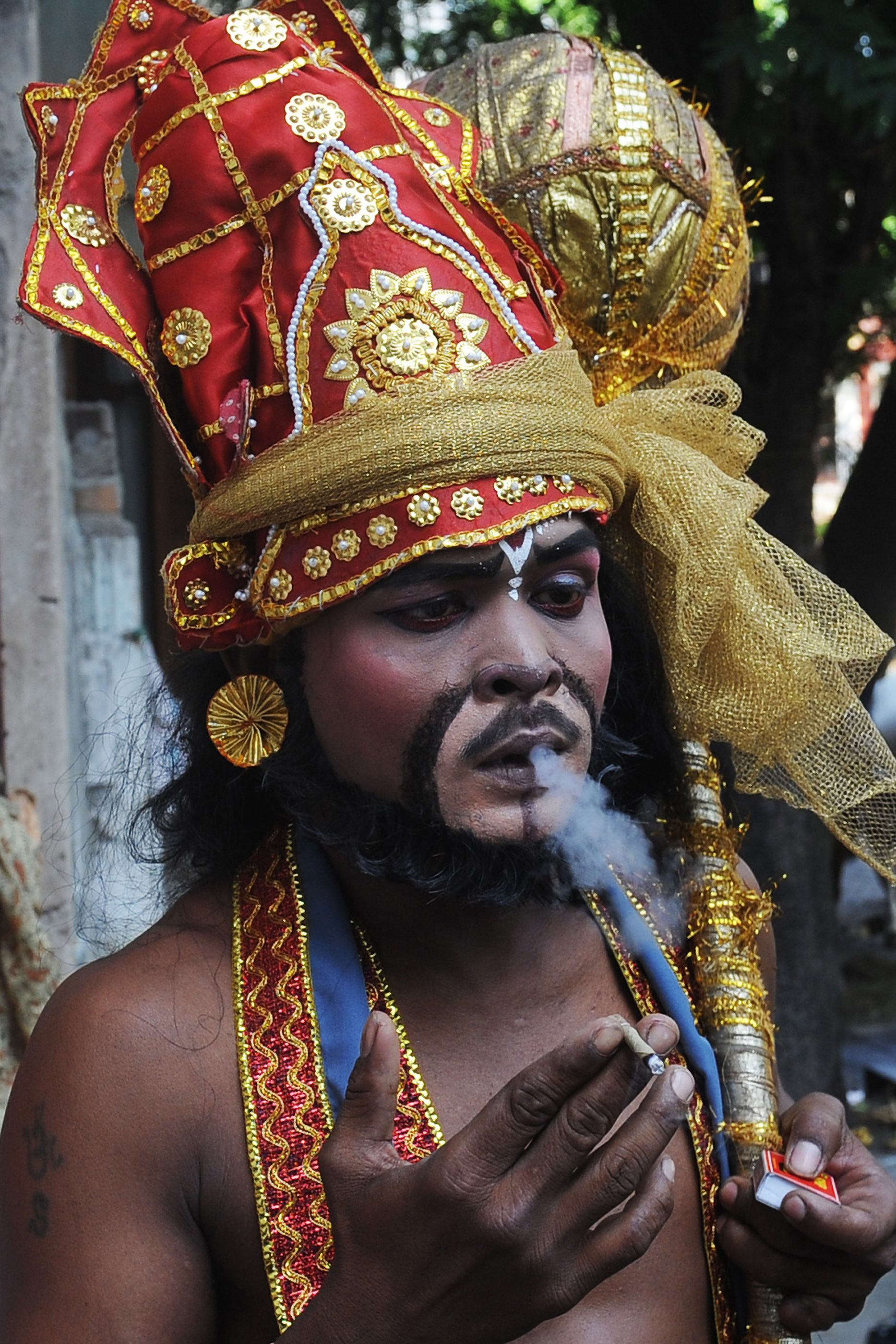

Our Infatuation With Origin Stories

by Zoë Pollock

Is hardwired:

Some types of explanations are more satisfying to our minds than others. Simpler ones, as a rule, win out over more complicated: We will take the more direct of two equally good explanations—and may even overturn a slightly better but more complex one for a slightly worse but more straightforward one. And the more coherent, the more story-like and narrative-driven, the better – especially if it also explains a number of factors at once. 

What Should God Look Like?

by Zoë Pollock

C.S. Lewis defended anthropomorphic images in 1947:

A girl I knew was brought up by ‘higher thinking’ parents to regard God as perfect ‘substance.’ In later life she realized that this had actually led her to think of Him as something like a vast tapioca pudding. (To make matters worse, she disliked tapioca.) We may feel ourselves quite safe from this degree of absurdity, but we are mistaken.

Brian LePort nods:

While anthropomorphic language may fall short of explaining a God that is far beyond us it is the best language we can find for humans are the most “god-like” figures in creation. When we attempt to venture away from anthropomorphic language toward something that sounds “deeper” and more philosophical we may find that we are speaking of a depersonalized deity that is more of an oblong glob than a god.

How Free Is Free Will?

by Zoë Pollock

John Horgan takes issue with Sam Harris definition of free will:

Yes, my choices are constrained, by the laws of physics, my genetic inheritance, upbringing and education, the social, cultural, political, and intellectual context of my existence. And as Harris keeps pointing out, I didn’t choose to be born into this universe, to my parents, in this nation, at this time. I don’t choose to grow old and die. But just because my choices are limited doesn’t mean they don’t exist. Just because I don’t have absolute freedom doesn’t mean I have no freedom at all. Saying that free will doesn’t exist because it isn’t absolutely free is like saying truth doesn’t exist because we can’t achieve absolute, perfect knowledge.

Keeping The Dead In Our Thoughts

by Zoë Pollock

Roger Ebert contemplates loved ones he's lost:

Early one morning, unable to sleep, I roamed my memories of them. Of an endless series of dinners, and brunches, and poker games, and jokes, and gossip. On and on, year after year. I remember them. They exist in my mind–in countless minds. But in a century the human race will have forgotten them, and me as well. Nobody will be able to say how we sounded when we spoke. If they tell our old jokes, they won't know whose they were.  That is what death means. We exist in the minds of other people, in thousands of memory clusters, and one by one those clusters fade and disappear.

A commenter raises an interesting distinction:

Many Native American peoples had two words to describe the dead. One word for those who had died- but still had someone living who remembered them, and another word for those who have died and no living person was left who remembered them.