by Zoë Pollock
"Step Gently Out" by Helen Frost, with photography by Rick Lieder:
(Hat tip: Cory Doctorow)
by Zoë Pollock
"Step Gently Out" by Helen Frost, with photography by Rick Lieder:
(Hat tip: Cory Doctorow)
by Zoë Pollock
Ron Rosenbaum grapples with how anyone accepts a God that let the Holocaust happen:
The failure of contemporary Jewish sages, scholars, and the rabbinate to come up with an adequate explanation for God's silence, God's absence, is scandalous to me, virtually an admission that there is no good explanation. But must we then reject God? It's a fairly important question to spend your academic or seminary life ignoring. It's the elephant, no, the mastodon, in the room. Something most don't want to talk about. Or claim not to be troubled by.

by Zoë Pollock
Alain de Botton explains why he thinks it's dangerous:
For a start, there is the danger of individualism: of placing the human being at the center stage of everything. Secondly, there is the danger of technological perfectionism; of believing that science and technology can overcome all human problems, that it is just a matter of time before scientists have cured us of the human condition. Thirdly, without God, it is easier to lose perspective: to see our own times as everything, to forget the brevity of the present moment and to cease to appreciate (in a good way) the miniscule nature of our own achievements.
But he believes we can be the masters of our own morality:
An adequate evolution of morality from superstition to reason should mean recognising ourselves as the authors of our own moral commandments. We don’t need a central structure. We are beyond the age of gurus and inspirational leaders. We are in the age of the Wiki structure. This means that it is up to all of us to look at religion and see what bits we can steal and place into the modern world.
(Photo: "Nave, Chartres Cathedral, Chartres, France, 2006" by David Stephenson, from his series of church vaults. Courtesy of David Stephenson and Julie Saul Gallery, New York.)
by Zack Beauchamp
Katrien Devolder puzzles the ethics of prescribing libido-reducing anti-depressants to those who have religious objections to sex:
Perhaps one could say that helping people adhere to religious norms falls outside of the psychiatrist’s sphere of duty, and that, as a consequence, psychiatrists do not have to provide such ‘treatment’ even if requested by the patient. However, the aim of the drug could be described in several ways: to help maintain the Haredi community, or to increase people’s wellbeing, for example, by increasing their authenticity, or by reducing anxiety and depression. The latter clearly falls within the professional responsibility of psychiatrists. So should a psychiatrist then provide such treatment? Many psychiatrists may feel uncomfortable at this thought.
Iain Brassington compares this case to its opposite, prescribing libido-enhancing medication:
In both cases – of being under-stimulated and being over-stimulated – there’s room to wonder whether the real problem is a rigid (pfffft!) view of what sexuality entails and demands. The man who wants oxytocin in order to have sex may simply be buying into a narrative about how sex – and masculinity – involves getting it up, hopefully quite often, and wanting to get it up. Haim is at the receiving end of a narrative about how he should avoid wanting to get it up nearly as much as he does.
The distress caused by the failure to meet the demands of these narratives could well be genuine. But if the problem is with the narratives, then prescribing drugs in an attempt to solve them might miss something rather important.
by Zoë Pollock
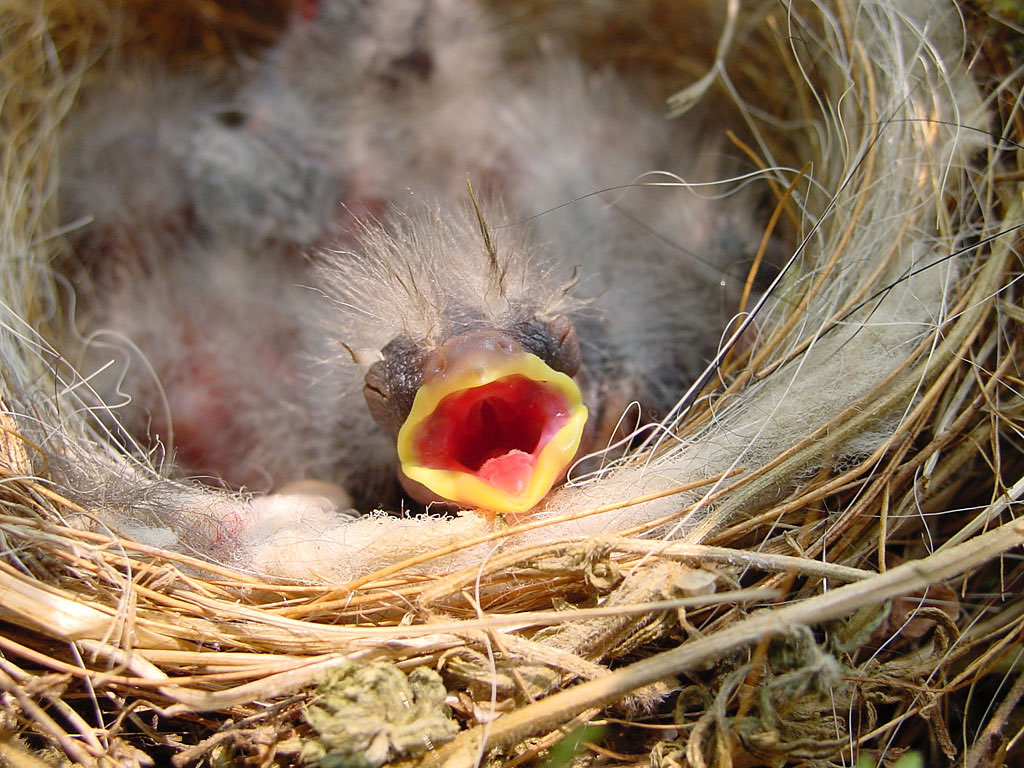
David Gessner recently built a small shack in his back yard with a desk for writing. But he didn't add a screen to cover a gap above the door and was rewarded with the nest of two Carolina wrens and, soon after, four baby birds:
My life feels better, more intense and elevated, having this new family around. Over the last two weeks the wrens and I have co-existed, though, feeling it was only good manners, I have spent less time in the shack, and each night I place the plywood cover over the screen window to keep the wind and rain out. When I do take a seat these days I witness the non-stop parade of feeding, performed by both the male and female, and I take notes in my journal of the type of insect or worm they have brought as an offering. The few minutes immediately after the feedings are the only time, outside of sleep, that the tiny birds stop pleading with their squeeze-toy squeaks and stop lifting their gaping mouths.
(Photo by Ryan Keene.)
by Zoë Pollock
On a panel with Roger Ebert, Michael Fink, the man behind the CGI dinosaurs in Terence Malick's The Tree of Life, confirmed what we all believed:
The premise of the four-shot scene was to depict the birth of consciousness (what some have called the "birth of compassion") — the first moment in which a living creature made a conscious decision to choose what Michael described as "right from wrong, good from evil." Or, perhaps, a form of altruism over predatory instinct. Here's the relevant passage from a 2007 draft of Malick's screenplay:
Reptiles emerge from the amphibians, and dinosaurs in turn from the reptiles. Among the dinosaurs we discover the first signs of maternal love, as the creatures learn to care for each other. Is not love, too, a work of the creation? What should we have been without it? How had things been then? Silent as a shadow, consciousness has slipped into the world.
by Zoë Pollock
Even Hustler needs a style guide:
[Copy editor Eric Althoff] said that the magazine prefers “come” as a verb and “cum” as a noun in references to ejaculation. But on the magazine’s cover, it would allow “cum” in either situation to get the attention of potential buyers. “‘Cum’ is going to jump out at consumers,” he said.
(Hat tip: Nick Baumann)

by Zoë Pollock
"You Fit Into Me," by Margaret Atwood:
you fit into me
like a hook into an eyea fish hook
an open eye
More great, short poems here.
(Photo by Nomadic Lass)
by Zoë Pollock
Stephen Marche argues that Facebook has spawned an epidemic of loneliness in America:
The history of our use of technology is a history of isolation desired and achieved. When the Great Atlantic and Pacific Tea Company opened its A&P stores, giving Americans self-service access to groceries, customers stopped having relationships with their grocers. When the telephone arrived, people stopped knocking on their neighbors’ doors. Social media bring this process to a much wider set of relationships. … The beauty of Facebook, the source of its power, is that it enables us to be social while sparing us the embarrassing reality of society—the accidental revelations we make at parties, the awkward pauses, the farting and the spilled drinks and the general gaucherie of face-to-face contact. Instead, we have the lovely smoothness of a seemingly social machine.
Sherry Turkle's new TED talk covers similar territory.
(More on Jo Luijten's projects about how far the web has come here.)
by Zoë Pollock
Mark Dery offers a stunningly beautiful, and funny, meditation on his years battling stomach cancer:
Every patient has his answer. Mine is the existentialist’s koan: the answer is that there is no answer. My first impulse, as a godless rationalist, is to say that diseases like urethral cancer and system breakdowns like bowel obstructions are object lessons in the capriciousness of the cosmos—the unpredictability of life, its random unfairnesses. Our insistence that things have meanings and morals impels us to turn our sickness into metaphor and narrative; to demand something deeper from it than purposeless pain.
To my Christian-fundamentalist relatives, my near-fatal cancer was just the Lord moving in mysterious ways, showing me the error of my atheism before death consigned me to eternal torment. To my father, the colorectal cancer that killed him was, he confided in all seriousness, the likely result of a lifetime of emotional repression—karmic retribution for anal retention. …
I contend that, while metaphor may be an illness when it obscures our understanding of the true nature of disease, language—the meta-metaphor—is the Indian rope trick that lets us climb into our minds, out of bodies in pain.
On a related note, Radiolab's most recent episode investigates our tenuous relationship with our guts.
 The Dish