by Zoë Pollock
Self-taught artist Silvia Pelissero, also known as Agnes-Cecile, reveals her watercolor magic:
(Hat tip: Colossal)
by Zoë Pollock
Self-taught artist Silvia Pelissero, also known as Agnes-Cecile, reveals her watercolor magic:
(Hat tip: Colossal)
by Zoë Pollock
It takes only 13 milliseconds to decide:
[Neuroscientists Ingrid Olson and Christy Marshuetz] exposed men and women to a series of pre-rated faces, some gorgeous and other homely, and asked them to rate their appearance. The twist was that the faces flickered on the screen for only thirteen milliseconds — a flash so fast that the exasperated viewers swore they didn't see anything. Yet when forced to rate the faces they thought they didn't see, the judges were uncannily accurate. Without knowing why, they gave good-looking faces significantly higher scores than unattractive ones.
The takeaway:
To a great extent, first impressions of people's looks are less about choice and culture and cultivated tastes, and more about something deeper and universal. Judging attractiveness seems to happen just as automatically and matter-of-factly as judgng identity, gender, age, and expression.
by Zoë Pollock
The city that never sleeps in motion:
by Zoë Pollock
"Caterpillars More Likely to Vomit Alone," – Science Daily.
by Zoë Pollock
A new experiment shows baboons can distinguish English words from jibberish, a big step on the road to reading:
And the monkeys weren’t just memorising the words. They were still more likely to pick a set of letters they had never seen before, if it was an actual English word. [Study author Jonathan Grainger] thinks that the baboons learned to tell the real words from the fakes by using the frequencies of letter combinations within them. They learned which combinations were most likely to be found in real words, and made their choices accordingly. They had gleaned the stats of English, without any knowledge of the language itself.
So is the primate brain built to read?
When we invented writing systems, we co-opted ancient neural circuits that help primates to recognise patterns. This shouldn’t be surprising. Written language is only around 5,000 years old, and millions of people today still cannot read. We can, however, develop that ability very quickly. In the 19th century, when the Cherokee of North America finally invented a writing system for their spoken language, they started learning and using it within a single generation.
Alexis compares the baboon's abilities to Google.

Grand Bay, Alabama, 9.40 am
by Zoë Pollock
A window into the wild world of Couchsurfing.com:
I’d selected Fielding and my other hosts after scrolling through hundreds of profiles, winnowing out those whose narratives included the words “party,” “vegan,” and “free spirit,” and the phrases “I believe in the journey,” “Never stop learning, never stop loving,” and “Burning Man.”
Patricia Marx contemplates the act of staying with strangers in the age of the internet:
Has our relation with machines made us feel so deprived of human contact that we befriend anyone and shack up with whoever has a mattress? Moreover, how profound can a social connection be if it is arranged through paperwork and typically lasts only a day or two? “It’s sad when they leave,” Sommer, one of my San Francisco hosts, said. “But then you get another one.” People, it seems, are becoming fungible, and, as in a game of pinball, you score points by bumping up against as many of them as possible.
There's an environmental benefit as well:
One study by Urban Futures in Vancouver, BC, estimated that 29 percent of all homes had more bedrooms than people in them. That’s more than 220,000 empty bedrooms—a massive untapped reservoir of accommodations, already built, painted, furnished, heated (and sometimes cooled), and provided with bathroom and kitchen access. Channeling travel growth into existing homes rather than new hotels would bring big environmental benefits, as Finnish think tank low2no.org argued in an analysis of the carbon footprint of hotels.
Those seeking to capitalize on sharing are primed to do well:
Super angel Ron Conway recently identified [the sharing economy] as 2012?s hot area for angel investment in The Economist. And Fast Company deemed 2012 the “year of peer-to-peer accommodations,” thanks to the emergence of Airbnb clones that hinged off of the company’s outstanding growth.
by Zoë Pollock
Blame the French:
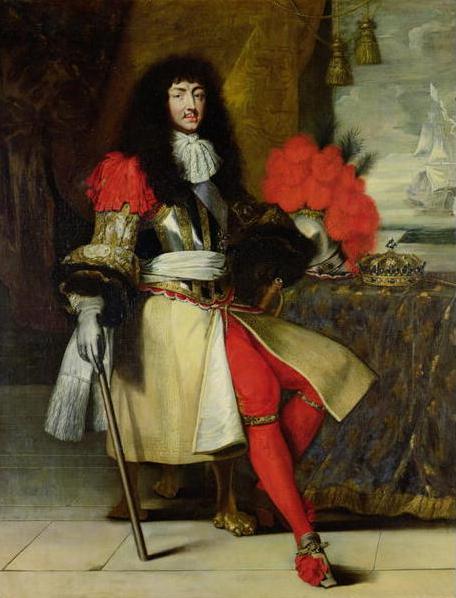
The reign in France of Louis XIV, with his gloriously powdered face and wig, silk stockings of cardinal red, heels, and fine plumage of velvet, ribbons, and lace, would
mark the zenith of aristocratic fashion. By the time the republicans executed Louis XVI, the flush of colors, fabrics, and accoutrements had already begun giving way to a darker, more muted palette. The Industrial Revolution changed the way people dressed, as mass-produced three-piece suits became more accessible. The bourgeois class ushered in a new paradigm where men were to be defined by their commitment to industry and work, not the elaborateness of their dress. Their sobriety was a direct rebuke of the excesses of the French aristocracy.
Prominent British psychologist J.C. Flugel, in his book, The Psychology of Clothes, called this moment the “Great Masculine Renunciation,” when men “abandoned their claim to be considered beautiful” and “henceforth aimed at being only useful.”
How little has changed:
Suits are still “universal.” Pants are de rigueur. Much of the excitement surrounding menswear has come from the fact that self-professed heterosexuals like Mordechai Rubinstein are joining in on the fun. Rubinstein likes three-piece suits and dislikes“men who are getting too pretty.” It is a way of saying, I do enjoy the occasional purple pocket square. No homo. Men can reclaim fashion while still retaining their masculinity. While most are not as explicit as Rubinstein, they are essentially speaking the same language, the language of legitimacy, power, and respectability. As David Foster Wallace might have said, this is the Standard White English of fashion.
But male jewelry is on the rise:
According to the market researchers Euromonitor, in 2005 British men bought £136m-worth of luxury jewellery; by 2010, despite the recession, this had gone up to £168m. The greatest increase was not in safely conservative watches, either, but bracelets and—yes, Hugh—necklaces.
by Zoë Pollock
Chris Jones profiles Robert Caro, author of behemoth biographies of Robert Moses and a five book biography of Lyndon Johnson he's been writing for 38 years:
It's not just Caro's single-mindedness that makes repeating The Years of Lyndon Johnson a modern impossibility. The world outside his office has changed in the nearly four decades since he began. Publishers might like to pretend that they're different from other manufacturers, or at least that they're farms rather than factories, but they're not. Books like Caro's don't make corporate sense anymore, if they ever did.
The fourth installment, The Passage of Power, comes out May 1. I love this anecdote from Andy Hughes, Caro's designer:
He wants them to be built to last. Unfortunately, book building is another dying art. Bindings are glued instead of stitched; most hardcovers are made from paper rather than cloth; hinges aren't as sharp as they used to be and half rounds aren't as tight. "These are just things that have been lost in the march of time," Hughes says. Today, he looks at books and sees weakness as often as he sees beauty. He sees it especially in something he calls "mousetrapping," one of our invisible modern plagues. He opens the three Caro books to demonstrate: Each stays open on his desk. Each lies flat. Hughes then finds a more recent book, and no matter how much he cracks its spine, it wants to snap shut. "It's like we're asking readers to close them," he says. The Passage of Power, Hughes says, will lie flat.

You have until noon on Tuesday to guess it. City and/or state first, then country. Please put the location in the subject heading, along with any description within the email. If no one guesses the exact location, proximity counts. Be sure to email entries to VFYWcontest@gmail.com. Winner gets a free The View From Your Window book. Have at it.
 The Dish