Our Publishers, Ourselves

by Zoë Pollock

Clay Shirky pops one of the book industry's biggest bubbles:

Because the word “publishing” means a cadre of professionals who are taking on the incredible difficulty and complexity and expense of making something public. That’s not a job anymore. That’s a button. There’s a button that says “publish,” and when you press it, it’s done. In ye olden times of 1997, it was difficult and expensive to make things public, and it was easy and cheap to keep things private. Privacy was the default setting. We had a class of people called publishers because it took special professional skill to make words and images visible to the public. Now it doesn’t take professional skills. It doesn’t take any skills. It takes a WordPress install.

His theory in action:

We’ve seen this with self-published authors like Amanda Hocking, who used Amazon’s Kindle platform to make more than $2-million in revenue for her books without the help of the traditional publishing industry, or John Locke, who has sold over a million copies of his self-published books. We’ve seen it in the news-publishing business as well, where web-only entities like The Huffington Post and Politico have created substantial media properties without the help of the traditional news industry — and in video, where videographers like Tim Pool and others have become one-man TV news stations. … 

In the end, Shirky is making the same point we have made before when it comes to publishing: if traditional publishers — of all kinds, not just the book industry — want to maintain some of the value they have had in the past, they will have to stop thinking about controlling the process of distribution or the delivery platform, and think more about the services they can add for authors and readers.

When Politicians Rig Their Taxes

by Zoë Pollock

While at the IMF, Tim Geithner failed to pay Medicare, Social Security, and payroll taxes for several years, to the sum of $40,000. Dan Ariely ran an experiment to show how Geithner's behavior might affect the rest of us:

To see how witnessing an act of dishonesty would affect participants, we had one student—a confederate named David—stand up after only a minute and claim he’d solved all 20 matrices. The experimenter merely responded that in that case he could take his earnings and go. So how did the participants respond to this display when asked to self-report the number of matrices they solved? By cheating a whole lot: they claimed an average of 15 correct answers, more than twice the average score when cheating was not allowed.  … [T]he more we see politicians—the people who make our laws—fudge their taxes (which seems to happen continually), the more likely the rest of us are to adjust our understanding of what is right and wrong about paying our taxes, and do the same.

Ad War Update

by Maisie Allison

The Obama campaign celebrates Romneycare's sixth anniversary, casting Romney as a proud pioneer of the ACA: 

Sahil Kapur has more

The dueling responses foreshadow a sort of political chess match where Romney works to keep the focus on “Obamacare” while Obama responds by strategically giving his opponent some credit for his signature law. The other wildcard is the Supreme Court’s verdict on the constitutionality of the Affordable Care Act. A ruling to strike down some or all of it would energize Romney’s message that the federal government overstepped its bounds, but a decision to uphold the law would effectively make his one trump card — the federal-state distinction — moot. Despite Romneycare’s minimal effect in controlling costs, it has been a success by a number of indicators: Nearly everyone in the state has insurance, emergency room visits have dropped and surveys show that about two-thirds of residents favor the law.

The Democratic PAC American Bridge piles on

Super PAC spending update here

Previous Ad War Updates: Apr 11Apr 10Apr 9Apr 5Apr 4Apr 3Apr 2Mar 30Mar 27Mar 26Mar 23Mar 22Mar 21Mar 20Mar 19Mar 16Mar 15Mar 14Mar 13Mar 12Mar 9Mar 8Mar 7Mar 6Mar 5Mar 2Mar 1Feb 29Feb 28Feb 27Feb 23Feb 22Feb 21, Feb 17, Feb 16, Feb 15, Feb 14, Feb 13, Feb 9, Feb 8, Feb 7, Feb 6, Feb 3, Feb 2, Feb 1, Jan 30, Jan 29, Jan 27, Jan 26, Jan 25, Jan 24, Jan 22, Jan 20, Jan 19, Jan 18, Jan 17, Jan 16 and Jan 12.

Denial, Anger, Bargaining, Romney

by Zoë Pollock

The process of GOP acceptance could work to Romney's advantage as long as Republicans stay unhappy with Obama:

One remarkably consistent pattern across the last several decades is that incumbent presidents, not their challengers, drive the behavior of supporters and opponents alike. According to Pew, when George W. Bush stood for reelection in 2004, nearly every Republican cast his vote "for Bush," but only 33 percent of Democrats voted "for John Kerry"—the remaining 66 percent said they were voting "against Bush." The same pattern held when Bob Dole challenged Clinton in ’96: most Democrats voted for Clinton, while most Republicans voted against him, rather than for Dole. It also held in 1992, when George H.W. Bush’s supporters voted for his re-election, and Clinton’s voted en masse against Bush. This year will be no exception. When Pew inquired last October, Republicans by nearly 3-to-1 said they were motivated to vote against Obama. 

The Weekly Wrap

6a00d83451c45669e2016303f1b2c5970d-550wi

Friday on the Dish, Patrick went in-depth on whether labels make you stupid (reader thoughts here), Chris debuted the Ask (Spencer) Ackerman Anything poll, Maisie pondered Romney's path on foreign policy, and I nodded in the direction of a political solution for Syria during a cease fire (follow-up here) and posed some pragmatic challenges to advocates of a settlement boycott. We worried that geese could set off nuclear war betwen Israel and Iran, examined the implications of North Korea's failed missile test here and here, wondered if Latin America could end the drug war as we know it, determined the scope of media mistreatment of foreign countries, and noticed that fighting wars helped presidents in history's eyes. Romney always had a woman voter problem, swing voters weren't who you thought, and the campaign ushered in the media silly season.

We fit alien movies to American foreign policy, thought over what made a book unfilmable (follow-up here), noted an important addendum to the young adult literature conversation, asked science for symphonies, and re-read The Closing of the American Mind. Ebook sellers irritated the Justice Department and the pot law patchwork confused growers. Readers continued discussiong "boxing on ice," dating with disabilities (here and here), and the value of gyms. Pants lied, fancy restaurant ordering required ordering weird-sounding stuff, the Titantic disrupted social norms, and Friday(s) the 13th creeped people out. Ask Charles Murray Anything here, Malkin Award Nominee here, Quote for the Day here, View From Your Airplane Window here, FOTD here, VFYW here, and MHB here.

6a00d83451c45669e201630402cad1970d-550wi

Avalon, California, 7.42 am

Thursday on the Dish, I defended the idea that liberal democracy was here to stay, spoke up in favor of gyms (follow-up here), and clarified a point on drug legalization versus criminalization, while Patrick debunked a wildly misleading statistic from the Romney campaign. Today's nontroversy merited a meh, the Buffet Rule tested the GOP's elasticity, Mitt needn't fret about the empathy gap (an attribute that probably didn't matter much in Presidents anyway), and Eisenhower's approach got deconstructed. We took in arguments as to why Obamacare wouldn't increase the deficit, spotlighted Connecticut's decision to ax the death penalty, and kept up the political labels v. intelligence debate. Ad War Update here.

We also glimpsed the life of gay teenagers gripped by ex-gay theory, examined "dating with disability" (follow-up here), and further distanced asexuality from anti-intimacy. Readers debated the VAT as tax simplification, paying for education with future earnings, and fighting in hockey. War might have been less likely if it was harder to start, Communtiy explained real wars, the quality of American food fell off - as did walking, stay-at-home mothers were less well off, and Microsoft Word sucked. Pet obituaries created problems and a dog talked. Ask Charles Murray Anything here, the (above) Hathos Alert here, VFYW here, FOTD here, and MHB here.

Wednesday on the Dish, Patrick waded into the debate and humbled pundits attempting to estimate the cost of Obamacare, Maisie reframed the Buffet Rule debate, I pushed back against a drug war talking point, and Chris gave you the above weirdness and reupped Ask Jennifer Rubin Anything. We wondered if Santorum really pulled Romney right, looked at Mitt's next steps, heard the case for Romney-Ryan, pinned the Democratic platform's embrace of marriage equality to 2016 at the latest, and acknowledged Bush's tax victory. Ad War Update here.

We also surveyed Arab attitudes toward Iran, previewed the upcoming negotiations, busted some myths about Israeli and American politics, examined 9/11's impact on Canada, and pinpointed the most violent place on Earth. Economic growth increased death rates, IPOs created "death spirals" for young buisnesses, Facebook bought Instagram for some pretty understandable reasons, and future earnings hypothetically financed college. Reading surged, some YA novels really were worth it for adults (thread-ending Quote for the Day here), and age didn't always increase wisdom. Race divided a parent from child, American Pie broke down sexual norms, religiosity mattered, and humans were incorrigibly optimistic. We pondered the rationality of hating murders, thought through veterinary ethics, heard the sound of meals, and readers continued the cannabis and hockey violence threads. Ask Charles Murray Anything here, Hathos Alert here, VFYW here, MHB here, and FOTD here.

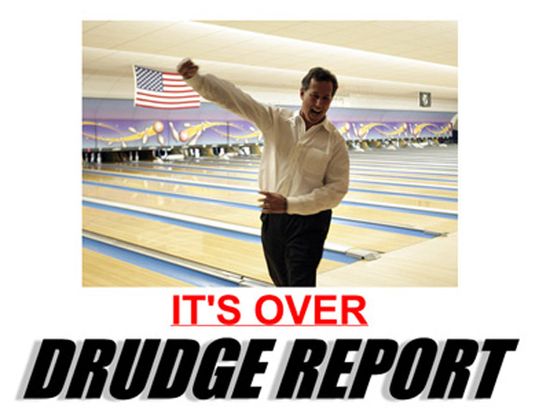
Tuesday on the Dish, Maisie compiled reax to Santorum's drop out and I defended the idea that the man had legitimate appeal inside the GOP. Chris thought through the phenomenology of asexuality and implored you to Ask Jennifer Rubin Anything, Patrick posed a tough question for Ross Douthat, and I both sharpened the liberal/neoconservative line on foreign policy and explored a justification for US global military presence. We fit Romney into a chameleon suit and explained the real reason a veep matters. Ad War Update here.

We also checked a new study on Obamacare costs, looked at the View from Your Recovery, explored a quick path to tax simplification, battled with IRS bureaucracy, worried about privacy in a cashless world, cautioned against smartphone addiction, and broke down the evidence about putting head shots in resumes. Student debt exploded and alumni offered loans.

Libya's future was murky and Assad buckled. We questioned the durability of federal marijuana laws, debated pot's creativity-enhancing effects, noted that caffeine could theoretically make you lazy, and warned against the dangers of sitting. The morality of procreation discussion moved away from abstraction, nose erections were a thing, and readers aired thoughts on YA books (here) the comparison between injuries in football and hockey (here and here). Ask Charles Murray Anything (on his marriage equality conversion) here,VFYW Contest Winer here, VFYW here, FOTD here, and MHB here.
6a00d83451c45669e2016764da024f970b-550wi

By Jim Watson/AFP/Getty Images

Monday on the Dish, I defended good-versus-evil narratives, Chris invited you to ask Tyler Cowen Anything and chuckled at a penguin, and Patrick gave you a moment of Andrew. Romney distinguished between Mormon "doctrine" and "practices," it appeared possible that the GOP might have to defend both in the election, and Gingrich reconciled (sort of) to the inevitable. We debated the Ryan plan's seriousness, listened to reader feedback on the "Social Darwinism" label for it, and dove into the science of ideology. John Derbyshire's firing got more scrutiny here and here, gender roles limited female opportunities in Congress, and journalists prophesied their own doom.

We also weighed in on pink slime, took in advice on getting out of food ruts, examined how to prevent human extinction, zoomed in on the secret life of plankton, and learned about human society from an octopus. Posthumous marriage and child conception posed ethical issues, homophobia came from repressed gayness (shocker, that), a (potentially false) coming out story moved us, and monogamy worked for many. The deluge on Big Football continued, tackling Saddam was expensive, our energy crisis needed to be solved socially, your dollars went to office workers, and the government had more to do if it wanted to improve our economic situation. Laughter bonded and Korean pop spread. Ask Charles Murray Anything here, View from your Airplane Window here, VFYW here, MHB here, and FOTD here.

Z.B.

Can Latin America End The War On Drugs?

GT_GUATEMALADRUGS_120413

by Zoë Pollock

Guatemalan president Otto Pérez Molina has initiated the discussion:

In a poor and stratified country further devastated by a decade-long war, Pérez Molina watched social structures and institutions crumble under the impact of the drug trade. The homicide rate raced upwards from an already high 24 per 100,000 in 1999 to a staggering 41 in 2010. (By comparison, the overall rate in Mexico, whose violence receives far more international press, was 18 last year; in the US it was about 5.)

The Summit of the Americas meets this weekend in Cartagena to discuss. Molina explained his position in a recent op-ed:

Guatemala will not fail to honour any of its international commitments to fighting drug trafficking. But nor are we willing to continue as dumb witnesses to a global self-deceit. We cannot eradicate global drug markets, but we can certainly regulate them as we have done with alcohol and tobacco markets. Drug abuse, alcoholism and tobacco should be treated as public health problems, not criminal justice issues. Our children and grandchildren demand from us a more effective drug policy, not a more ideological response.

Earlier coverage of the drug war here and here.

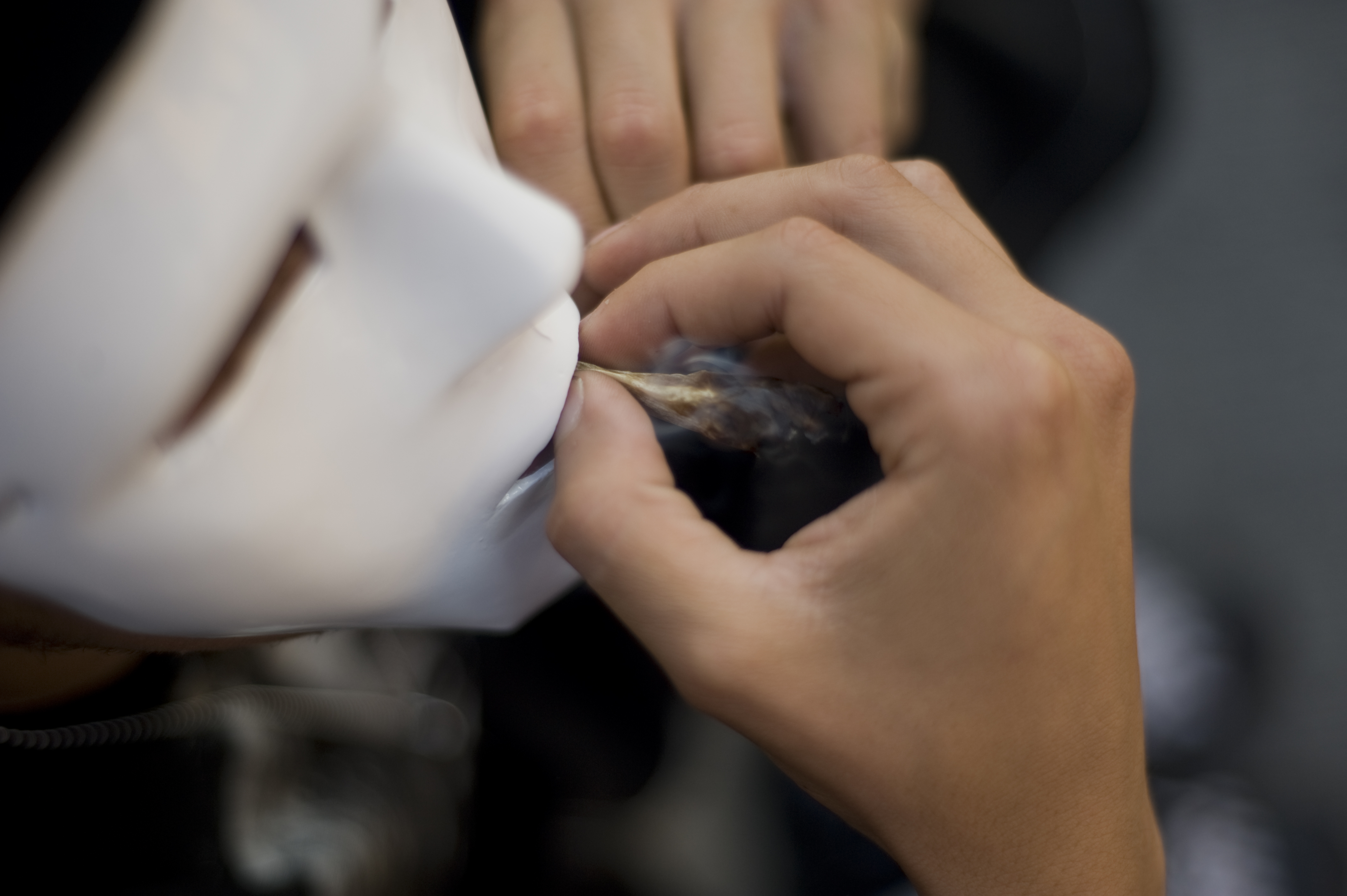
(Photo: A man smokes marijuana during a march calling for the decriminalization of marijuana on March 23,2012 in Guatemala City, a day before that the presidents of Central America debate alternatives to combat drug trafficking. By Johan Ordonez/AFP/Getty Images.)         

The Most Unlucky Day

by Zoë Pollock

Is today:

In numerology, the number twelve is favored for its association with completeness: twelves months in a year, twelve hours on a clock, twelve Apostles, twelve tribes of Israel, twelve gods of Olympus, etc. Thirteen, then, is the perversion of this perfect completeness; twelve's a party, thirteen a crowd. Some believe that seating thirteen people at a table will result in the death of one, a superstition inspired by both The Last Supper and an old Norse myth. But why Friday? Bad end-of-week vibes can be traced back to as early as the 14th century, in Geoffrey Chaucer's The Canterbury Tales.

This year's Friday the 13th is unusual:

There are three of them: Jan. 13, April 13 and July 13. The freaky thing? The dates fall exactly 13 weeks apart. That hasn't happened since 1984.

The Settlement Problem

Post.001b

by Zack Beauchamp

Robert Wright, with Gideon Levy, declares the two-state solution dead. Levy's column, as it is mostly generalization from anecdote, isn't all that persuasive. Zvika Krieger brings the evidence:

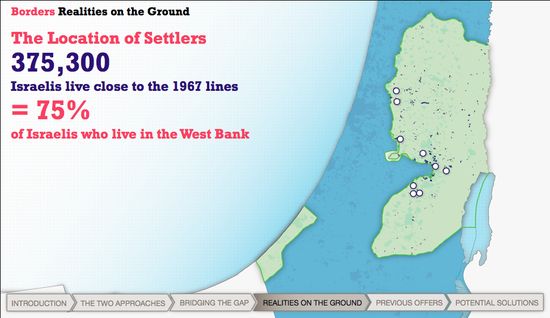
The majority of settlers are motivated by economic or quality-of-life concerns, since Israel subsidizes housing and amenities in the settlements, and could likely be convinced to relocate voluntarily with economic incentives…According to Israeli pollster Rafi Smith, data collected in 2007 from settlers in 60 of the most remote (and most radical) settlements suggests that at most 37 percent of them would accept compensation in return voluntary evacuation. Let's be clear: A significant majority of the remaining settlers will need to be evacuated in some form. According to the poll, 25 percent of them said they would "actively oppose" a governmental decision to evacuate their settlements (as opposed to "no opposition" or "passive opposition"). Almost 75 percent of respondents did not predict any violence from settlers against soldiers who come to evacuate them. 

Perhaps the most interesting part of Krieger's article is his documentation of sub-state efforts to ease the settlements out:

Israeli NGO Blue and White Future in particular has taken the lead on [settler repatriation] and is doing a lot of innovative work to help relocate the settlers, according to their website, "in a manner that demonstrates compassion and respect for the settlers and in recognition of the sacrifices they have made first by settling the land at the behest of numerous Israeli governments and then by relocating back to Israel." They are working, in conjunction with Israel's leading university, as well as local and municipal leaders, on a comprehensive national plan to absorb of those settlers that would return either before or after an agreement is signed, including urban and vocational planning. 

These are the sorts of steps that sympathetic critics of Peter Beinart have in mind when he asks what the alternatives to settlement boycotts are. Thinking about settlements isn't well served by a simple, are-they-or-aren't-they expanding binary. It's figuring out the best strategy to pry the settlers apart from the settlements.

Proponents of a settlement boycott teeter between seeing it as an instrument of economic pressure that can push settlers back into Israel proper and a symbolic approach that attempts to galvanize moral disapprobation as a force against settlement activity. The former is implausible given the significant financial inducements low-income Israelis are given by the government to move into the West Bank. It's incumbent on boycott advocates to explain  how and through what mechanisms enough pain could be brought counteract the slew [pdf] of policies that give bottom-line reason for non-ideological Israelis to move east. Absent an international campaign of unprecedented strength (an implausible bet given the demonstrated failures of the currently existing BDS campaign), economic pressure is unlikely to dislodge settlers from their homes.

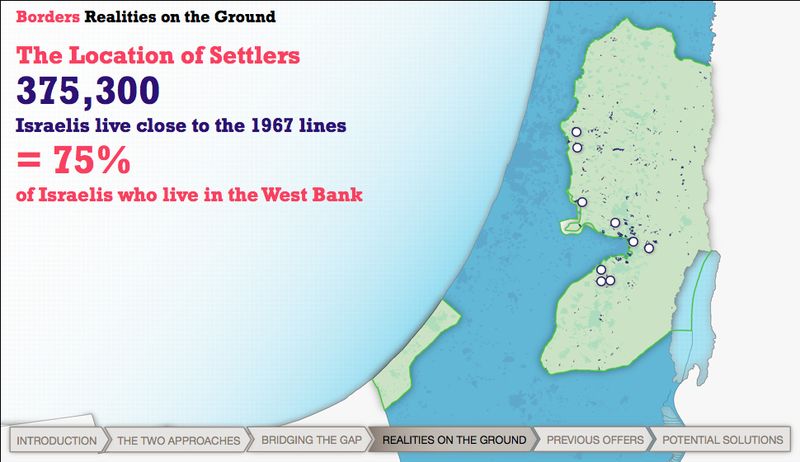
And what about moral suasion? That's when Krieger's distinctions between different types of "settlers" become critical. Since a) most settlement expansion today happens near the border in zones that will likely become Israel in any two-state deal, b) that's where most of the population already was, and c) most settlers today aren't hyper-ideological, the central problem with settlement expansion isn't running Palestinians out of the West Bank. Rather, the biggest concern is that settlement expansion creates a new voting bloc that will support political parties unwilling to give way in final status negotiations (and, of course, that expansion limits the Palestinian leadership's ability to enter into negotiations in the first place).

How would putting pressure on settlers persuade them to support pro-peace political parties or policies? One route would be simple moral shame, but it strikes me as radically unlikely that anyone already willing to move to the West Bank is going to be persuaded by symbolic gestures by non-Israelis. The second would be to persuade Israelis inside the Green Line that settlements aren't in their interest, and hence to use their vote to dismantle the incentive structure for settlement activity. But the track record of this strategy, too, is dubious. Israelis have historically seen international pressure campaigns (e.g., "Zionism is Racism" or any of the countless U.N. resolutions condeming Israel) as reasons to circle the wagons at home. Promoting a siege mentality is most likely to shore up support among Israelis – non-ideological settlers and non-settlers alike – for Israeli political factions least inclined towards compromise.

As Krieger outlines, there are less confrontational alternatives already in play. Further, there's evidence that the seeming right-wing consensus in Israeli politics is more fragile than one might think: the enormous tent protests last summer were motivated by high housing prices inside Israel proper partially caused by the policies incentivizing settlement. Though those protests quite explicitly didn't touch the settlement issue, it's possible that the underlying economic outrage could help fuel support for parties less willing to abet settlers.

The question, then, isn't boycott or naught. It's whether a boycott is likely to help move Israelis and Palestinians closer to or further from a two-state solution. The evidence suggests the latter.

(Map from Krieger.)

Face Of The Day

GT_FACE-TIMOR_120413

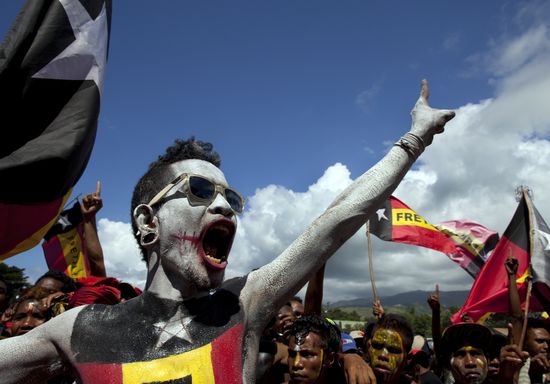
Supporters cheer for Fretilin Party candidate Francisco Lu Olo Guterres during the final political rally on April 13, 2012 in Dili, East Timor. As East Timor prepares to go to the polls for the second round of the presidential elections on April 16, the race is very tight between Lu Olo Guterres and former military chief Taur Matan Ruak. By Paula Bronstein/Getty Images.

— C.B.