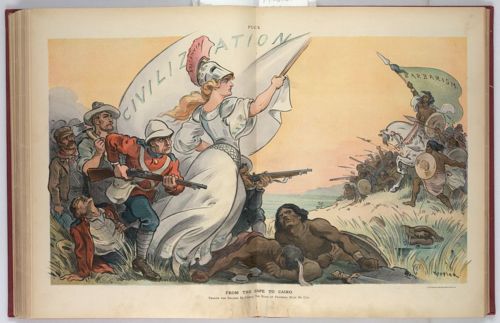
Charles Kenny thinks the appeal to African helplessness poisons real efforts to spur global development:
Even people of goodwill in the West are stuck with a bad case of the white man's burden complex, then: We must help, because they are so helpless. That attitude leads to bad aid — the type run out of donor-country capitals with little involvement of beneficiary governments or citizens on the ground — with the irony that reams–worth of evaluation studies suggest it is exactly this aid that is some of the most likely to fail. It also leads to aid fatigue: "What? They're still helpless after all our help?" Worse, it surely depresses other powerful forms of engagement between North and South — like private investment, trade, and travel. Who would think of setting up a factory or going on holiday to a region supposedly engulfed in war, run by crooks and psychopaths, and starving to the last man?
(Photo from The Library of Congress)
 In his later years, Buckley believed that the Republican failures in Iraq stemmed from a … tendency to engage in ideological wishful thinking instead of hard analysis. He also cautioned against the tendency of conservatives to transform the cautious insights of supply-side economics, for example, into theological certainties, and to move toward ever more narrow and rigid definitions of doctrinal acceptability. Fanaticism and obsession, he believed, ultimately represented a surrender of individual freedom. As the high priest of the conservative movement, Buckley had latitude to advance unorthodox proposals such as the legalization of marijuana without being condemned for apostasy, but he also sought similar indulgence for other conservative thinkers.
  The Dish