The Madness Over “Mad Men” Ctd

A reader writes:

I think the answer to the question of why people so inordinately love the show is simple: People enjoy seeing the culture and attitudes of the '50s and pre-counterculture '60s displayed.  It’s fun to see how different attitudes towards women in the workforce, smoking and drinking, gender relationships, religion, etc. were back then compared to our contemporary world. 

Ben Schwarz explored that theme of liberal self-congratulation in his 2009 review of the show:

In describing a scene in which sexist badinage is exchanged at an account meeting, [Jesse] McLean correctly points out that “the series is critical of this limited view and is not afraid to spell [its criticism] out.” That stance—which amounts to a defiant indictment of sexism and racism, sins about which a rough moral consensus would now seem to have formed—militates against viewers’ inhabiting the alien world the show has so carefully constructed, because it’s constantly pressing them to condemn that world.

And that stance is responsible for the rare (and therefore especially grating) heavy-handed and patronizing touches in an otherwise nuanced drama. Must the only regular black characters be a noble and cool elevator operator, a noble and understanding housekeeper, and a perceptive and politicized supermarket clerk? Must said elevator operator, who goes unnoticed by the less sensitive characters, sagely say when discussing Marilyn Monroe’s death, “Some people just hide in plain sight”? Get it—he’s talking about himself. He’s invisible.

Even worse, that stance evokes and encourages the condescension of posterity; just as insecure college students feel they must join the knowing hisses of the callow campus audience when a character in an old movie makes an un-PC comment, so Mad Men directs its audience to indulge in a most unlovely—because wholly unearned—smugness. As artistically mistaken as this stance is, it nonetheless helps account for the show’s success. We all like to congratulate ourselves, and as a group, Mad Men’s audience is probably particularly prone to the temptation.

The above reader continues:

Other than that, I don’t think there’s a whole lot to recommend the show.  It seems to me that the plot moves along slowly and not in an especially compelling way. The characters are, for the most part, not particularly interesting; and the writing is certainly very good, but not Sorkin-like in its brilliance.

Speaking of which, the trailer for the latest Sorkin just came out. Another reader:

What many people overlook about Mad Men is how comforting a slow-paced show can be. It’s a really difficult balance, because it’s so easy to fall into boredom and self-importance. But the show’s pace, minimalist design, and familiar characters create an appealing mental ease. Also, while 75 percent of the shows are merely good; when it’s great, it’s the best. So we watch for those moments.

Another fan counters Marc Tracy's critique:

I have friends who thought the brief scene between the new hire and his father was too something – sentimental? on the nose? I defended against their criticism by pointing out how, in his interview with Peggy, Mike had said he had no family. Whether that was a spur-of-the-moment lie to create a special image of himself, or one he commonly uses, that creates a distance between him and his father. And that distance was demonstrated in the prayer scene, with Mike's back to the camera, and the father in the shadows. So the gravitas or spiritual importance that Tracy harps on is actually undercut. Add to that the irony of Roger's comment that a Jew will make the office more modern. SCDP might be valuing that identity trait more than Mike himself does.

These are meanings, and I derived them from only a few minutes of action. This is one of the reasons I like Mad Men: I think it does a great job of introducing new characters by setting up tensions in the relationships.

Another also liked the scene:

Matthew Weiner and his writers gave us a completely unexpected moment that adds depth and pathos to the character.  After exclusively focusing on him in the context of his job and talent, we get to see the difficulties of his home life with what seems to be a difficult but loving father.  We know something personal and very real about this new character in the space of just a few scenes, something the other characters don't know, which adds richness to the show as a whole. And we know more about this one, brand new character from those few scenes, than we ever know about a multitude of characters in traditional television (or even movie) narratives.

Mitt Romney Is Not A Moderate

Waldman intervenes

There is simply no reason—none—to believe, let alone to assert as though it were an undisputed fact, that the first incarnation of Romney was the "real" one and the current incarnation of Romney is the fake one. Every single issue position that might mark Mitt Romney as a "relative moderate" is something he has cast off, whether it's being pro-choice, or pro-gay rights, or not hating on immigrants. … [I]f you suspect that Mitt Romney is really a moderate, then say it's a suspicion. But don't treat it like a fact.

I think he's an Etch-A-Sketch. Its default mode is blank. But it can change in seconds.

Does Cannabis Increase Creativity? Ctd

One guy seems to think so:

More highdeas here. A reader writes:

I wasn’t especially impressed with Jonah Lehrer’s cannabis-creativity answer. He lists substances that in some cases have and in some cases haven’t been demonstrated by studies to increase problem-solving ability, and then chalks it all up to "edge"? I didn’t catch a whiff of attempted explanation in there.

What I’ve found re: creativity while I’m high is as follows.

Obviously, the feeling of being high is a kind of distortion, just as alcohol is. As somebody who is constantly mentally active, I become aware of this onset as it’s happening, its visibility possibly enhanced by an innate effect in the substance. As such, my brain is required to work harder to maintain a regular focus, and since cannabis isn’t a depressive and lacks other cerebral dulling effects alcohol possesses, the brain is up to the task.

Thus does cannabis yield more acute solutions to the generic creative problem of "what does this particular blank canvas need?", since the drug’s shift of familiar perspective necessitates more inventive methods of getting to places that to a sober mind are by-rote, i.e. less creative. And my brain’s reactionary surge of concentration improves the dexterity with which I reach the ends of these mental roads-less-taken.

The "enhanced concentration" component that seems unique to cannabis is particularly palpable when listening to music. When I’m high, it is much easier to isolate different instrumental components, and draw individual conclusions about each performance, without robbing the whole of its focus.

Another writes:

I so agree that cannabis increases creativity. I've never been a complete stoner, but through my years as a designer, graphic, then interior, I've relied on a little green bud to relax after a day at the office and mull over some of the design challenges I 50 holescurrently have on the drawing board.

Today was a perfect example. I had the day off, facing a backyard patio project I've wanted to get done but avoided, and with a little puff I not only figured out how to anchor the individual pavers (recycling discontinued colors of quartz countertop samples), but jumped right in and went out and dug 50 individual holes, 8" x 8" and 4" deep, spaced equally. Not only did I increase my creativity, but my motivation factor was upped a few notches. Now I get to start mixing cement and installing each paver. Another puff might be in order, but I'm taking a break for lunch. I'm starved!

Silly Adult, Those Books Are For Kids

Joel Stein is taking a beating for arguing that grown-ups should read grown-up books:

The only thing more embarrassing than catching a guy on the plane looking at pornography on his computer is seeing a guy on the plane reading “The Hunger Games.” Or a Twilight book. Or Harry Potter. The only time I’m O.K. with an adult holding a children’s book is if he’s moving his mouth as he reads.

Julian Sanchez partially defends Stein:

I’ll go ahead and say I think we’d probably be worse off in a world completely bereft of this kind of cultural snobbery.

It’s hard to resist poking fun at the pretentious undergrad lugging some William Gaddis doorstop to the local café so everyone can see what they’re reading—but I’m not sure I’d prefer a world where grown men and women didn’t feel slightly sheepish about settling in with teen lit day after day instead. … a little nagging voice in the back of the head that says “Hey, you’re a grown-ass man/lady, shouldn’t you challenge yourself a bit?” is probably a net cultural asset.

The Political Case For Baseball

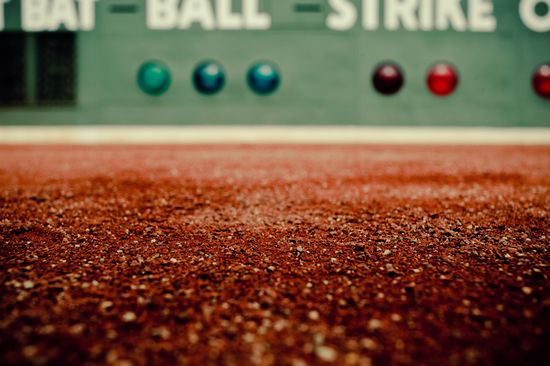
Baseball_Dirt

As the season begins, Michael Kazin makes it: 

Major League Baseball (MLB), the oldest spectator team sport in the nation, has become the most affordable and least exploitative one—and its labor relations are remarkably harmonious, too.

Compared to the dysfunction, scandal, and discontent commonplace in other professional sport, baseball is looking better than ever. Let’s start with cost: A family with a middle-class income can attend a baseball game without straining its budget but has to think hard before splurging for an afternoon or evening spent inside an NFL stadium or an NBA or NHL arena. In 2011, the average price of an MLB ticket was about $27, compared to over $48 for a pro basketball game, $57 for a hockey match, and a whopping $113 for one ticket to a gridiron bruise-a-thon. 

More on that bruising here and here.

(Photo by Flickr user Shoothead)

The Obama Alarmists

Fear-mongers warn that Obama's secret radical agenda would be unleashed in a second term. Steve Chapman counters:

The doomsayers … assume that someone shrewd, unthreatening and adaptable enough to become the first black president would, at the age of 51, metamorphose into Huey Newton. It's about as plausible as Santorum undergoing a sex change or Newt Gingrich taking a vow of silence.

The Right’s Obama, Ctd

A reader writes:

I liked your reader's Baldwin quote. The situation also reminds me of another Baldwin quotation that is less specific, but heartbreakingly accurate nevertheless:

"I imagine one of the reasons people cling to their hates so stubbornly is because they sense, once hate is gone, they will be forced to deal with pain."

Saving A Stranger’s Life

Mike Riggs promised to give a kidney to a woman named "Nora":

My mother, an expert at prodding me in my pressure points, once asked if I had a case of Knight in Shining Armor Syndrome. She was searching for a way to diffuse my compulsion, to help me reconsider my decision. She wanted to know if rescuing Nora would be like rescuing everybody I’d ever wanted to save but couldn’t. Her question scraped at something deep. Whenever Nora was up against the ropes—after her cancerous breasts were removed, after her mother’s dementia upended her life, after she learned her father was dying—I wanted to be sure that when she looked down, she would be able to see me just outside the ring. 

The Wedding Markup

For one, dresses are way overpriced:

Yglesias, who is getting married this month, sympathizes:

We don't drive great bargains on wedding-related things because we don't want to see ourselves and be seen by others as being stingy about such an important event. So if you're purchasing wedding-related items in a marketplace where everyone else is also shopping for a wedding you're looking at an environment where the prices are systematically higher. By contrast, if you shop in a normal store then even if you, personally, are acting in a relatively price-insensitive way the fact that everyone else is driving a harder bargain helps you out. If you're determined to be traditional, there's no way around this but the price you pay for self-selecting into a niche market is pretty high no matter what strategy you adopt.