"We cannot know the whole truth, which belongs to God alone, but our task nevertheless is to seek to know what is true. And if we offend gravely enough against what we know to be true, as by failing badly enough to deal affectionately and responsibly with our land and our neighbors, truth will 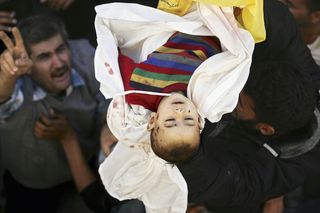 retaliate with ugliness, poverty, and disease. The crisis of this line of thought is the realization that we are at once limited and unendingly responsible for what we know and do…
To hear of a thousand deaths in war is terrible, and we “know” that it is. But as it registers on our hearts, it is not more terrible than one death fully imagined. The economic hardship of one farm family, if they are our neighbors, affects us more painfully than pages of statistics on the decline of the farm population. I can be heartstruck by grief and a kind of compassion at the sight of one gulley (and by shame if I caused it myself), but, conservationist though I am, I am not nearly so upset by an accounting of the tons of plowland sediment borne by the Mississippi River. Wallace Stevens wrote that "Imagination applied to the whole world is vapid in comparison to imagination applied to a detail" — and that appears to have the force of truth.
It is a horrible fact that we can read in the daily paper, without interrupting our breakfast, numerical reckonings of death and destruction that ought to break our hearts or scare us out of our wits. This brings us to an entirely practical question: Can we—and, if we can, how can we—make actual in our minds the sometimes urgent things we say we know? This obviously cannot be accomplished by a technological breakthrough, nor can it be accomplished by a big thought. Perhaps it cannot be accomplished at all," – Wendell E. Berry.
(Photo: a child killed during conflict in Gaza last year. Getty Images.)
 The Dish