In some ways, Romney is the reductio ad absurdum of what has been wrong with conservatism in America (but not Britain) this past decade:
In Romney’s telling, the terms debt and spending are essentially interchangeable. When presented with Obama’s position — that the solution to the debt ought to include both higher taxes and lower spending — he rejects it out of hand.
The AP notes that Chait's analysis is reality-based, and Romney's narrative is essentially a lie. But it's the "out of hand" dismissal of increasing revenues that is so telling. How many households take no account of their income when deciding what to spend? How feasible is it politically – as Jim Manzi notes here – that we will seriously lower the debt entirely on one party's terms, rather than by some bipartisan deal? Romney's position is, it seems to me a declaration that partisanship trumps debt-cutting in his mind. Given his own rhetoric about the danger of the debt, that's quite something. And it sure isn't conservative. It's radical to be playing ideological brinksmanship at this point.
And I think this is actually Romney's biggest liability in this race. On the key question of how to lower the long-term debt, Romney takes the view that only 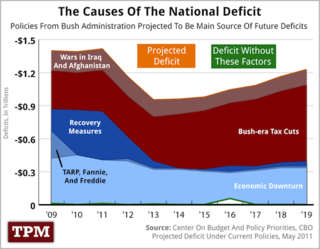 spending on entitlements matters. Everything else can and should actually add to the debt. More Pentagon spending and more tax cuts for everyone, including the 1 percent (even below the Bush era rates), are fine. That kind of debt is somehow not debt for Romney because he assumes that if you slash taxes, revenues will increase. This was an interesting theory in 1981. It is a failed experiment today. (Why we need to drastically increase defense spending in a period of necessary austerity is beyond me.)
More to the point, I just cannot see how that argument wins against the logic that this sacrifice needs to be shared, that we all need to do our part, that, at this stage in the debt-binge begun in earnest under Reagan, we should double down on supply side economics in the face of massive evidence that it doesn't fucking work. You need some kind of intravenous injection of Jude Wanniski to get this argument off the ground and in the air.
Let me be clear: I have long favored serious retrenchment of entitlement spending. It is the most important thing we can do to curtail future debt. But I do not only oppose the perverse unfairness of balancing the budget entirely on the backs of the needy; I don't think Romney's positions will help reduce the debt. Call me crazy, but I think a permanent and sustained reduction in revenues will increase the debt. Call me crazier, but I tend to think a balance between spending cuts and revenue increases is obviously a fairer, more effective, and more feasible path forward.
I'd be fine with 3-1 on the spending cuts-revenue increase question. I'd prefer the revenue increases were achieved through tax reform, rather than increasing tax rates. But Romney is stuck with the position that he would even turn down a 10-1 ratio, and that the cuts should be entirely on the backs of the poor, while increasing defense spending, and lowering still further the taxes paid by his own class.
How on earth do you win a general election when you are so far out on the fringe?
 The Dish