I am shocked that someone's ex-girlfriends do not paint a flattering picture of him. wapo.st/IKqn0Y
— Seth Masket (@smotus) May 3, 2012
I am shocked that someone's ex-girlfriends do not paint a flattering picture of him. wapo.st/IKqn0Y
— Seth Masket (@smotus) May 3, 2012
A reader writes:
Sounds like Anne Kreamer has an office with walls and a door, or works at home. In the real world, we don't get to be surrounded by well-behaved geniuses with whom we can have engaging conversations. Without headphones, I would have no chance to get any work done, while my cubicle farm coworkers talk loudly about TV shows and basketball scores.
Another reader adds:
First, I work in a collaborative space, and I've helped with the change management for promoting open spaces, telework, and Google collaboration tools at work. I am all for the power of adjacency. However, the fundamental principle behind open work spaces is permission to not engage.
Collaboration is important, but we have to acknowledge that it doesn't necessarily increase productivity or creativity. Sometimes what people need is the quiet space to think, and headphonesare part of that. Headphones are a polite, passive way to signal that I'm busy doing "my" work, not "our" work. I'm still working in an social and collaborative space, but I also still have control over how my time gets used.
I'm 24, and I see collaboration and crowdsourcing and social as unparalleled opportunities to tap the potential of communities and 2+2=5 and all that sparklehands-funtimes-awesomeness. But I also work on change management for these initiatives at a government agency, and it's not some magical fix. It's a tool. In the same way that offices and cubicles weren't the solution, constant socialization isn't the one and only answer. I'll keep my headphones, thanks.
A reader personalizes the topic:
I'm a bit of an urban nature enthusiast. My wife and I have lived in two different Dallas-area homes since getting married in 2000 – both embedded in densely urban areas of town. And both set adjacent to creeks. Creeks serve as wild animal highways for urban areas, since they eventually dump into a river or flow out into the more rural countryside.
Rural-based animals will run the creeks and rivers or urban areas and sometimes find city living to their liking. Many birds and smaller mammals, like raccoons, opossums, small rodents and squirrels, have probably always lived on these creeks and were never forced to leave when housing developments built up around them. Maybe they, along with garbage cans, provide sources of food for larger mammals that wander in.
My wife and I have seen coyotes (my video), grey foxes (my video again), bobcats, a 6-foot rat snake (my dad's pic), great horned owls, barred owls, screech owls, ospreys, various hawks, opossums, and raccoons. And all within a two-house radius of our home.
At a neighborhood picnic, I once spoke to a fellow who works for our city's animal control unit. He told me a story of being called to the home of a German Shepherd owner who awoke one morning to find his dog missing from the back yard. But along the back fence – a 6-foot wooden fence – there was a bloody trail from the ground straight up to the top of the fence. His best guess was that a mountain lion had wandered into town, killed the dog, and dragged it over the fence. Personally, I've heard many first hand accounts of people having occasionally spotted mountain lion tracks on rural properties outside of Dallas-Ft. Worth proper. So I don't doubt this animal control worker's logic.
The above video was shot last week in Boulder. There's a great photo of the bear captured mid-fall here.
Art Markman explores the psychology of "unknown knowns:"
Find an object you use daily (a zipper, a toilet, a stereo speaker) and try to describe the particulars of how it works. You're likely to discover unexpected gaps in your knowledge. In psychology, we call this cognitive barrier the illusion of explanatory depth. It means you think you fully understand something that you actually don't. We see this every day in buzz words. Though we often use these words, their meanings are usually unclear. They mask gaps in our knowledge, serving as placeholders that gloss concepts we don't fully understand.
A new group is attacking Obama where he is strong: on the killing of Bin Laden:
Some background:
Can Obama be swift boated? That's the idea behind this attack ad from Veterans for a Strong America, which slams the president for taking too much credit for Osama bin Laden's death. The group's founder tells Mother Jones' Adam Weinstein that he's recruiting Navy SEALs to openly criticize Obama: "We're gonna be rolling some of those folks out soon.
Meanwhile, the Romney campaign issues a new spot on energy policy in its "Broken Promises" series:
The DNC dwells on the "war on women":
And, as Sam Stein notes, this cycle has already been marked by an unprecedented level of negative advertising:
70 percent of ads aired so far in the 2012 presidential race have been negative, meaning they mentioned an opponent by name. In 2008, the percentage of negative ads at this juncture in that campaign was 9.1 percent, the study found. The acidic change in tone is owed to the rise of interest groups and super PACs in the electoral process, the study concludes. Whereas in 2008, candidate-sponsored ads made up 96.6 percent of total "airings," as of April 22, 2012, that percentage had dropped to 35.8 percent. Campaigns, in short, are outsourcing their airwave operations to allied groups, who in turn are going negative. Outside groups have so far sponsored nearly 60 percent of total ads aired, at an estimated cost of $77.5 million. Of those, 86 percent have been negative and 14 percent have been positive.
Previous Ad War Updates: May 2, May 1, Apr 30, Apr 27, Apr 26, Apr 25, Apr 24, Apr 23, Apr 18, Apr 17, Apr 16, Apr 13, Apr 11, Apr 10, Apr 9, Apr 5, Apr 4, Apr 3, Apr 2, Mar 30, Mar 27, Mar 26, Mar 23, Mar 22, Mar 21, Mar 20, Mar 19, Mar 16, Mar 15, Mar 14, Mar 13, Mar 12, Mar 9, Mar 8, Mar 7, Mar 6, Mar 5, Mar 2, Mar 1, Feb 29, Feb 28, Feb 27, Feb 23, Feb 22, Feb 21, Feb 17, Feb 16, Feb 15, Feb 14, Feb 13, Feb 9, Feb 8, Feb 7, Feb 6, Feb 3, Feb 2, Feb 1, Jan 30, Jan 29, Jan 27, Jan 26, Jan 25, Jan 24, Jan 22, Jan 20, Jan 19, Jan 18, Jan 17, Jan 16 and Jan 12.
Joe Klein sticks up for vocational schools:
"College for everyone has become a matter of political correctness," says Diane Ravitch, a professor of education at New York University. "But according to the Bureau of Labor Statistics, less than a quarter of new job openings will require a bachelor of arts degree. We're not training our students for the jobs that actually exist." Meanwhile, the U.S. has begun to run out of welders, glaziers and auto mechanics–the people who actually keep the place running.

Today on the Dish, Andrew declared war on GOP homophobia, pointed to Erick Erickson's reaction to Grenell as proof he was part of the problem, and scoured Obama's letter on Yeats for clues about his personality. Andrew also explained why Jose Rodriguez destroyed the torture tapes, wrapped his head around the details of the Chen Guangcheng case, and spotlighted Rick Perlstein's response to The Crisis of Zionism. We checked on Obama's (high) approval ratings, guessed at why his numbers were higher than they should be, forecasted the unemployment rate on election day, hearkened back to Obama's negative '08 campaign, puzzled over Romney's non-existent Latino outreach, yawned over the VP race, broke down the anatomy of fake news, and advised candidates to avoid lying whenever possible. We also wondered whether torture would return under Romney, contrasted duelling accounts of the Chen Guangcheng affair, listened to a Beinart debate on Israel, defined "Second World Nations," and noted National Review's Islam problem. Ad War Update here.
Andrew also issued a call for the next class of Dishterns, noted a little crack in NRO's prohibition, and re-upped Ask Bruce Bartlett Anything questions. Republicans wouldn't explain how they'd pay for Bush tax cuts, Stephen King (hilariously) called paying taxes patriotic, some people "sprinted" towards the 1%, moral intuition preceded reason, and headless meat posed challenges to vegetarian and omnivore alike. Community college found champions, headphones sapped productivity, e-bikes enhanced the experience, and recognition boosted value. Boybands creeped us out, celebrity namesakes shared their suffering, a reader defended the theory that the internet makes us lonely, and dogs learned to like people food from people. Martian sunsets were blue, dudes flaunted their beards, and this joke was "subtler than you think." Ask Tyler Cowen Anything here, Quotes for the Day here and here, Chart of the Day here, Hathos Alert here, VFYW here, MHB here, and FOTD here.
– Z.B.
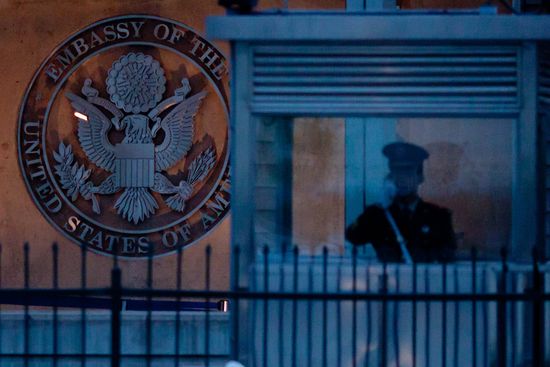
Helen Gao explains why China's people care so much about the way America treats escaped dissidents:
The two most recent real-life thrillers coming out of China, though they involve characters from opposite ends of the power spectrum, both began with a man's frantic attempt to seek refuge from the Chinese system in the embraces of American power. This, more than a coincidence, sheds light on a truth deeply rooted in current Chinese society, but often muddled by the constant bickering between the two nations: the popular Chinese conviction of the United States' unrivaled international clout, and a widely shared perception of the U.S. as the ultimate embodiment of justice, democracy, and the rule of law.
Recent Dish on the Chen Guangcheng case here and here. The sequence of events makes a judgment hard. I can see why Chen would want to stay in China at first, and can also, of course, sympathize what what appear to be his second thoughts in hospital. I can see evidence that the Obama administration tried to deal with this briskly to avoid a clash at high-level talks, but I don't yet see them in any way hanging Chen out to dry. But it's a mess nonetheless:
Via a cellphone held up to a microphone at the hearing, Mr. Chen, speaking in Chinese, said: “I want to come to the U.S. to rest. I have not had a rest in 10 years. I’m concerned most right now with the safety of my mother and brothers. I really want to know what’s going on with them."
Mr. Chen, according to the English translation of his comments, also asked to meet with Secretary of State Hillary Rodham Clinton, who was in Beijing. "I hope I can get more help from her," he said. "Also, I want to thank her face-to-face."
One aspect of this is that we are dealing with a heroic figure who is physically exhausted and injured after an amazing flight from house arrest. His emotions are understandably in flux. I just wish he had clearly asked for asylum as soon as he got to the embassy, instead of changing his mind once handed back to the Chinese.
(Photo: A paramilitary guard stands in a booth outside the US embassy in Beijing on April 28, 2012. By Ed Jones/AFP/Getty Images.)
A revealing snapshot.
Jonathan Haidt, author of The Righteous Mind, believes that moral intuition comes before reason:
Our flawed post-hoc reasoning, our cherry-picking of evidence to suit our instincts, makes us poor policy makers, and creates politics that is tribal, confrontational and ill-suited to solving the world's problems. "Our reasoning is very good as a press agent and lawyer," says Haidt, "But we're so biased, no individual can design social policy just using reason. But once you can accept what reasoning is and what it is designed to do, you can start to design groups and institutions that can do a pretty good job of it. When you put people together, you can think of each person as being like a neuron, and if you put us together in the right way then you can get some very good reasoning coming out of it."
More on Haidt's theory of human nature and politics here, here and here.
 The Dish