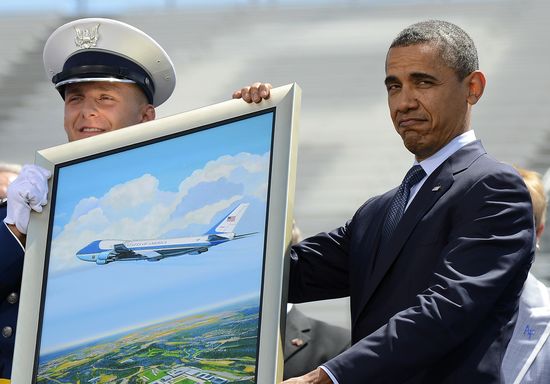
US President Barack Obama receives a painting of Air Force One from the US Air Force class of 2012 during their graduation ceremony at the US Air Force Academy in Colorado Springs, Colorado, on May 23, 2012. By Jewel Samad /AFP/GettyImages.
US President Barack Obama receives a painting of Air Force One from the US Air Force class of 2012 during their graduation ceremony at the US Air Force Academy in Colorado Springs, Colorado, on May 23, 2012. By Jewel Samad /AFP/GettyImages.
A reader writes:
Your fact-checker is indeed speaking of a different generation. I grew up in Mitt's era in a family of Book of Mormon believers. We had a library of books at home, most from LDS sources, that clearly assumed that all Native Americans were part of the "Lost Tribes of Israel." Indeed, one of the first missionary trips of the fledgling LDS church in the early 1830s was to "the Lamanites," their name for the Native American tribes that they encountered west of Independence, Missouri.
The LDS church is trying to re-write their history in this regard.
Another is far more blunt:
I can't say I'm a practicing Mormon, or an ex-Mormon, or an expert on Mormons. So I may be totally off base here. But … I can only quote their text, the Book of Mormon. From the first book, chapter 12. I don't even have to reference the Skeptics Annotated version. I can go right to the LDS website! And what does their holy book say about Native Americans?
23 And it came to pass that I beheld, after they had dwindled in unbelief they became a adark, and loathsome, and a bfilthy people, full of cidleness and all manner of abominations.
As a Mormon and a historian, your reader ought to read his own text, and then should be able to explain and defend how it is utterly and completely racist. Mormons certainly believe that Native Americans were here with the white folks from Jerusalem, but they also believe they killed off the whites and were cursed for their actions with dark skin.
The Romney campaign responds to the Bain onslaught with testimonials from the "Obama economy":
Alex Burns has more:
[It's] the same style of video Romney's opponents have used against him on the subject of Bain. Except in Romney's production, the speakers are saying things like, "I have to work part time in order to make ends meet," and, "I expected great things from the president when he was elected and now it’s just a feeling of disappointment that he hasn’t been able to fulfill all of the things, all of the changes that he talked about." The bet Team Romney appears to be making is that the depth of Obama's economic problems will overwhelm the Democratic attacks on Romney's job-creation credentials. Some Republicans have wondered why Romney hasn't produced a TV ad with testimonials from people who say they've been helped by Bain Capital. Their current approach is less symmetrical than that and declines to engage the Democrats in a he-said/he-said on the details of private equity. And in some respects, it's an echo of the American Crossroads GPS campaign that launched yesterday.
Meanwhile, the Obama campaign temporarily moves on from Bain with two spots running in seven key states. The first clings to Medicare:
And for Memorial Day:
Previous Ad War Updates: May 22, May 21, May 18, May 17, May 16, May 15, May 14, May 10, May 9, May 8, May 7, May 3, May 2, May 1, Apr 30, Apr 27, Apr 26, Apr 25, Apr 24, Apr 23, Apr 18, Apr 17, Apr 16, Apr 13, Apr 11, Apr 10, Apr 9, Apr 5, Apr 4, Apr 3, Apr 2, Mar 30, Mar 27, Mar 26, Mar 23, Mar 22, Mar 21, Mar 20, Mar 19, Mar 16, Mar 15, Mar 14, Mar 13, Mar 12, Mar 9, Mar 8, Mar 7, Mar 6, Mar 5, Mar 2, Mar 1, Feb 29, Feb 28, Feb 27, Feb 23, Feb 22, Feb 21, Feb 17, Feb 16, Feb 15, Feb 14, Feb 13, Feb 9, Feb 8, Feb 7, Feb 6, Feb 3, Feb 2, Feb 1, Jan 30, Jan 29, Jan 27, Jan 26, Jan 25, Jan 24, Jan 22, Jan 20, Jan 19, Jan 18, Jan 17, Jan 16 and Jan 12.
Nate Silver recently predicted that Colorado would be one of the most important states in determining the outcome in November. Mary Winter explains why:
Seth Masket, an associate professor of political science at the University of Denver, calls Colorado "an interesting case in that it has not been a swing state that long. Colorado was relatively safe for GOP candidates up until decade ago." That changed, Masket said, with the influx of Democratic-leaning migrants from the West Coast, many drawn by the high-tech jobs in the metro Denver area. "The political geography of the state is pretty fascinating. Boulder and Denver are quite liberal, while Colorado Springs is very, very conservative, and the west is slightly libertarian."
The state that put Obama over the top in 2008 could do the same in 2012:
A simple yet meaningful way to look for the decisive state is to order the states according to the winner’s margin of victory. By arranging the states in this way, we can find the cut-off point where the winning candidate crosses the 270 electoral vote threshold. The state that gives a candidate a majority of the 538 votes in the Electoral College is the decisive state.
In 2008, that state was Colorado. Obama won the Centennial State by about nine percentage points over John McCain; had Obama failed to carry Colorado and every state that he won by a smaller margin, the Electoral College result would have been a 269-269 tie, a result that would have thrown the election into the House of Representatives.
Bloomberg explores all the swing states and finds their economies doing better than most, hence the solid Electoral College lead in a tight race.
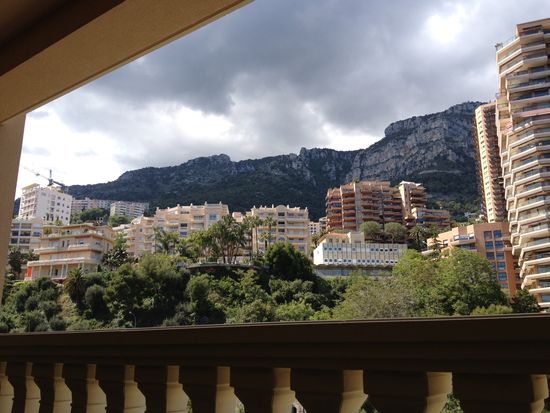
Monaco, 3.32 pm
Sasha Issenberg notices that "scattered, unsustained messaging has become the unlikely hallmark of the well-funded" Obama campaign:
If these forays seem random, it’s because at least some of them almost certainly are. To those familiar with the campaign’s operations, such irregular efforts at paid communication are indicators of an experimental revolution underway at Obama’s Chicago headquarters. They reflect a commitment to using randomized trials, the result of a flowering partnership between Obama’s team and the Analyst Institute, a secret society of Democratic researchers committed to the practice, according to several people with knowledge of the arrangement.
Wendell Steavenson reports on today's elections:
Throughout the day, in the long lines that snaked outside the schools that are used as polling stations, there was a patient hope that the lengthy, confused, and often violently riotous transition from Tahrir to a new government would come to a close. In truth, fundamental questions about a new constitution and the role of Sharia and the Army show no signs of being answered.
The men in Boulaq saw the Army as their protector, while many of the Tahrir Twitterati activists boycotted the voting, saying they had no faith in an election conducted under military rule. The ruling Supreme Council of the Armed Forces has promised another constitutional declaration in the next few days, to explain what powers the President will actually have. A new President will be announced on June 21st, the generals will hand over authority on the first of July. But where the balance of power will lie—between the parliament, the Islamists, the Army, the protestors, and the President—will not be decided only at the polls.
Nathan Brown takes a closer look at possible constitutional declarations:
[T]here are clearly things a complementary declaration should not say. Any matter that gives a protected role for the military or that prejudges issues that should be resolved in the permanent constitution would likely be regarded as illegitimate by most political players. The constitutional declaration is clear: the president assumes full authority on taking office. The SCAF loses its position as acting president. There is to be a "National Defense Council," but it is headed by the president. Of course, the military is likely to continue to enjoy considerable autonomy for some time. But enshrining that into constitutional text is likely to add an element of controversy and instability that Egypt does not need.
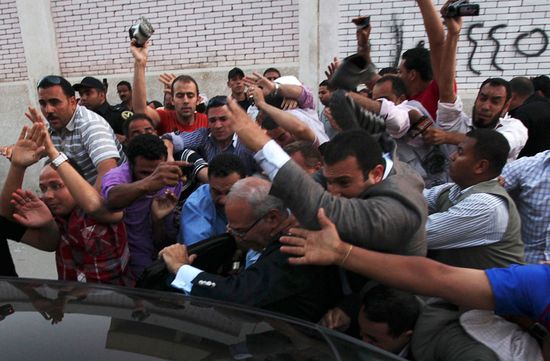
An Egyptian reader relays the above photo (via Mohamad TwfiQ on Twitter) and captions:
Ahmed Shafiq, Egyptian presidential candidate and last PM of Egypt during the Mubarak era (with white hair entering the car), is running from a group voters who are trying to hit him with their shoes (a big sign of disrespect in the Arab World) while casting his vote in Cairo today. Shafiq's run was considered by many revolutionaries as an "insult to the revolution", and Parliament quickly issued a law that bans people who served in the last ten years of the Mubarak regime from running for President.
First day of the first round of voting in the Egyptian presidential election saw long lines and voting was extended for two more hours across the country. Tomorrow is the last day of the first round with a run-off scheduled for June 16 and 17. No clear indication on who will win or who will get to the run-off yet.
Michael O'Brien argues it's a myth:
The religious assemblage, which has evolved over the past century from a strong Democratic constituency into a national election bellwether, is no longer discernible from most other voter groups. As the community has become less homogenous and more assimilated into mainstream culture, so has its voting habits – sending many politicians on a fool’s errand in pursuit of the “Catholic vote."
The hierarchy – and the theocons – have effectively put their collective weight behind the GOP, as the above ad (from a theocon group) reveals. For them, contraception, abortion and gays are "non-negotiable" and you risk eternal damnation if you vote for Obama. No other issues – such as the Ryan budget or the repeal of universal healthcare insurance – matter to the same extent. One wonders whether this Christianist campaign will do much more, though, than mobilize the hard right, who were already anti-Obama. But the hierarchy's effective endorsement of Romney might swing a few votes, as Douthat notes:
The Catholic vote does look a lot like the American vote in microcosm, encompassing liberals and conservatives, the lukewarm and the devout, the partisan and the uncommitted and everything in between. But as National Review’s Ramesh Ponnuru points out, there is evidence that Catholic swing voters are slightly more up for grabs than the average independent. Ponnuru notes that George W. Bush “improved his share of Catholic voters between 2000 and 2004 more than he did his overall share; and the Republican share of the Catholic vote fell a bit more between 2004 and 2008 than did the Republican share of the overall vote.”
A reader writes:
The reluctance of people to leave a parking space isn't just about territorial imperative or property-rights thinking. It's about etiquette, or trying to enforce it. There is a species of driver I refer to as the "parking lot vulture". This is the person who, while looking for a parking space, sees you approaching your car with a full shopping basket. The vulture will then park their car in the middle of the aisle, blocking traffic, just barely giving you enough room to pull out of your space without clipping the car next to you. A line invariably forms behind the vulture, who sees nothing wrong with waiting and watching you load your car, just so long as the vulture doesn't have to take one step on foot more than absolutely necessary.
This behavior is pardonable when the vulture is extremely elderly or handicapped, and they have obvious need of a close space. Otherwise it's rude as hell. It puts pressure on the person in the parking space to hurry up, hurry up and get out already. It blocks the drive for other people seeking parking spaces, or for people getting out of parking spaces. Thus, even if it wasn't also burning gas or diesel, it's still making our world a little worse place to live in.
The only non-violent protest a person can make with parking lot vultures is to slow-walk their departure. I myself have on occasion simply refused to get in my car until the vulture takes the hint and goes elsewhere. This reaction is partly a stand for etiquette (or, at least, for teaching grown people to WALK), and partly a childish "you can't make me" reaction against unjust authority.
So it's not about keeping the parking space. It's about keeping the vulture from profiting by his or her inconsiderate behavior.
Another illustrates that point:
When parking spots are genuinely tight, such as around Christmas time, if another driver is "hovering" waiting for my spot, I'll be sympathetic and polite, and pull out quickly and efficiently to make sure that driver gets the spot and not a possible interloper (as happens all too often.) However, when a driver is waiting for my spot rather than take one of dozens of available spots, simply because my spot is closer to the storefront, then I get cranky and obnoxious. If the waiting driver has the nerve to honk the horn, I have been known to stop the engine and walk back to the store – just to piss off the rude lazy-ass driver who's waiting.
Stan Persky reflects on his literary sanctuaries:
When I was a teenager I believed, as many have, that I had personally invented homosexuality. … Much more than the concurrent civil rights, women's, students' or anti-war movements of the 1950s to mid-1970s — though all generated significant writing — the gay movement was unusually dependent on books, journalism, theater, and screenwriting to spread its message, both to others and itself. That was so for a very simple reason. Unlike women, African Americans, and other activists, homosexuals, except for the stereotyped subculture of flamboyant "queens," were mostly invisible to one another, and even to themselves.
 The Dish