The Laissez-Faire Argument For Marriage Equality

Brian Jay Stanley makes it:

My wife and I settle our arguments by deciding whom an adverse outcome would bother more. … I apply this principle to the issue of gay rights. Discrimination hurts gays more than equality for gays hurts their opponents. At stake for gay people are their own lives; at stake for their opponents, merely others' lives. The effect on gays is material, direct, and daily; the effect on their opponents, abstract, remote, and occasional, concerning only the conformity of society to their moral beliefs. My neighbor, not me, gets to choose how to decorate his living room because he lives in it while I merely glimpse it through his window. Our rights extend only to the property line of our own life.

Sarah Bessey is on the same page:

Most of us evangelicals in Canada, regardless of personal beliefs about homosexuality, can admit that since same-sex marriage has been legalised in Canada, our society has not gone to hell in a hand basket, nor has traditional marriage, or our families been under attack. Scare tactics and wild-eyed fear-based rhetoric rarely turns out to be true. In actual practice, our society has become “live and let live” which is actually a rather tolerant and comfortable place to be.
“The Deeply Rejected”

Bumble

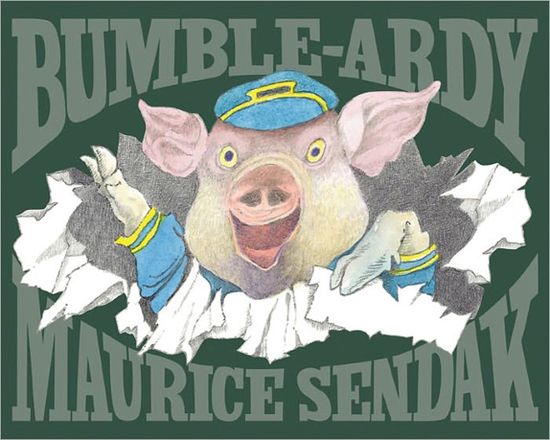
I thought of Maurice Sendak almost immediately after the president's endorsement of marriage equality a week and a half ago, so soon after Sendak's death. And then I came across this Paris Review interview about his last book, Bumble-Ardy, and stopped short:

It’s a very strange book, in terms of my feelings for it. It came from a deep place. I was intensely involved in the vanity of the parents. I mean, how does the child live with that? I remember I once watched this baby whale separated from its mother. The baby whale is panicked and it looks for its mother among the other whales, and they know it’s not their baby. They turn away from it, and you’re left to wonder, How does the baby live, how does the baby feel? Can’t the others see that he’s one of them?

Bumble is an outcast. This was an experiment in what it’s like to feel … deeply rejected.

Bumble is a pig, Sendak's first pig character. But it's hard not to see the arc of a gay life in much harder times:

Bumble is battling with a basic sense of confusion—“I don’t know how old I am.” He gives up when his aunt says, “You’ve had your party. Never again!” He replies, “I promise, I swear, I won’t ever turn ten.” It’s my favorite line in the whole book. It’s both comical and terrifying. It’s this self-annihilating moment. There is a sense that he is frozen. He doesn’t progress. But, you see, Bumble is my less mature self. He is the little boy who wasn’t sure he’d live, let alone grow up.

But he did. He did.

Meat: All Or Nothing?

Beatrice Marovich examines the religious ethics of meat eating:

[T]he thicket of little rules and regulations seems absurd. The “real” question, it seems, is whether or not to eat animals at all—whether to have all or nothing, flesh or no flesh. But such universal injunctions seem problematic to me. Human history is littered with smaller lists, smaller injunctions, created in ethical conversation with a particular context. … But this is not a sign of our human failure. Rather, I think we can see it as an encouragement to keep making those small lists. Morality is a messy business—why should we expect its rules to be singular, or simple?

Relatedly, Mark Bittman encourages Americans to eat less meat.

Will The Catholic Church Ever Evolve?

Kyle Cupp wonders if the Catholic church could ever approve gay marriage:

If, hypothetically, the church magisterium were to change its teaching and profess the existence and goodness of erotic homosexual love, other foundational changes would first have to be made. First, it would have to broaden its ontological understanding of human sexuality to include as authentic both sex ordered toward procreation and sex not ordered toward that end. Sexual identity would include but not be limited to difference and complementarity. 

Second, the church would have to revise its traditional reading of the creation myth, perhaps taking a less literal interpretation of the passages related to God creating the human race as male and female. Third, it would have to redefine its conception of chastity so as to include the possibility of exercising temperance and self-mastery with respect to expressions of non-procreative erotic love.

All of these changes in teaching would imply that the magisterium had been wrong about not only homosexuality, but also human sexuality in general, the bible, and the virtue of chastity. To accept homosexuality as a legitimate orientation would mean admitting error about matters of faith and morals—error that, according to the magisterium, cannot be made.

The Crack-Up Essays

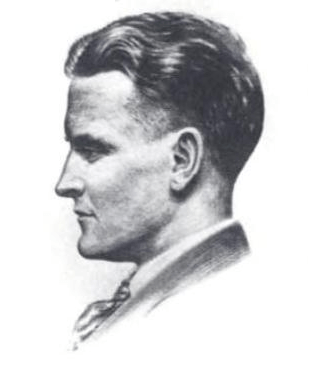
I never realized that F. Scott Fitzgerald, broken down by success and booze (and his wife), penned a series of essays for Esquire that detailed his misery. It was an outrage at the time, especially to his literary friends, a breach of decorum, but now these efforts – deemed "the crack-up essays" – are seen as a cultural watershed in American life. In some ways, they forged new space for the essay as a form, which has since devolved even further into the real-time essay, or blog:

The publication of the “Crack-Up” essays looks now like a sharp pivot, marking a fundamental change in American consciousness and therefore in narrative voice, an evident moment when the center of authorial gravity shifted from the “omniscience” afforded by fiction’s third person to the presumption (accurate or not) of greater authenticity provided by the first-person voice with all its limitations.

F._Scott_Fitzgerald,_1921Whitman had set American poetry on this road a few generations earlier: the voice of “Song of Myself” belongs to a lyric essayist, contending with himself and his time, using the personal self as the representative of the national type, fusing the individual to history. And the presence of faux memoirists as narrators in American fiction—including Nick Carraway in The Great Gatsby, Hemingway’s own Nick Adams, and before that the narrators of Huckleberry Finn and Moby-Dick—also betrays a preference for the first-person voice.

The “Crack-Up” essays are a similar poetic project. Fitzgerald’s strangled cry in them makes clear that a lyric impulse links the personal essay with poetry, even though essays are a prose form and seem to pose a chronic scourge (or companion) to their apparent kin—narrative fiction. In fact, the essay inhabits an intermediate territory between story and poem. That may be its fundamental appeal. Tell a story and then think about it—all in the same work.

Is Dying Really So Bad?

Shelly Kagan explores the philosophical paradoxes of death:

Yet if death is bad for me, when is it bad for me? Not now. I'm not dead now. What about when I'm dead? But then, I won't exist. As the ancient Greek philosopher Epicurus wrote: "So death, the most terrifying of ills, is nothing to us, since so long as we exist, death is not with us; but when death comes, then we do not exist. It does not then concern either the living or the dead, since for the former it is not, and the latter are no more." If death has no time at which it's bad for me, then maybe it's not bad for me. 

Norm Geras offers an obvious counterpoint:

Death is bad for a person because it's the end of that person (Kagan's starting assumption as well as mine). That's at least one reason why the answer to the question is so obvious.

After spending time with women with terminal cancer, Anne Jacobson draws out the social implications of dying:

Even women who lament that they will not see their youngest daughter graduate, or their son get married, are often not thinking, “O, that’s a good time I won’t have.” Rather, their thought is more about how their child will have a large gap in the normal social surrounding. Other grads get photographed with both parents; theirs will stand out as not having a mother. …

[I]f we think of the goods that accrue individualistically, then death means one doesn’t get any more, but then one isn’t around to experience the lack. If, however, we think of the good socially, one’s death can be very destructive to things one has spent significant parts of one’s life on. 

(Video: "The Singularity, ruined by lawyers" by Tom Scott)

The Creature Of Habit

Peter Berger ponders humanity's basic nature:

Forming habits is a basic requirement if human beings are going to live in a society (which in turn is a requirement for surviving as a species). Society is only possible because its members share mutually predictable programs of behavior. We are different from even our closest zoological relatives in that our biological makeup falls far short of supplying the required programs. The social philosopher Arnold Gehlen interpreted our species as being instinctually deprived, a “deficient being”. … Since our instincts provide us with only a few programs of behavior, we must invent such programs ourselves.

Face Of The Day

Darwin

In 1868, Charles Darwin wanted to create a universal dictionary of emotions. He asked 24 participants to attribute emotions to various images of a man getting electrical shocks to the face (according to Darwin the expression above is "Agony, torture, and fright"). The University of Cambridge’s Darwin Correspondence Project recreated the study using the same images:

Yes, they look like yearbook portraits from a sanitorium. But more than 18,000 participants’ evaluations have now been tallied, and the project may actually yield defendable results. And they include a dimension Darwin didn’t intend. “There are different emotional vocabularies and repertoires in different periods,” says Cambridge research associate Paul White. For example, whereas Darwin’s posse perceived the conveyed emotion in one image as “hardness,” today’s majority describes it as “bored”—a word that in the 1800s only described what you might have done to a piece of wood. Emotions, it turns out, vary not only cross-culturally but also cross-historically. You might say they’ve evolved.