Graduation Blues

First_Job

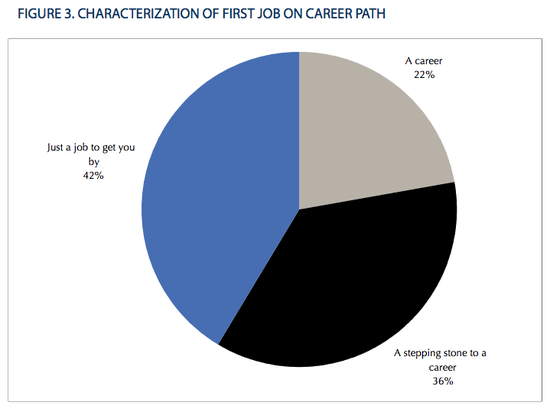
A new Rutgers University survey (pdf) found that just half of those who graduated between 2006 and 2011 are working full time:

That's bad enough, but when you look at just those people who have graduated since 2009, it gets even worse. Fewer than half of them found a job within a year of graduating; whereas 73 percent of those who graduated between 2006 and 2008 found jobs in the first year. Kids who graduated after 2009 are three times more likely to not have a fulltime job than the kids who finished between 2006 and 2008. 

Those who are working aren't making much:

Employed, post-2009 graduates also have an average starting salary of $27,000, $3,000 less than the average starting salary for the classes of 2006 and 2007; experts estimate that given the fragile state of the post-2009 economy, these wages are likely to stay depressed for the next 10 or 15 years.

Nathaniel Beck compares job prospects across majors.

The Origin Of The Taco

According to Jeffrey Pilcher, author of Planet Taco: A Global History of Mexican Food, it's pretty recent:

My theory is that it dates from the 18th century and the silver mines in Mexico, because in those mines the word “taco” referred to the little charges they would use to excavate the ore. These were pieces of paper that they would wrap around gunpowder and insert into the holes they carved in the rock face. When you think about it, a chicken taquito with a good hot sauce is really a lot like a stick of dynamite. The first references [to the taco] in any sort of archive or dictionary come from the end of the 19th century. And one of the first types of tacos described is called tacos de minero—miner’s tacos. So the taco is not necessarily this age-old cultural expression; it’s not a food that goes back to time immemorial.

Ad War Update

The Romney campaign responds to Obama's Bain spot with a "gauzy" video about a different steel company, SDI: 

The Obama campaign is only testing the waters with its ad, putting $71,000 behind it in five key states. David Graham has more

The new ad comes after a week in which the political discussion was centered around Barack Obama's endorsement of gay marriage. That stance is a potential liability for the president in swing states: In four of the five states where "Steel" will air (Virginia, Ohio, Colorado, and Pennsylvania), civil gay marriage is banned by state constitutional amendments. An ad that focuses on Rust Belt concerns helps to distract from the social issue question. Meanwhile, it answers Republican critics who complained that Obama was avoiding conversation about the economy — and it puts Romney on the defensive.

Byron York anticipates Romney's counterattack: 

First, the campaign has carefully scrutinized Romney's entire record at Bain and believes it is a strongly positive one overall.  But that is the big picture — there are individual instances in which Bain investments failed.  Given that, look for the Romney campaign and its surrogates to counterattack by focusing on an instance in which Barack Obama, in essence, took over a company and laid people off in an effort to save the larger enterprise. That was, of course, the auto bailouts, and while Obama often cites his success in "saving" the car industry, few remember today how many (non-union) workers lost their jobs in the Obama administration's handling of the matter.  During the economic crisis, General Motors and Chrysler shut down more than 700 dealerships, resulting in the loss of tens of thousands of jobs.  And the companies did it under pressure from Obama.

But the crony-capitalism charge doesn't sit well with the above ad, as Maggie Haberman notes

SDI, as the folks at American Bridge point out, may not ultimately be the best test case for Romney to push back with, since it runs counter to other parts of his message – the firm got tax subsidies and levies were raised on an Indiana county to help pay for infrastructure that benefitted the company.

Meanwhile, the RNC focuses on the debt: 

And MoveOn.org goes after Romney for "throwing women under the bus": 

Previous Ad War Updates: May 10May 9May 8,  May 7May 3May 2May 1Apr 30Apr 27Apr 26Apr 25Apr 24Apr 23Apr 18Apr 17Apr 16Apr 13Apr 11Apr 10Apr 9Apr 5Apr 4Apr 3Apr 2Mar 30Mar 27Mar 26Mar 23Mar 22Mar 21Mar 20Mar 19Mar 16Mar 15Mar 14Mar 13Mar 12Mar 9Mar 8Mar 7Mar 6Mar 5Mar 2Mar 1Feb 29Feb 28Feb 27Feb 23Feb 22Feb 21, Feb 17, Feb 16, Feb 15, Feb 14, Feb 13, Feb 9, Feb 8, Feb 7, Feb 6, Feb 3, Feb 2, Feb 1, Jan 30, Jan 29, Jan 27, Jan 26, Jan 25, Jan 24, Jan 22, Jan 20, Jan 19, Jan 18, Jan 17, Jan 16 and Jan 12.
The Case For Ending College Football, Ctd

Michael Elkon goes point-by-point with Buzz Bissinger on the merits of a ban:

There is a legitimate criticism buried within Bissinger's hyperbole. Major college football is a time-consuming activity. It is hard for players to balance their academic and athletic demands, especially when many of them come from families and school systems that did not prepare them for college. However, there are ways to solve this problem that do not involve banning college football (and thereby depriving many of the players whose interests Buzz professes to have in mind of attending college altogether). For instance, the NCAA could mandate that players get time after the expiration of their eligibility to complete their degrees. But what fun is suggesting measured changes when Buzz can make outlandish claims because he comes from an area of the country where college football is an afterthought and he is confused by a world where the sport has replaced baseball as the second most popular in the country.

The Daily Wrap

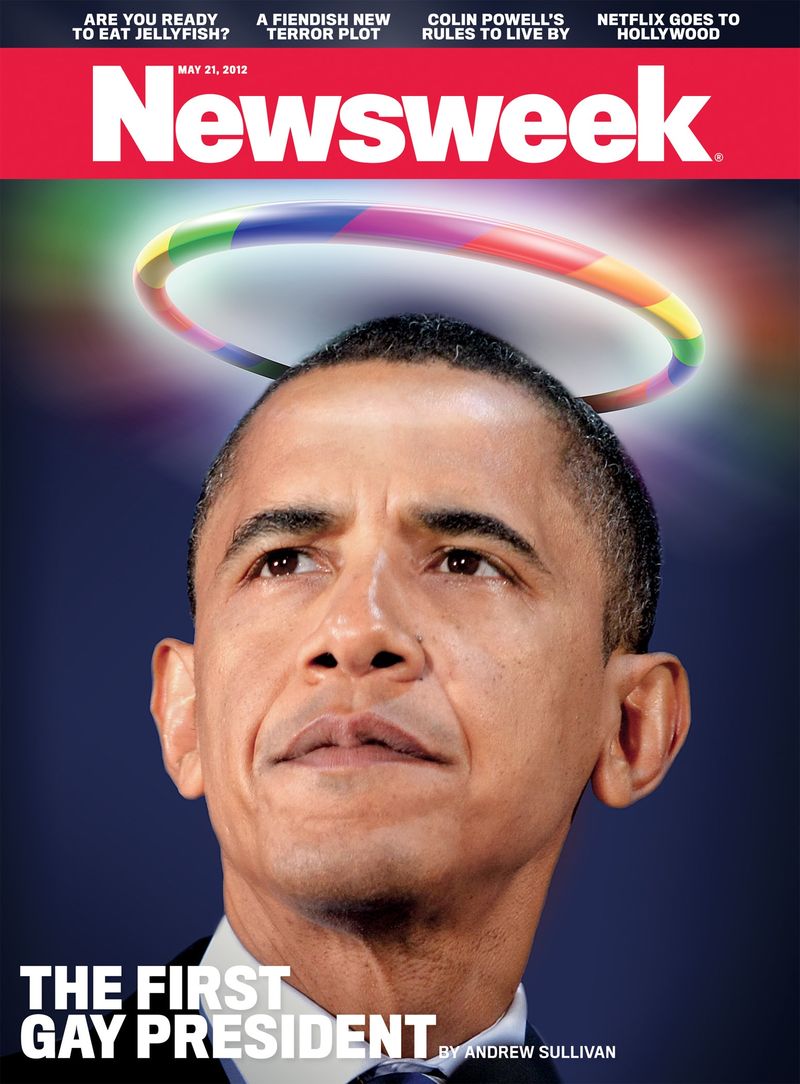
Obama-newsweek-gay

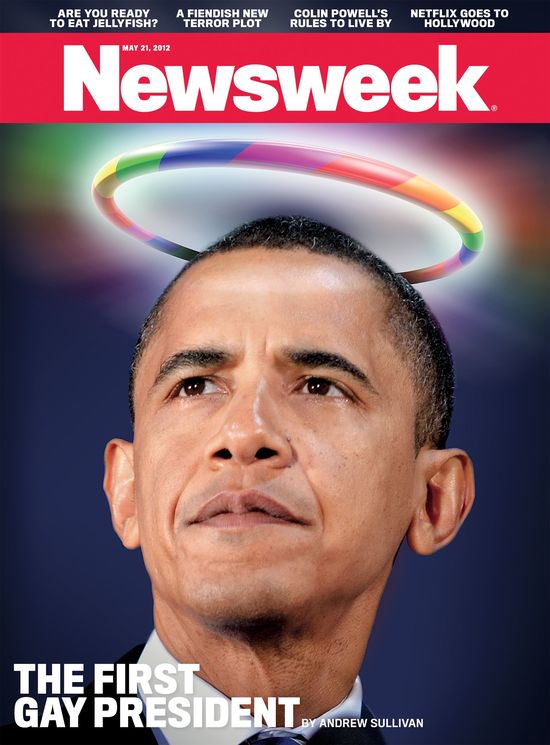
Today on the Dish, Andrew made the case for Obama's incrementalism in the marriage equality fight, explained how said case debunked the strongest argument against marriage rights, detailed the reasoning behind the Newsweek cover, dove into the strong polling support suggesting a fundamental shift in America's attitudes toward gays, and pondered the explanation for this sea change. We took on another common anti-equality nonsense argument, looked at an exemplar of an advocate for equality, unconvered a powerful story about an Obamaesque move in Albania, noticed the non-backlash to Obama's new position on marriage, watched Romney flip-flop on gay adoption, and listened to another view of Romney's hair-cutting past. The race remained tight, Obama raised Bain, Romney hit back on Wall Street ties but had a JP Morgan problem, crowd size didn't explain the race, Bush's second term still hurt, and good political humor required a deft touch.

Andrew also qualified his skepticism about an AIDS vaccine, suggested the Euro needed Germany to assert itself (as it weakened), and noted a horrible "I'm back!" column from John Derbyshire. Islamists warmed to capitalism, the web blanched at JP Morgan's $2 billion oops moment, and a lack of housing constrained technological advancement. We discovered cannibalistic medicine, tracked the gentrification in our guts, peeked into the world of microbes living in extreme environments,  understood how breats could kill, and bet that schoolkids of the future would be graded by robots. Not every married couple needed kids, becoming an adult meant cutting the parents off, the well-educated went on welfare, and an excellent pan got our attention. Handmade crafts ballooned, bank robbery deflated, news apps failed, and rejected New Yorker covers ruled. Ask Pinker Anything here, Quote for the Day here, Cool Ad here, VFYW here, MHB here, and FOTD here.

Z.B.

The Politics Of Crowds

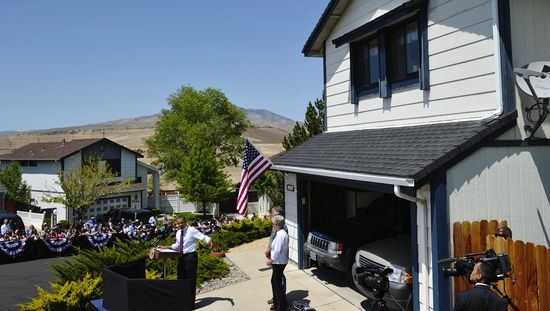
GT_OBAMA-RENO_120514

Jesse Singal is frustrated over the fixation:

First there was Romney giving a speech to a small crowd at the not-small Ford Field in February, prompting a fair bit of liberal glee over the catastrophically bad optics. Then, a couple weeks ago, Obama failed to fill an arena in Columbus, Ohio, leading to gloating on the right, much of it prompted by the mindless forwarding of what appears to be a very misleading photo tweeted by Romney spokesman Ryan Williams. Then, this weekend, the most recent one, which, mercifully, received less attention than the previous two. Obama gave a speech in front of a couple’s garage in Reno and failed to draw much of a crowd. In each case, the usual suspects did the usual pontificating about What It Means; that Obama or Romney, depending on your politics, clearly isn’t enjoying popular support and just might be doomed.

(Photo: US President Barack Obama greets well-wishers while speaking on the economy on May 11, 2012 in Reno, Nevada. Obama urged Congress to act on his 'To Do List' . By Mandel Ngan/AFP/GettyImages)

Bush’s “Humble” Second Term

Larison pushes back against the belief that Dubya mellowed after reelection:

Bush’s foreign policy in his second term ran into the limits of American power, and the drain of the Iraq war prevented the administration from pursuing any other spectacularly harmful policies. However, this was also the period when the U.S. foolishly backed elections in Gaza, offered uncritical support to Israel’s bombardment of Lebanon, and enabled a reckless Saakashvili with misleading pledges of support and recognized the independence of Kosovo, both of which eventually led to the August 2008 war. Bush’s foreign policy in his second term was calamitous in its own way, and greater humility is not the characteristic I would ascribe to it.

Is A Lack Of Housing Preventing Innovation?

Timothy B. Lee uses San Francisco as a case study. With freer housing policies, he claims the Bay Area would have 11 million rather than 7 million residents:

Among those extra 4 million people would likely have been hundreds of thousands of additional engineers starting new firms or expanding the Google and Facebook workforces. In short, the reason there’s too much money chasing too few businesses isn’t that the country is running out of people with good technology ideas. It’s just that bad housing policies mean that there’s nowhere for additional people to live.

Chart Of The Day

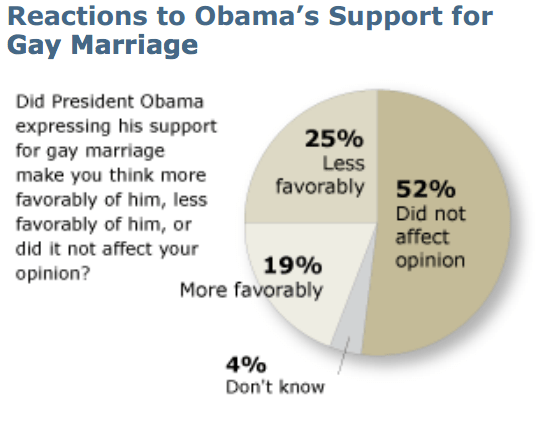
Pew's latest (pdf):

Marriage_Obama

The partisan breakdown:

About half of Republicans (53%) say they feel less favorably toward Obama because of his support for gay marriage. By contrast, 60% of independents and 52% of Democrats say their view of Obama has not changed. Among independents, as many say they feel less favorably as more favorably toward Obama as a result of his gay marriage decision (19% each). Far more Democrats say they feel more favorably than less favorably toward Obama (32% vs. 13%).

TNC points out that black voters aren't running scared. Ruy Teixeira sees no political downside for Obama:

Hispanics are also not a plausible candidate for significant desertions based on the issue. They are not even particularly conservative on marriage equality: In the latest NBC/Wall Street Journal poll, 55 percent supported marriage equality compared to 49 percent overall. We should not expect to see many Hispanics abandoning Obama simply on this issue and embracing his opponent, Mitt Romney, who holds hugely unpopular positions on immigration, an issue of far more importance to these voters.