A Prescription For Cannibalism

Medicine made from human corpses used to be the norm:

"The question was not, ‘Should you eat human flesh?' but, 'What sort of flesh should you eat?'" says [Richard Sugg, author of Mummies, Cannibals and Vampires: The History of Corpse Medicine from the Renaissance to the Victorians.] The answer, at first, was Egyptian mummy, which was crumbled into tinctures to staunch internal bleeding. But other parts of the body soon followed. Skull was one common ingredient, taken in powdered form to cure head ailments.

Thomas Willis, a 17th-century pioneer of brain science, brewed a drink for apoplexy, or bleeding, that mingled powdered human skull and chocolate. And King Charles II of England sipped "The King’s Drops," his personal tincture, containing human skull in alcohol. Even the toupee of moss that grew over a buried skull, called Usnea, became a prized additive, its powder believed to cure nosebleeds and possibly epilepsy.

The practice continues today:

Last year, we wrote about a South Korean team that was investigating the production and sale of capsules filled with powdered human baby flesh in China. When the team investigated, they reportedly found a hospital that sold the dead babies, with the dead babies mostly being abortions and stillbirths, to medicine companies. These medicine companies would put the dead baby into a medical drying microwave, then grind the dried result up into powder and put it into a pill capsule. The pills were reportedly being sold to enhance stamina, though what variety of stamina was not clarified.
Politics As Punchline

Alyssa Rosenberg is looking forward to the latest from Will Ferrell and Zack Galifianakis:

It’s all there: the John Edwards-like obsession with looks, the conviction that the candidate must be at the center of attention even in the aftermath of his own gaffe (or, okay, baby-punching), the pablum of pander. To my knowledge, no existing American politician has declared that "Filipino Tilt-a-Whirl Operators are this nation’s backbone," but I eagerly await the day when one does.

Mark Schmitt, meanwhile, is disappointed by "Veep":

[Director Armando Iannucci’s characters have] won elections, been given some formal power, even if it’s just a tie-breaking vote in the Senate. They vaguely want to use that power for some good—clean energy or education. But the actual ability to use or claim power continually eludes them. Where Veep falls short, then, is only in Louis-Dreyfuss’s smiling indifference to that fate.

Could Romney Run Against Wall Street?

He could run against anything, if it would work. This independent pro-Romney ad tries to go there:

Jim Pethokoukis suggests something less hollow: that Romney should advocate breaking up the big banks: 

Romney would undercut the charge that he’s a creature of Wall Street and the financial superelite. And given how many hedge fund managers and other investment pros dislike the mega-banks, Romney probably wouldn’t even take a fundraising hit. At the same time, he would outflank Obama on the financial reform issue by portraying Obama-Dodd-Frank as a sop to the big banks that failed to fix the problem. 

Joe Klein entertains the idea: 

This would be a move supported by discerning liberals and conservatives–as I wrote yesterday, Jon Huntsman proposed it during the primary campaign; Paul Volcker favors it, too. And out in America, where Big Wall Street is about as popular as Big Government, this would be very popular with the independent voters who will decide this election

“Still Holding On To Their Bibles”

They were born in 1937, an African-American couple in Indiana. Their daughter writes:

As we discussed the events of the day, my husband wondered how my dad, the old deacon, would feel. We soon got our answer. This morning my mom came to our house, as she has every weekday for the past 15 years, to take care of our children while my husband and I work in the city but something was different. Mom was ebullient as she chattered on the phone with my dad. Soon it became clear that their opinions may have changed over the years but their faith had not. They were still holding onto their Bibles as they said, without qualification: “How bout our President! We are so proud of him!”

My parents believe in equality for all people. Not just equality in the areas that they don’t care about but equality in areas that may make them a little uncomfortable… They are 74 and they are my heroes because they live their Christianity with compassion and authenticity.

Brainstorming With Bad Taste

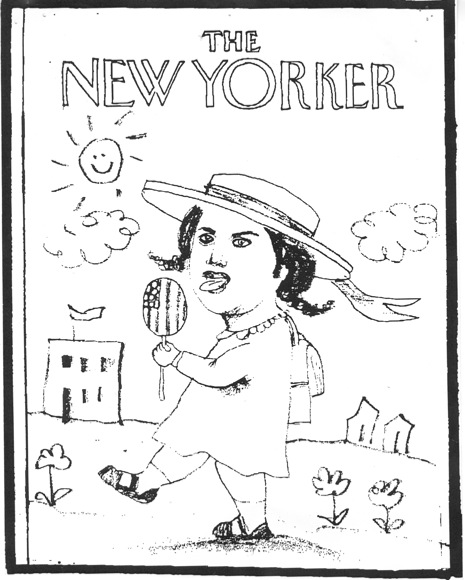
120507_pg-32-kunz-lewinsky-copy_p465

Blown Covers is a new book that reveals rejected New Yorker covers. Françoise Mouly, the magazine's art editor since 1993, explains her process:

"Think of me as your priest," she told one of them. Mouly, who cofounded the avant- garde comics anthology RAW with her husband, Art Spiegelman, asks the artists she works with — Barry Blitt, Christoph Niemann, Ana Juan, R. Crumb — not to hold back anything in their cover sketches. If that means the occasional pedophilia gag or Holocaust joke finds its way to her desk, she's fine with that. Tasteless humor and failed setups are an essential part of the process. "Sometimes something is too provocative or too sexist or too racist," Mouly says, "but it will inspire a line of thinking that will help develop an image that is publishable."

On the above image:

Anita Kunz’s drawing of Monica Lewinsky with a lollipop—why was that rejected?

We had already run an image on the topic, and we did not anticipate at the time how salacious the discourse was to become. It took us by surprise; we didn’t expect that The New York Times would have the word blowjob on the front page day after day after day after day. Often the artists know—because they actually are paying attention to stuff that’s in the air, they are so often ahead of their time.

The “Get The Government Out Of Marriage” Canard

Jason Brennan dismantles the idea that libertarian critiques of marriage law can be used as a reason to oppose marriage equality:

I don’t advocate having the government distribute red scarves in order to signal status. That’s not the business the government should be in. However, if the government did distribute scarves as a way of signaling status and membership, I’d want it to do so equally. I’d be outraged if it excluded homosexuals, or blacks, or whomever, even though I think it’s dumb for the government to issue scarves in the first place.

I don’t want trivialize marriage. In the case above, the value of getting a red scarf is purely symbolic. The value of having government accept and recognize your marriage contract is not purely symbolic.

How Have Gays Won?

Libertarian Richard Posner tries to explain the sea change in gay rights between his youth and today. One huge factor I think he misses – and that will perhaps one day be given the attention it deserves – is the AIDS epidemic. When a country loses 300,000 young people to a single disease in a decade, and when those hundreds of thousands were effectively outed as gay, the collective consciousness shifts. People discover gay people in their own families and among their friends and co-workers and their perspectives can shift very suddenly. That's why polling on abortion remains relatively stable, while polling on gay rights has seen an accelerating transformation:

Although I knew in the 1950s that there were homosexuals, if asked I would have truthfully said that as far as I knew I had never met one, or expected ever to meet one, any more than I had ever met or expected to meet an Eskimo. 

For today's teenagers, it's a different world entirely. And Posner sees where this debate has now led us:

It seems that the only remaining basis for opposition to homosexual marriage, or to legal equality between homosexuals and heterosexuals in general, is religious. Many devout Christians, Jews, and Muslims are strongly opposed to homosexual marriage, and to homosexuality more generally. Why they are is unclear. If as appears homosexuality is innate, and therefore natural (and indeed there is homosexuality among animals), and if homosexuals are not an antisocial segment of the population, why should they be thought to be offending against God’s will? Stated differently, why has sex come to play such a large role in the Abrahamic religions? I do not know the answer. But whatever the answer, the United States is not a theocracy and should hesitate to enact laws that serve religious rather than pragmatic secular aims, such as material welfare and national security.

"Why has sex come to play such a large role in the Abrahamic religions?" That is the question.

Mental Health Break

Neetzan Zimmerman explains:

The Three-Point Landing is an absurdly overused visual trope defined as landing "on the ground in a crouching position, feet wide apart and supporting their weight with one hand on the floor while the other hand is outstretched away from their body, usually pointed diagonally upwards." At the ROFLCon III supercuts panel — starring Gawker's own Rich Juzwiak — clip artist Duncan Robson (he of "Tumbleweeds" and "Let's Enhance" fame) premiered a compilation dedicated to the stunt TV Tropes warns should "not to be confused with the skydiving three-point landing, where you land on your feet and then fall on your ass."

Robots With Red Ink

Dana Goldstein considers the future of robo-grading, which could use online encyclopedias to help fact-check essays:

An experimental program called the Stanford Named Entity Recognizer can pick out proper nouns like "Chaucer" and "Albert Einstein" with 82 percent precision. Another program, called ReVerb, can recognize about one-third of the "facts" writers present on such topics, such as the century in which Chaucer lived (the 14th) and Einstein’s most famous scientific contribution (the Theory of Relativity). Since computers can already recognize phrases that hint at an argument—such as "caused by" and "led to"—it isn’t inconceivable that in coming years, a program will be able to search Web sources on a certain topic, and then use its findings to assess the plausibility of a writer’s assertions.

Kevin Drum bets that a computer will be as good as a human at scoring student essays by 2022.

The Case For Incrementalism

E.J. Graff is patient

Here's the truth: If we had national marriage laws, I would not be married right now. The U.S. has only recently been able to break through and try out same-sex marriage, which is leading people to realize, albeit slowly, that it's no threat to anyone. But that's only been possible because our federalist marriage system allows each state to make its own decision. And because we have a federalist system, LGBT advocacy groups are able to challenge the one national marriage law that the U.S. has passed: the Defense of Marriage Act (DOMA). … And what all the DOMA lawsuits are saying to the federal courts is this: let the states decide. 

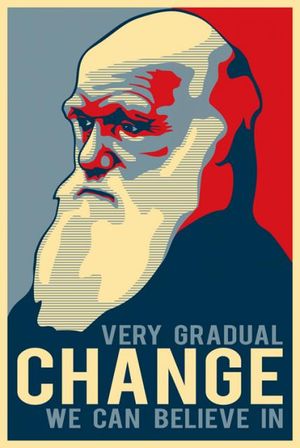
Exactly. There are currently two core positions on marriage equality. The first says this is a matter for the states, as it was for inter-racial marriage for centuries. The second says that this has to be Gradual-changedecided federally for the entire country as a whole. I have always taken the first position – because I take seriously the argument that you do not change such a fundamental institution without some experience of what its effects might be. Federalism is able to test things out: "laboratory of the states" blah blah blah. And that's why federalism is, or should be, a conservative position (in the Manzi sense).

Instead the GOP first pushed for the Defense Of Marriage Act, the first time marriage was federalized as an issue in American history; and its current nominee wants to amend the federal constitution to prevent Massachusetts, Connecticut, Iowa, et al from deciding their own marriage laws. So much for states' rights. If they conflict with divine mandates, buh-bye states' rights.

My view is that we can and should be patient, because I believe the experience of marriage equality is one of the reasons public opinion has shifted. We can now see this as a reality, rather than as an abstraction. And it has led to very little social change, except for more marriages, and more family integration. You think my taking turns with my husband to walk the dogs is a subversive and destabilizing act? Please.

What's left right now is the federal government's simple legal recognition of all civil marriages in the states where marriage equality exists. The feds recognized inter-racial marriage in non-Southern states long before the bans on miscegenation were ruled unconstitutional. If DOMA falls, we can get back to the debate – and allow Burke's "great law of change" take its course.

(Image by Mike Rosulek)