A Diary For God

Kaya Oakes recounts how she learned to find the sacred in the every day:

Ignatius taught the Jesuits to end each day doing something called the Examen. You start by acknowledging that God is there with you; then you give thanks for the good parts of your day (mine usually include food); and finally, you run through the events of the day from morning to the moment you sat down to pray, stopping to consider when you felt consolation, the closeness of God, or desolation, when you ignored God or when you felt like God bailed on you. Then you ask for forgiveness for anything shitty you did, and for guidance tomorrow.

I realize I’ve spent most of my life saying "thanks" to people in a perfunctory, whatever kind of way. Now when I say it I really mean it, even if it’s to the guy who makes those lattes I love getting in the morning, because I stopped and appreciated his latte-making skills the night before. If you are lucky and prone to belief, the Examen will also help you start really feeling God in your life.


Embracing The Darkness

Hiding-from-love

Kathryn Schulz sees the beauty in staying up all night:

Of the many radical rearrangements of knowledge brought about by the Copernican revolution, my favorite is one that most people today take for granted but that, back then, blew everybody’s minds. It is this: The universe is dark. Before Copernicus, the cosmos was presumed to be awash in infinite, celestial light. Look at the brilliant blues on the ceiling of the Sistine Chapel (Renaissance painting lagged behind Renaissance astronomy), or read Dante, who declared that beyond the spheres of the planets lay the "Luminous Heaven." With the shattering of geocentrism came the realization that we do not look through night’s darkness into infinite day, but through daylight into infinite darkness.

(Painting by João Figueiredo via But Does It Float)

When He’s Just Not That Into Sex

Michael Ian Black speaks from experience:

Male libido is assumed to be a constant, quivering thrum. For some men, maybe it is. But for me, as much as I enjoy the old in-n-out, the rubba-dub-dubba, the squeak-n-bubble, I have never craved it the way our culture has led me to believe I should, not even during my fabled Horny Years from ’91 to ’95. Except for those moments when I was in the first throes of a new love, sex has never subsumed me. Yet every cultural message I receive has led me to believe it should. Consequently, my lack of nymphomaniacal tendencies has always left me feeling embarrassed and emasculated.

His deeper message:

To me, sex isn’t even about sex. Fundamentally, it’s about acceptance, having somebody desire you enough to allow you to envelop them and wanting that person to envelop you in return. 

Recently Black also critiqued Hollywood's version of love:

Hollywood has given us two, equally false, notions of marriage. Either it’s the joining of two gorgeous young people "destined" to be together, or as a wheezing and cold institution inhabited by miserable and middle-aged wheezebags, usually meant to illustrate a counterpoint to the love the gorgeous young couple in the film will share once their destinies are realized, and they are able to finally be together against all odds. Yawn. Boring. Wrong. …

It’s doing laundry. It’s paying bills. Cleaning the kitty litter. Marriage is a hundred thousand tiny tasks you share. It is peeling vegetables and changing lightbulbs and giving each other quick kisses and wishing for each other "a nice day." It is coming home and smelling dinner cooking, and running out on a cold winter night for antacid because she has a headache and cannot sleep. Sometimes marriage is being pissed off at each other for weeks at a time. And sometimes it’s walking into your children’s bedrooms and watching them sleep.

The Art Of Sexting

Some are less savvy than others:

Sarah Nicole Prickett craves a good sext:

Consider what’s required in a formal sentence: the rhythm of punctuation, of course, but also knowing when to start, when to stop. Consider too the devastating effects of a well-timed ellipsis; read some Bataille. Erotic grammar is good grammar. Sexting has sped up seduction, but if you write it right, it can still torture.

I have a long-distance lover now and our text exchanges are fragmentary and agonizing and great. We met in person and had sex in person which helps fill in the ellipses, and I still always want to have sex in person, especially because we can’t. But wanting is sometimes as close to ecstasy as having.

I always think about the first time we were in some incalescent argument on g-chat and he finally said, "you’re right," and then (though he had yet to touch me) "for some reason that makes me want to slide my hand under your skirt up your thigh," and then, "I’m going to go eat…" and then, "lunch." And reader, I fucking died.

The iPhone app Snapchat can help with the pictorial part:

Snapchat allows a person to take and send a picture and control how long it is visible by the person who receives it, up to 10 seconds. After that, the picture disappears and can’t be seen again. If the person viewing the picture tries to use an iPhone feature that captures an image of whatever is on the screen, the sender is notified. … But even if a Snapchat image is set to vanish after a few seconds, there’s nothing to stop someone from taking a photograph of his smartphone screen with another camera.

A Poem For Saturday

0624

"It is not so much that I miss you" by Dorothea Grossman:

It is not so much that I miss you
as the remembering
which I suppose is a form of missing
except more positive,
like the time of the blackout
when fear was my first response
followed by love of the dark.

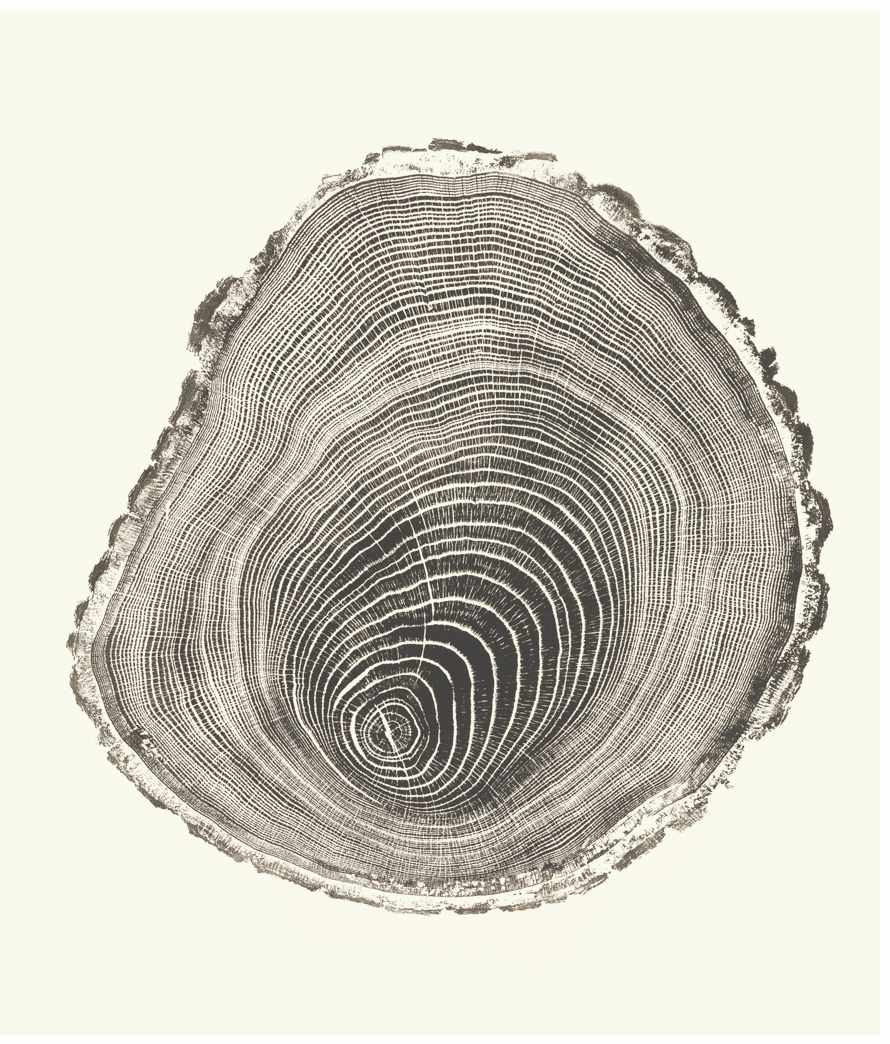
Bryan Nash Gill describes his piece, "Compression Wood, 2011, 76 years printed," seen above:

The term compression wood describes trees that grow abnormally in the forest. This growth may result from heavy snow or uprooting, or simply from the tree reaching for sunlight. The seashell-like pattern of this block implies that the tree was bending in the direction of the top of the print.

(Artwork: courtesy of Bryan Nash Gill, author of Woodcut, Princeton Architectural press NYC 2012)

Mourning Fictional Deaths

Shoshana Kessock wonders why fans become so incensed when creators such as Avengers director Joss Whedon and Game of Thrones scribe George R.R. Martin kill off main characters:

I believe the discomfort comes down to the base fear of death and uncertainty that people face every day. Death is a subject that makes people uncomfortable. It doesn’t surprise me then that people would have such emotional reactions to fictional character death. They come to fiction to be taken away from the concerns of their everyday life. When confronted with the sudden death of a beloved character, viewers and readers are jarred into dealing with the uncertainty of life in their fiction and that can be unnerving. Look at reactions to the first murder in Psycho, or the death of Cedric Diggory in Harry Potter as examples outside of Martin and Whedon if you will, as they’re not the only writers who use the tactic to drive the emotional point home. 

Face Of The Day

Vintage-mugshots-black-and-white-3

From an amazing collection of vintage mug shots comes Eugenia Falleni, aka Harry Crawford:

When ‘Harry Leon Crawford’, hotel cleaner of Stanmore was arrested and charged with wife murder he was revealed to be in fact Eugeni Falleni, a woman and mother, who had been passing as a man since 1899. In 1914, as ‘Harry Crawford’, Falleni had married the widow Annie Birkett. Three years later, shortly after she announced to a relative that she had found out ‘something amazing about Harry’, Birkett disappeared.

Algae: Low-Fat Of The Future?

Sarah Zhang profiles Solazyme, a company that set out to grow algae that converts sugars into ethanol but instead stumbled upon a version that "made a pretty healthy fat similar to olive oil but with a consistency fit for use in cookies and ice creams":

The result is Almagine, a bright yellow powder made from dried algae ground up into tiny one-micron pieces. It tastes a little like pie dough right after the butter and shortening has been cut into the flour. Substitute Almagine for some of the butter, eggs and flour in a chocolate chip cookie recipeand you get the buttery, chewy feel of the original with 40 percent less fat and cholesterol.

We have no taste buds that detect fat. But anyone who’s experienced the disappointment of low-fat ice cream or Baked Lays knows just how important it is to the eating experience. That’s because fat plays a significant role in a decadent food’s mouthfeel: the cool unctuousness of ice cream, or the crisp shatter of a deep-fried potato chip. The size and organization of Almagine particles—globules of fiber and protein coated in fat—give them the unique ability to mimic the consistency of fat when it hits the tongue.