Monica Potts visits Owsley County, Kentucky, "the poorest county in the United States with a majority-white population:"
Kentucky began calling Owsley County a "pauper county" as far back as the 1890s, because it took more state tax revenue than it contributed. Since the federal government began tracking poverty rates in 1959, Owsley has ranked as one of the nation’s poorest counties. By the 1960s, when much of the United States had moved into prosperity, Southern Appalachia’s shoeless children, living in mountain shacks without electricity or plumbing, seemed like relics—trapped in a sticky poverty that modernity had yet to solve. The people of Owsley County translated all the attention as criticism. They weren’t descendents of pioneers. They were a problem.
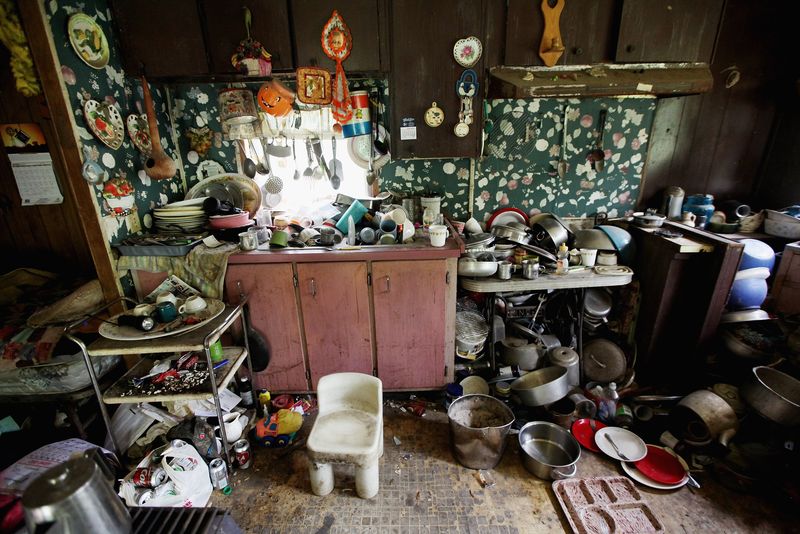
(Photo: Former chimney sweeper Mose Noble's kitchen is seen in Owsley County on April 21, 2012 in Booneville, Kentucky.
Noble is no longer employed but does volunteer cleaning graveyards from time to time. His trailer has no electricity or running water but he receives governmental and neighborly assistance. Daniel Boone once camped in the Appalachian mountain hamlet of Owsley County, which remains mostly populated by descendants of settlers to this day. The 2010 U.S. Census listed Owsley County as having the lowest median household income in the country outside of Puerto Rico, with 41.5% of residents living below the poverty line. Familial and community bonds run deep, with a populace that shares a collective historical and cultural legacy uncommon in most parts of the country. However, the community of around 5,000 struggles with a lack of jobs due to the decline in coal, tobacco and lumber industries along with health issues including drug addiction without effective treatment. By Mario Tama/Getty Images.)
 The Dish